"Crimes Committed by Police in the '12·3 Incident' Subject to Direct Prosecution Investigation"
Prosecution Can Investigate Cases Related to 'Crimes Committed by Police Officers'
"Discussions Ongoing with the CIO Regarding Case Transfer"
Amid ongoing confusion as three investigative agencies-the police, the prosecution, and the Corruption Investigation Office for High-ranking Officials (CIO)-are simultaneously investigating the '12·3 Emergency Martial Law' incident, it was confirmed on December 10 that the prosecution has internally concluded that it has investigative authority over the case, even when following the explicit provisions of the Prosecutors' Office Act rather than a presidential decree.
The previous day, Kim Minseok, Supreme Council member of the Democratic Party, criticized the prosecution's investigation into the case, stating that it was "based on an illegal presidential decree enacted during Minister Han Donghoon's tenure." He even mentioned the possibility of an 'emergency prohibition of investigation' and 'impeachment' of the prosecution's lead investigator. However, the prosecution's position is that, regardless of the presidential decree (Regulation on the Scope of Crimes Subject to Prosecutors' Investigation), the revised Prosecutors' Office Act-amended during the Democratic Party's efforts to adjust and ultimately abolish prosecutorial investigative powers-clearly recognizes the prosecution's authority to investigate this case.
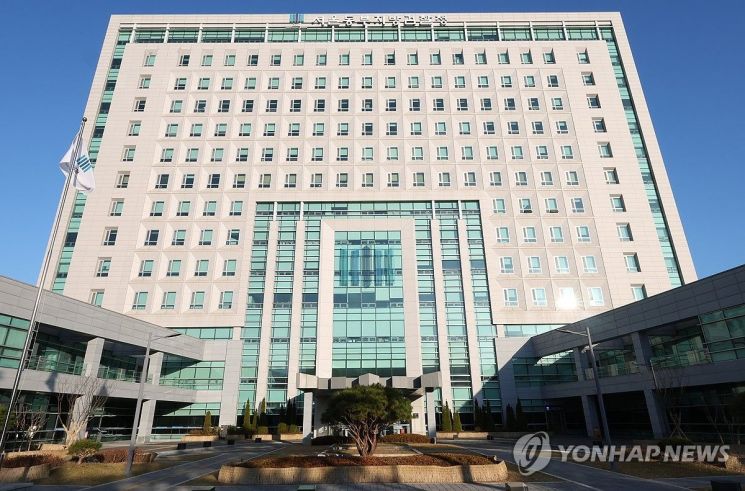 Seoul Eastern District Prosecutors' Office, where the Special Investigation Headquarters for the '12·3 Emergency Martial Law' incident was established. Photo by Yonhap News
Under the current Prosecutors' Office Act, the crime of insurrection is not explicitly included among the offenses that prosecutors can initiate investigations into. However, Article 4, Paragraph 1, Subparagraph 1(a) of the Act designates 'corruption crimes' as offenses that prosecutors can directly investigate. Article 2, Subparagraph 1(b) of the presidential decree, 'Regulation on the Scope of Crimes Subject to Prosecutors' Investigation,' lists 'crimes involving the abuse of position or authority in connection with official duties' as a type of corruption crime. In addition, Annex 1, Subparagraph 2(a) of Article 4 of the Prosecutors' Office Act specifically includes abuse of authority under Article 123 of the Criminal Act as a corruption crime.
Until now, the prosecution has been known to investigate the crime of insurrection related to the martial law incident as a related offense to abuse of authority, which prosecutors can directly investigate under the Prosecutors' Office Act and the relevant presidential decree. Article 4, Paragraph 1(c) of the Prosecutors' Office Act allows prosecutors to initiate investigations into crimes that are either recognized or directly related to significant crimes, such as corruption or economic crimes, as defined by presidential decree.
This is why the Democratic Party criticizes the prosecution, claiming it is investigating the case based on a presidential decree enacted by Han Donghoon, the current leader of the People Power Party, during his tenure as minister to restore prosecutorial investigative authority.
However, the prosecution's position is that it can investigate the crime of insurrection not only as a 'related offense to abuse of authority,' but also as a crime 'directly related to crimes committed by police officers,' which is explicitly designated as an offense subject to prosecutorial investigation under Article 4 of the Prosecutors' Office Act.
Prosecutor A stated, "Looking at Article 4, Paragraph 1(b) of the Prosecutors' Office Act, prosecutors can initiate investigations into crimes committed by police officers or officials belonging to the CIO. Paragraph 1(c) of the same article clearly stipulates that 'crimes recognized in connection with the crimes in (b)' or 'crimes directly related to the crimes in (b)' are also subject to direct prosecutorial investigation."
He added, "In other words, crimes related to those committed by the police can be investigated by the prosecution according to the law, not merely by presidential decree. Therefore, the prosecution naturally has the authority to investigate the crime of insurrection in connection with this case."
Prosecutor A further explained, "Immediately after the declaration of martial law on December 3, the police appeared most frequently in news footage," and "the largest number of complaints received in connection with this case also concerned allegations of insurrection by the police leadership."
In summary, with numerous police officials having been reported and coming under investigation in connection with the '12·3 Emergency Martial Law' incident, the prosecution argues that it would be inappropriate for the police to investigate themselves. According to the Prosecutors' Office Act, if the prosecution has investigative authority over crimes (such as insurrection) committed by the police, it naturally also has authority to investigate other accomplices involved in the insurrection.
However, the prosecution has not made this position public, as it could provoke the police.
Meanwhile, it has been confirmed that the prosecution is continuing discussions with the CIO, which requested the transfer of the case. On the morning of December 10, the CIO stated, "We plan to attend a meeting with the Supreme Prosecutors' Office and the National Investigation Headquarters regarding the so-called 'martial law incident' investigation."
© The Asia Business Daily(www.asiae.co.kr). All rights reserved.
![Clutching a Stolen Dior Bag, Saying "I Hate Being Poor but Real"... The Grotesque Con of a "Human Knockoff" [Slate]](https://cwcontent.asiae.co.kr/asiaresize/183/2026021902243444107_1771435474.jpg)















