"Claimed 'Postpartum Depression Relief Effect'"
No Medical Evidence Verified
After giving birth, a British woman who made jelly from her 'placenta' and ate it posted a video on social networking services (SNS), receiving fierce criticism from netizens. While making placenta into capsules or jelly and consuming it is gaining popularity among some mothers, opinions on the medical effects of the placenta remain divided.
The British media outlet The Mirror recently reported that Hana Brown, a woman in her 30s living in West Yorkshire, made jelly from her child's 'placenta' and ate it. Brown had her second child last year, and during a test conducted at 12 weeks of pregnancy, she was informed by her doctor that there were issues with the placenta, posing risks such as stillbirth, eclampsia, low birth weight, and premature birth.
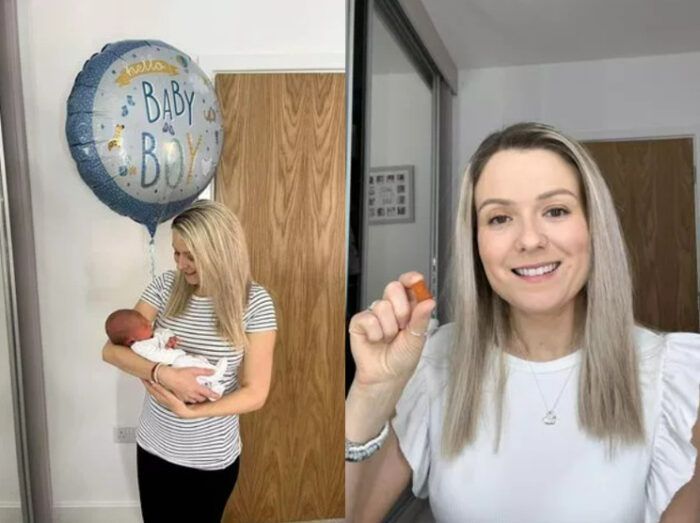 A woman who made the placenta into jelly and consumed it after childbirth. Screenshot from The Mirror.
Brown recalled her difficult pregnancy and childbirth experience with her first child and reportedly insisted on a home birth to reduce anxiety. After coming across information that the placenta helps increase breast milk and reduce postpartum depression, she decided to make the placenta into capsules and consume them.
In October last year, Brown gave birth to a 2.8 kg baby boy. An hour later, her husband placed the placenta in a container and put it in the freezer, and thereafter Brown reportedly consumed jelly made from the placenta daily. She also filmed this process and uploaded the video to SNS. In the video, she said, "I'm eating the placenta like Haribo," and claimed, "Although it is not scientifically proven, I definitely feel less anxious after giving birth."
The video quickly spread online, garnering over 5 million views. However, netizens' reactions were mixed. Criticism poured in, such as "It's disgusting" and "There is no medical evidence that the placenta can alleviate postpartum depression." Brown responded by saying, "I thought sharing my story might help others who could benefit."
So, does consuming the placenta actually help postpartum health? In 2015, Hollywood star Kim Kardashian also attracted attention when it was revealed that she made and took placenta pills after giving birth. At the time, she claimed, "All my friends said placenta pills helped with postpartum depression," and "I feel healthier every time I take them, and I have no depression."
However, the U.S. Food and Drug Administration (FDA) has not officially approved the efficacy of placenta consumption. Additionally, in 2017, the U.S. Centers for Disease Control and Prevention (CDC) warned of the risks of taking placenta capsules, citing a case where a baby contracted Group B Streptococcus after the mother consumed placenta capsules. It is suspected that an improperly managed placenta became infected with bacteria and transmitted it from mother to baby.
© The Asia Business Daily(www.asiae.co.kr). All rights reserved.
![Clutching a Stolen Dior Bag, Saying "I Hate Being Poor but Real"... The Grotesque Con of a "Human Knockoff" [Slate]](https://cwcontent.asiae.co.kr/asiaresize/183/2026021902243444107_1771435474.jpg)















