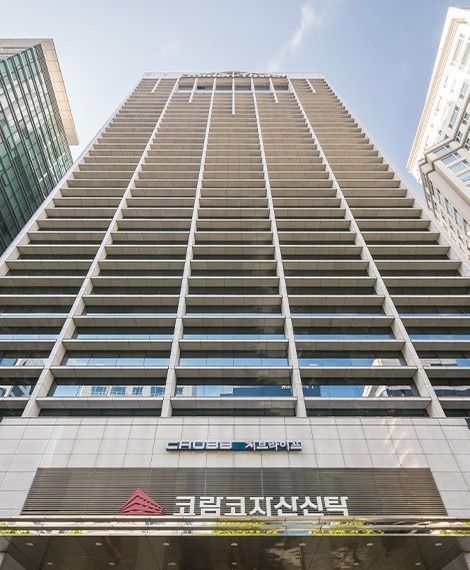
The Housing and Urban Fund Anchor REIT recently announced plans to create an active fund investing in listed REITs to revitalize the sluggish domestic listed REIT market.
Coramco Asset Trust, the operator of Anchor REIT, announced on the 6th that it is recruiting fund managers to oversee the fund.
Anchor REIT is Korea's first blind fund-type REIT, established in 2020 with a total of 465 billion KRW funded by the Ministry of Land, Infrastructure and Transport through the Housing and Urban Fund to activate the domestic public real estate indirect investment market. Coramco Asset Trust, the top private REIT operator in Korea by market share, manages Anchor REIT.
Anchor REIT initially started by participating in early investments of domestic REITs scheduled for public offering and listing, supporting their progress toward listing.
It also serves as an operational channel for surplus funds from the Housing and Urban Fund to efficiently target the growing domestic alternative investment market, which is becoming larger and more weighted toward public offerings.
The fund size to be raised by Anchor REIT is over 30 billion KRW, with a maturity of 3 years, and it aims for active management rather than passive management like ETFs that track indices. Since active funds engage in aggressive trading to generate returns exceeding market yields, the domestic REIT market is now welcoming a new liquidity provider (LP).
Since its inception, Anchor REIT has changed its form three times. Considering that REITs are listed stocks, the investment approach has also expanded accordingly. While the previous investment method focused mainly on the pre-IPO issuance market, it is expected to expand its role to the secondary market. The concept of investing is broadening from single projects to the market itself, and regular on-market purchases of high-quality REIT stocks are anticipated.
Since the establishment of Anchor REIT in 2020, various domestic pension funds and mutual aid associations have also joined the listed REIT market, which has grown to a total of 22 listed REITs with a market capitalization of 8 trillion KRW. Investment in REITs through retirement pensions has become possible, and the emergence of listed REIT ETFs has contributed to the quantitative growth of the domestic REIT market.
Recently, voices calling for qualitative growth in the REIT market have increased. Due to successive rights offerings causing REIT stock prices to fall, investor dissatisfaction is rising. While the size of listed REITs is growing, persistently low trading volumes are cited as one of the reasons for their decoupling from the domestic stock market boom.
In fact, the average daily trading volume of domestic listed REITs is only about 30% of the KOSPI 200 average. Considering the still relatively small market capitalization of listed REITs, this trading volume makes it difficult for institutional investors to enter.
The Ministry of Land, Infrastructure and Transport also hinted at expanding Anchor REIT’s role in active on-market trading, i.e., in the securities market, in its "REITs Activation Plan" announced on June 17.
The Bank of Korea lowered the base interest rate in October this year. The market demands appropriate stock price reflection through the activation of listed REIT stock trading.

© The Asia Business Daily(www.asiae.co.kr). All rights reserved.
![Clutching a Stolen Dior Bag, Saying "I Hate Being Poor but Real"... The Grotesque Con of a "Human Knockoff" [Slate]](https://cwcontent.asiae.co.kr/asiaresize/183/2026021902243444107_1771435474.jpg)















