Incheon is the only one among the six metropolitan cities in South Korea where the population is increasing, and it is expected to reach a maximum of 3.13 million by 2037.
On the 6th, Incheon City announced the '2022?2042 Future Population Projection by Gun and Gu' containing this information. This projection was prepared based on Statistics Korea's 'Future Population Projection by Province (2022?2052)' and reflects population trends such as births, deaths, and migration patterns.
This data targets residents who have lived for more than three months, including both domestic and foreign nationals, and differs from the Incheon resident registration population (3.02 million as of November 2024), which includes registered domestic nationals and overseas Koreans regardless of residence status.
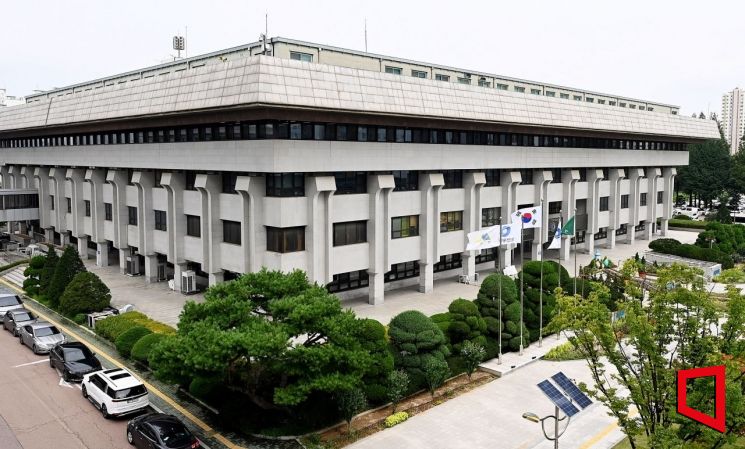
According to the projection, Incheon's total population is expected to steadily increase from 2.975 million in 2022, peaking at 3.126 million in 2037, then declining slightly to 3.111 million in 2042. This represents an approximate 4.5% increase over 20 years, and Incheon's share of the national population is projected to rise from 5.8% in 2022 to 6.3% in 2042.
By district, populations in Ganghwa-gun, Ongjin-gun, Jung-gu, Michuhol-gu, Yeonsu-gu, and Seo-gu are expected to increase, while Dong-gu, Namdong-gu, Bupyeong-gu, and Gyeyang-gu are expected to decrease. The high population growth rates in Seo-gu and Jung-gu are attributed to urban infrastructure investments such as new town developments and transportation network expansions. Conversely, Namdong-gu and Gyeyang-gu are predicted to experience declines due to industrial structural changes and aging of existing residential areas.
Changes in the age structure of the population are also inevitable. The median age (the age of the person in the middle when the entire population is ordered by age) is expected to rise from 44.1 years in 2022 to 54.3 years in 2042 due to decreased birth rates and increased life expectancy, though it remains lower than the national average of 55.4 years. This is mainly attributed to the influx of younger populations into new town areas such as Seo-gu and Yeonsu-gu.
Additionally, Incheon entered an aged society in 2022 and is expected to enter a super-aged society by 2027.
Furthermore, the working-age population (ages 15?64) is projected to decrease by about 359,000?from 2.173 million (73.0%) in 2022 to 1.814 million (58.3%) in 2042, a decline of 14.7 percentage points. In particular, the decrease in proportion is expected to be prominent in Ongjin-gun (21.9 percentage points) and Gyeyang-gu (21.4 percentage points), according to the city.
© The Asia Business Daily(www.asiae.co.kr). All rights reserved.
![Clutching a Stolen Dior Bag, Saying "I Hate Being Poor but Real"... The Grotesque Con of a "Human Knockoff" [Slate]](https://cwcontent.asiae.co.kr/asiaresize/183/2026021902243444107_1771435474.jpg)















