Police Assigned to National Police Agency Security Investigation Unit
The prosecution and the High-ranking Officials' Crime Investigation Division began reviewing on the 3rd whether to assign and directly investigate the case in which President Yoon Seok-yeol and others were accused of treason related to the declaration of martial law.
According to the legal community on the 5th, the Seoul Central District Prosecutors' Office assigned the case in which the Labor Party, Green Party, and Justice Party accused President Yoon, former Minister of National Defense Kim Yong-hyun, and Martial Law Commander Park An-su (Chief of Staff of the Army) of treason to the Public Investigation Division 1 (Chief Prosecutor Lee Chan-gyu) the day before.
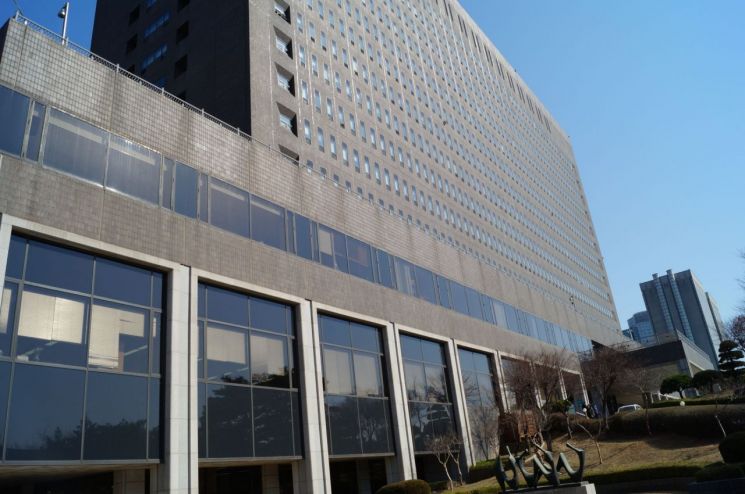
After reviewing the complaint, the prosecution plans to decide whether to conduct a direct investigation or transfer the case to the police.
According to the 2021 adjustment of investigative authority between the prosecution and police, treason is not a crime that the prosecution can initiate an investigation on directly.
Article 4 (Duties of Prosecutors) Paragraph 1 Item 1 of the Prosecution Service Act limits the crimes that prosecutors can initiate investigations on to ▲important crimes such as corruption and economic crimes as prescribed by Presidential Decree (Item a) ▲crimes committed by police officers and officials belonging to the High-ranking Officials' Crime Investigation Division (Item b) ▲crimes related directly to the crimes in Items a and b and crimes transferred by judicial police officers.
Under the delegation of law, Article 2 (Important Crimes) of the "Regulations on the Scope of Crimes for Prosecutors to Initiate Investigations" (Presidential Decree) specifies important crimes that prosecutors can initiate investigations on more concretely. Crimes involving abuse of position or authority related to duties are classified as corruption crimes, and crimes such as false accusation, escape, concealment of a criminal, destruction of evidence, perjury, false appraisal or interpretation, and retaliatory crimes are listed as important crimes outside corruption or economic crimes, but treason is not included.
Some interpret that the prosecution could initiate an investigation on abuse of authority and then investigate treason as a "related crime." This logic is similar to when the Seoul Central District Prosecutors' Office investigated defamation charges against President Yoon related to the election interference public opinion manipulation case as a related crime while investigating Kim Man-bae's breach of trust and bribery charges.
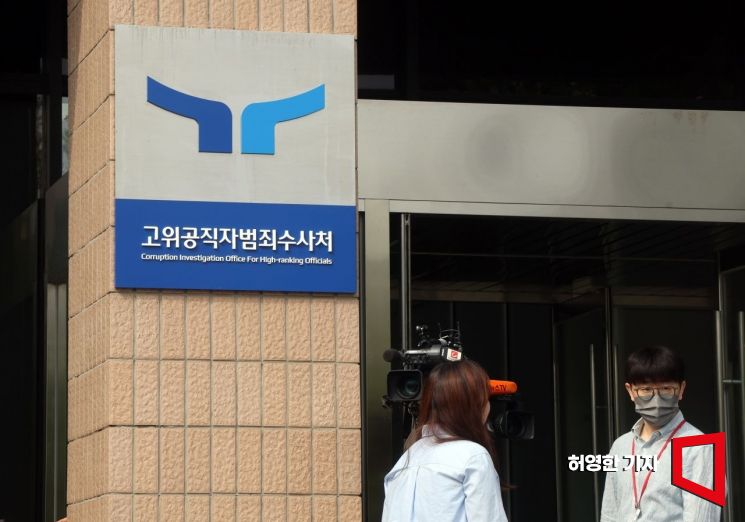 Government Gwacheon Complex, Corruption Investigation Office for High-Ranking Officials. Photo by Heo Young-han
The High-ranking Officials' Crime Investigation Division also assigned the case in which the Citizens' Action for Judicial Justice (Sasehaeng) accused President Yoon, Minister Kim, and Minister of the Interior and Safety Lee Sang-min of treason and abuse of authority to Investigation Division 4 (Chief Prosecutor Cha Jeong-hyun) on the same day.
Article 2 of the High-ranking Officials' Crime Investigation Division Act defines "high-ranking officials' crimes" that the division can investigate as crimes committed by high-ranking officials or their family members (limited to crimes related to the official duties of the high-ranking official in the case of family members) while in office, including ▲crimes under Articles 122 to 133 of the Criminal Act (neglect of duty, abuse of authority, illegal arrest, illegal detention, assault by a person performing detention duties, cruel acts, disclosure of suspect facts, leakage of official secrets, election interference, bribery, pre-bribery, bribery through a third party, post-bribery, mediation of bribery, bribery offering), including cases with aggravated punishment under other laws ▲invalidity of official documents related to duties, destruction of official property, forgery or alteration of official documents, false official documents, forgery or alteration of electronic records, use of forged official documents, embezzlement, breach of trust, embezzlement in the course of duties, breach of trust in the course of duties, bribery and breach of trust ▲bribery under the Act on the Aggravated Punishment of Specific Crimes ▲violation of the Attorney-at-law Act (Article 111) ▲violation of the Political Funds Act (illegal receipt of political funds) ▲violation of the National Intelligence Service Act (political involvement crime, abuse of authority) ▲perjury under the National Assembly Witness Examination Act ▲violation of the Act on the Regulation of Concealment of Crime Proceeds (concealment and disguise of crime proceeds, receipt of crime proceeds), among others.
Additionally, "related crimes" that the division can investigate include ▲high-ranking officials' crimes committed by persons in a joint principal, instigator, or accomplice (aider) relationship with the high-ranking official ▲bribery offering or breach of trust committed against a high-ranking official ▲concealment of criminals, perjury, malicious perjury, false appraisal, interpretation, or translation, destruction of evidence, false accusation, and perjury under the National Assembly Witness Examination Act related to high-ranking officials' crimes ▲crimes directly related to high-ranking officials' crimes discovered during the investigation process, committed by the relevant high-ranking official.
As such, treason is not defined as a crime subject to investigation by the High-ranking Officials' Crime Investigation Division under the Act. However, similar to the prosecution, there is an opinion that the division can investigate if treason is confirmed as a related crime of abuse of authority.
Although investigations of former presidents have occurred multiple times in the past, this is the first time an investigation into treason charges against a sitting president is underway, so controversy over the investigative authority is expected to continue for some time.
Meanwhile, on the same day, the police merged two cases accusing President Yoon and others of treason and assigned them to the National Police Agency's Security Investigation Division.
The day before, the Innovation Party accused President Yoon, former Minister Kim Yong-hyun, Chief of Staff of the Army Park An-su, Minister Lee Sang-min, and others of treason and related charges to the National Police Agency. Additionally, 59 civic activists including Yang Kyung-soo, chairman of the Korean Confederation of Trade Unions, also accused President Yoon and Minister Kim of treason, rebellion under the Military Penal Code, and obstruction of National Assembly proceedings under the National Assembly Act to the police the day before.
© The Asia Business Daily(www.asiae.co.kr). All rights reserved.
![Clutching a Stolen Dior Bag, Saying "I Hate Being Poor but Real"... The Grotesque Con of a "Human Knockoff" [Slate]](https://cwcontent.asiae.co.kr/asiaresize/183/2026021902243444107_1771435474.jpg)

















