"Gap Between US and Major Countries Worsens Compared to 1st Term... Exceptionalism Highlighted"
"Trump 2nd Term Policies Act as Pressure for Dollar Strength"
"Chinese Government Likely to Allow Yuan Weakness"
Since the inauguration of Donald Trump's second term administration, the US dollar is expected to continue its strength while the Chinese yuan is anticipated to weaken.
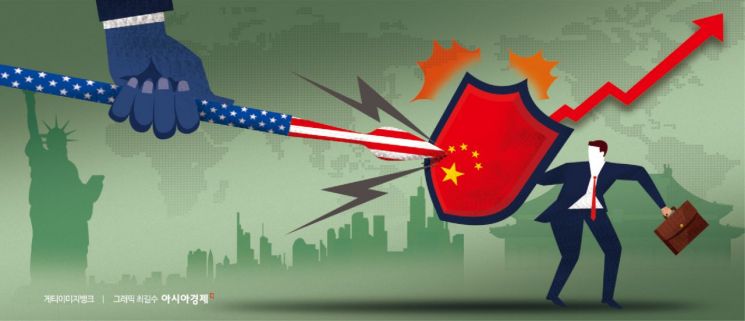
According to the report titled 'Outlook on the US Dollar and Chinese Yuan Following the Inauguration of the New US Administration' released by the Bank of Korea on the 5th, the policy mix of Trump's second term?including tax cuts, tariff increases, and immigration restrictions?is expected to exert upward pressure on the US dollar. In particular, as Trump has declared his intention to impose high tariffs on China, the Chinese yuan is likely to face significant downward pressure.
Recently, the gap between the US and major countries has widened compared to Trump's first term, highlighting American exceptionalism. When Trump was first elected in 2016, the US experienced slowed growth and persistent deflationary pressures, showing a pattern similar to the Eurozone. In contrast, this year and next, the US is expected to achieve higher growth rates due to a robust labor market, strong consumer spending, and increased investment, with upward revisions in growth and inflation forecasts, differentiating it from other advanced economies.
Trump's second-term policies, based on America First principles, are expected to be pursued more aggressively than in the first term. This is analyzed to lead to inflation, deterioration in fiscal soundness, and rising interest rates. A Bank of Korea official stated, "Given the larger fundamental gap in economic growth between the US and major countries compared to when Trump was first elected in 2016, expectations regarding Trump's America First policy direction are likely to act as upward pressure on the US dollar for the time being."
Even if tariffs and immigration controls pose downside risks to US economic growth, the growth of other major trade-dependent countries may be more severely contracted, which could serve as a factor strengthening the US dollar.
A Bank of Korea official explained, "Since October, when the likelihood of Trump's election increased, the US dollar has already strengthened by more than 6%, reflecting much of the policy expectations. Considering the 7.4% rise in the US Dollar Index (DXY) during the heightened trade disputes from March 2018 to October 2019, the US dollar is likely to remain strong at a high level while its strength moderates in the medium term."
The Federal Reserve's (Fed) interest rate cut stance is expected to have a limited effect in weakening the dollar's strength. Recently, the robustness of the US economy and the inflationary potential of Trump's policies have reduced expectations for Fed rate cuts.
The yuan is expected to be significantly affected by Trump's strong tariff policies against China in his second term. If, as promised, a high tariff rate of 60% is imposed on Chinese imports, the negative impact on the Chinese economy is expected to expand considerably. Investment banks (IBs) estimate that if the Most Favored Nation status is revoked and a 60% tariff is imposed, China's gross domestic product (GDP) growth rate could decline by 0.5 to 2.5 percentage points.
A Bank of Korea official explained, "The Chinese government is likely to respond to the reduced price competitiveness caused by tariffs by allowing yuan depreciation or lowering export prices, as it did during Trump's first term. This is expected to act as a factor causing economic recession and deteriorating profitability for Chinese companies."
© The Asia Business Daily(www.asiae.co.kr). All rights reserved.

















