OpenAI "Considering Introduction of Advertising Model"
Perplexity Also Adds Ads to AI Search
Revenue Model Needed to Offset Development and Operating Costs
Domestic Companies Gradually Adding Subscription Models
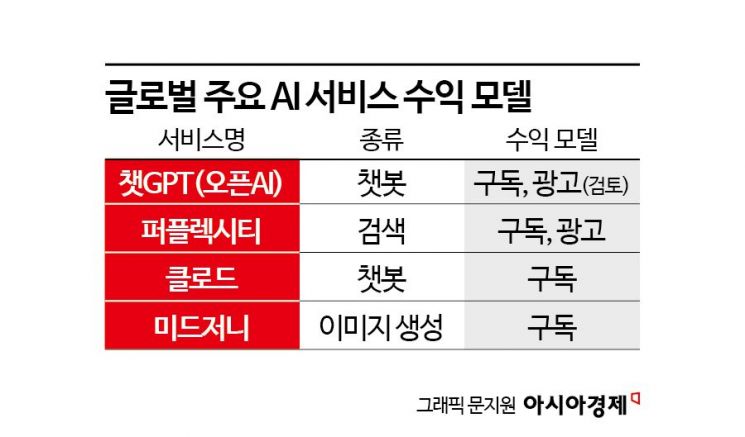
Global IT companies are not only applying subscription models to generative artificial intelligence (AI) services but are also adding advertisements. This is because additional revenue models are needed to cover astronomical development and operating costs. Domestic companies, which had been reluctant to monetize, are also gradually introducing subscription models to their AI services.
Sarah Friar, Chief Financial Officer (CFO) of OpenAI, recently stated in an interview with a foreign media outlet that "the introduction of an advertising model is under consideration" and that "we will carefully decide when and where to implement ads." CFO Friar has gained experience in advertising through major IT companies such as social media platform Nextdoor and enterprise software company Salesforce. OpenAI has been recruiting advertising talent from companies like Meta and Google, including hiring Vice President Shivakumar Venkataraman, who led Google's search advertising business, last May.
Perplexity, which has emerged as a rival to ChatGPT in the AI search field, has been attaching ads to AI search results since last month. When searching, it presents related questions, some of which are marked as ‘Sponsored’ ads. Companies like Nike and Whole Foods Market participate in the advertising.
Until now, generative AI search services have been cautious about introducing ads. Adding ads could lower search trustworthiness and reduce differentiation from existing search engines.
This stance has changed due to the judgment that relying solely on subscription fees is insufficient to cover AI development and operating costs. OpenAI’s main revenue model is a subscription service that allows unlimited use of the latest models like ‘GPT-4o’ for $20 per month. Perplexity also relies solely on a subscription service priced at $20 per month as its only revenue source.
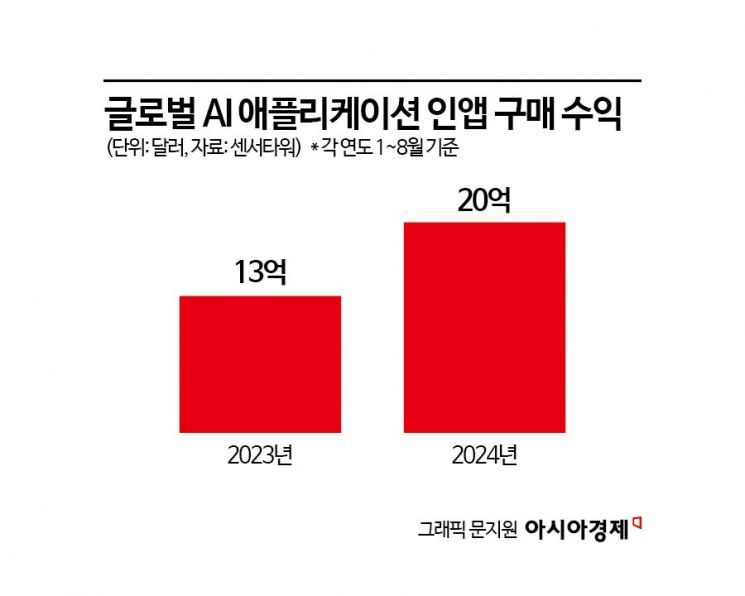
Although they generate revenue through subscription models, it is not enough to offset costs. According to app analytics firm Sensor Tower, the ChatGPT application has generated approximately $250 million (about 333.7 billion KRW) in cumulative revenue since its launch until August. Adding web payments likely increased this revenue further. However, considering that OpenAI’s development investment alone has reached $7 billion (about 9.6572 trillion KRW), other revenue models are necessary. An industry insider said, "If a user base has been secured through generative AI services, advertising can be a means to generate additional revenue."
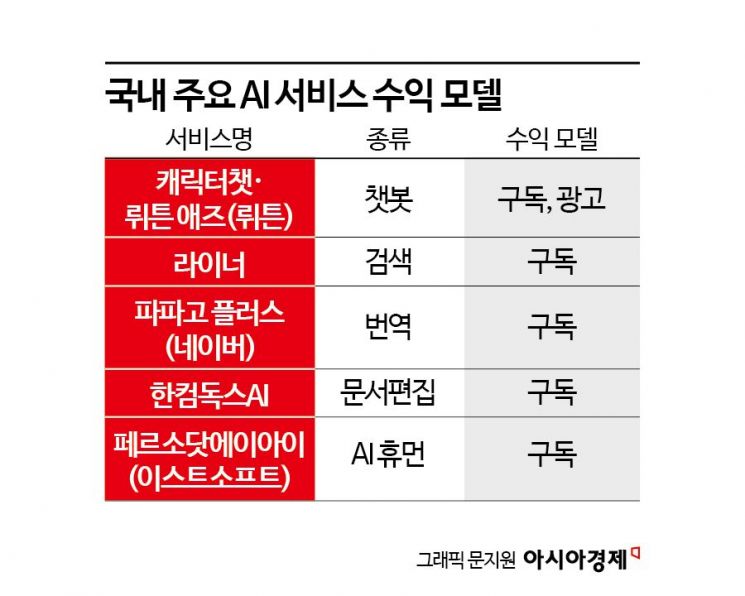
Domestic companies, which had been cautious about monetization, are also making moves. It is analyzed that resistance to charging has decreased as overseas companies have been rapidly monetizing generative AI services. Generative AI startup Lytten Technologies recently launched an AI digital advertising platform called ‘Lytten Ads.’ It automatically targets campaign audiences for advertisers and offers advertising products. This was added after partially monetizing ‘Character Chat,’ which allows conversations with AI characters, in October.
Naver launched ‘Papago Plus,’ a paid version of its AI translation service ‘Papago,’ in the third quarter. Users can access it for between 13,000 KRW and 75,000 KRW per month depending on features. Hancom also introduced ‘Hancom Docs AI,’ a subscription-based document editing service integrated with generative AI. Hancom Docs subscribers paying 6,900 KRW per month can use AI features. ESTsoft offers the AI human service ‘Perso.ai’ with subscription fees ranging from $29 to $109 per month. An industry insider explained, "As AI service usage increases, resistance to costs has decreased, and more companies are supporting these costs for productivity."
According to Sensor Tower, global AI app in-app purchase revenue exceeded $2 billion (about 2.76 trillion KRW) from January to August. It is expected to reach $3.3 billion (about 4.5526 trillion KRW) by the end of this year, which is 2.5 times higher than last year.
© The Asia Business Daily(www.asiae.co.kr). All rights reserved.
![Clutching a Stolen Dior Bag, Saying "I Hate Being Poor but Real"... The Grotesque Con of a "Human Knockoff" [Slate]](https://cwcontent.asiae.co.kr/asiaresize/183/2026021902243444107_1771435474.jpg)


















