KOCCA Presents 'Next K' as New Vision Keyword
Foresees Accelerated Content Strategy Utilizing Locals
"Beyond Cultural and Geographical Boundaries to a Wider Market"
The Korea Creative Content Agency (KOCCA) has presented ‘Next K: Beyond K’ as the vision keyword for the content industry in the coming year. It predicted the establishment of a global universal code and a transnational production system.

Yoo Hyun-seok, acting president of KOCCA, named this trend ‘Hallyu 5.0’ at the ‘Content Industry 2024 Review and 2025 Outlook Seminar’ held on the 3rd at CKL Stage in Jung-gu, Seoul. He predicted, “While Hallyu has diversified and interest in Korean culture has grown over the past two to three years, from next year, K-content will cross cultural and geographical boundaries to reach broader markets and more users.”
As a representative example, he pointed to ‘APT.’, a song performed by BLACKPINK’s Ros? and American pop star Bruno Mars. The motif of this globally successful song is the ‘apateu game’ (apartment game). It is a drinking game where multiple participants stack their hands, then remove one hand at a time from the bottom, and the person who removes their hand at a specific number called out by the seeker drinks a penalty. The ‘APT.’ music video humorously depicts this game, which has become a global trend.

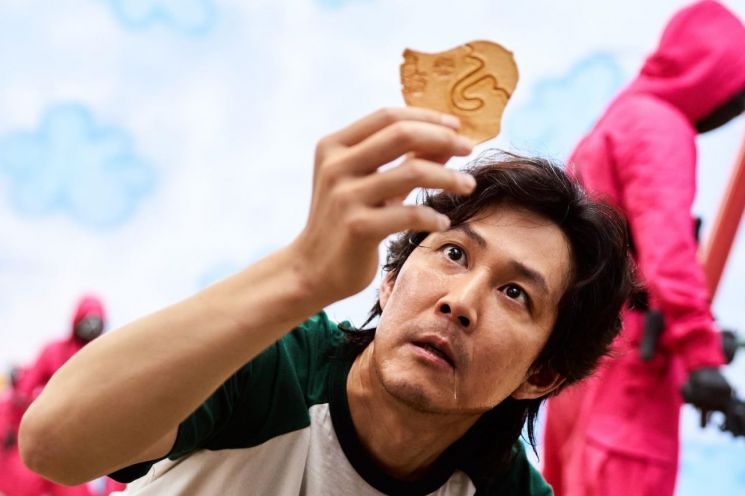
This is not the first time Korean play culture has attracted attention. In 2021, Netflix’s ‘Squid Game’ shook the global OTT market with its popularity, drawing great interest to traditional children’s games such as ‘Mugunghwa kkoci pieot seumnida’ (The Rose of Sharon Blooms), ‘Ddakji chigi’ (playing with folded paper tiles), ‘Guseul chigi’ (marbles), ‘Juldarigi’ (tug of war), and ‘Dalgona ppopgi’ (honeycomb toffee challenge), which the characters risk their lives to play. Yoo explained, “This is the result of the intersection between K-play culture and universal global codes.”
He also pointed to another future trend: the harmony between the K-production system and local artists and personnel. This is also a predicted change. In particular, recognizing the limitations of K-pop’s domestic activities centered on Korean members, this has been concretized since 2020.
The starting point was Japan, where K-pop is highly popular. JYP Entertainment introduced NiziU and MISAMO, HYBE launched ENHYPEN, and CJ ENM debuted JO1 and INI. Recently, the scope has been expanding to the English-speaking world. HYBE (CATS EYE), SM Entertainment (Dear Alice), and JYP Entertainment (VCHA) are each creating or preparing localized groups.
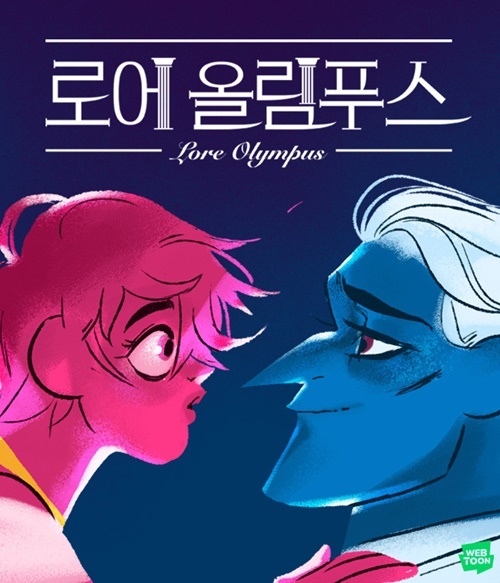
The content strategy utilizing locals also stands out in the webtoon industry. Representative examples include ‘Lore Olympus’ and ‘UnOrdinary’ (both North America), ‘Senpai wa Otokonoko’ (Japan), and ‘Pasutri Gaje’ (Indonesia). All are published on overseas platforms operated by domestic webtoon platform companies such as Naver Webtoon, Kakao Entertainment, and Ridi.
In particular, ‘Lore Olympus’, serialized on Naver Webtoon’s English service Webtoon, has swept major U.S. comic awards including the Will Eisner Award, Harvey Award, and Ringo Award. Its cumulative views exceed 1.7 billion (based on the respective language service on Naver Webtoon).
The author of this work is Rachel Smythe, a New Zealand-born American. Naver Webtoon debuted her through its overseas amateur platform ‘Canvas’. The focus is on nurturing local creators and building a new ecosystem where they attract new local readers. Popular webtoons are translated into multiple languages and serviced in Korea or third countries, expanding intellectual property (IP) through print publication and screen adaptations.
Yoo said, “This is a case of targeting local users through a sophisticated, localized strategy.” He added, “The core of ‘Hallyu 5.0’ will be content that does not need to have ‘K’ prefixed because it is not content made in Korea or by Koreans.”
© The Asia Business Daily(www.asiae.co.kr). All rights reserved.
![Clutching a Stolen Dior Bag, Saying "I Hate Being Poor but Real"... The Grotesque Con of a "Human Knockoff" [Slate]](https://cwcontent.asiae.co.kr/asiaresize/183/2026021902243444107_1771435474.jpg)

















