Expansion of China-US Treasury Yield Gap Also Puts Downward Pressure on Yuan
Despite the People's Bank of China's efforts to defend the exchange rate, the value of the yuan has fallen to its lowest level in a year.
According to Bloomberg and other sources on the 3rd, the offshore yuan value in China was traded at 7.3014 yuan per dollar, down 0.2% from the previous day at one point. The onshore yuan value also dropped 0.4% to 7.2996 yuan per dollar, marking the lowest level since November last year. Although the People's Bank of China announced a stronger-than-expected official yuan exchange rate to defend its value, investors burdened by domestic and international economic uncertainties sold off the yuan.
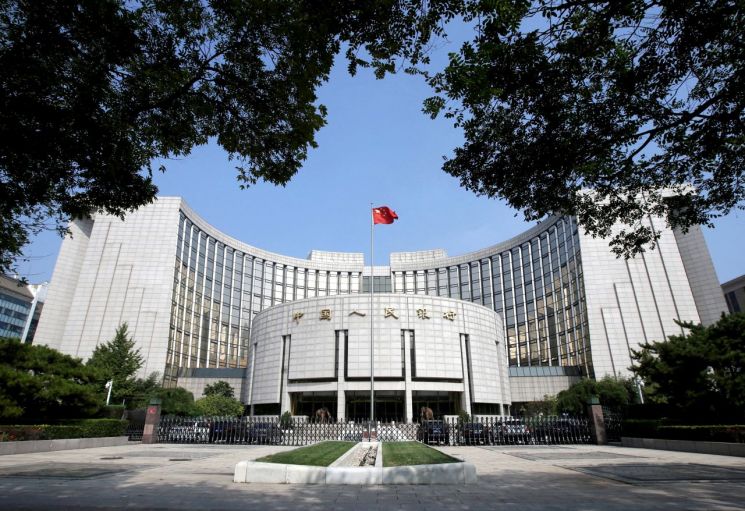
Since last month, after Donald Trump was confirmed as the President-elect of the United States, the People's Bank of China has maintained the benchmark exchange rate below 7.2 yuan per dollar. A source reported that on the day, Chinese state-owned banks increased their sales of dollars as the onshore yuan value was pushed down to 7.30 yuan.
The main culprit behind the yuan's weakness is the bomb tariffs announced by President-elect Trump. Due to concerns that tariffs will worsen the Chinese economy, the yuan has experienced the largest decline among Asian currencies since early last month. Christopher Ong, a strategist at Oversea-Chinese Banking, explained, "With China's economic recovery still uneven and further interest rate cuts expected, the prospect of additional damage from U.S. tariffs is fueling the yuan's weakness."
The widening interest rate gap with the U.S., caused by falling Chinese government bond yields, is also putting downward pressure on the yuan's value. The 10-year Chinese government bond yield fell to a record low the previous day, creating a gap of more than 2 percentage points compared to the 10-year U.S. Treasury yield.
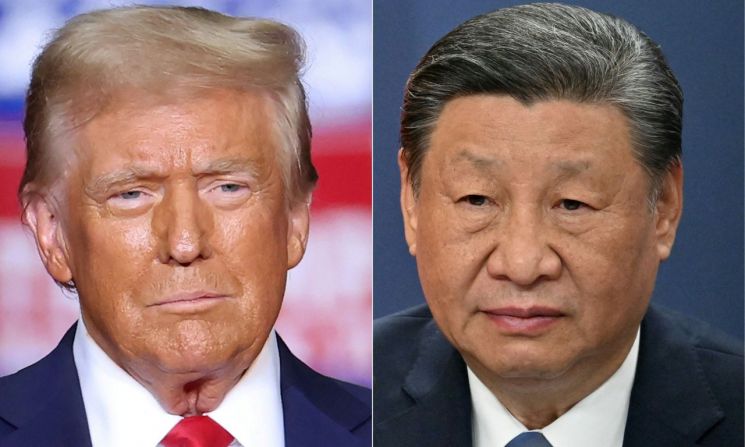
Earlier, CNBC reported that, based on forecasts from 13 investment banks and economic research firms including JP Morgan and Goldman Sachs, the offshore yuan exchange rate is expected to average 7.51 yuan by the end of next year. Jonas Goltermann, an economist at Capital Economics, stated, "All else being equal, U.S. tariffs lead to a stronger dollar," and added, "Currencies of countries with close trade ties to the U.S. will undergo significant adjustments."
Mitul Kotecha, head of Asia foreign exchange investment at Barclays, analyzed that for the yuan to fully reflect the 60% tariffs on China announced by President-elect Trump, the yuan would need to move to 8.42 yuan per dollar. However, if the yuan is devalued in retaliation to tariffs, capital outflows from China could pose another risk factor to the Chinese economy.
© The Asia Business Daily(www.asiae.co.kr). All rights reserved.


















