Record High Kimchi Exports This Year Amid K-Food Boom
Imports Also Rise, Widening Trade Deficit Expected
Cheap Chinese Kimchi Gains Ground Domestically
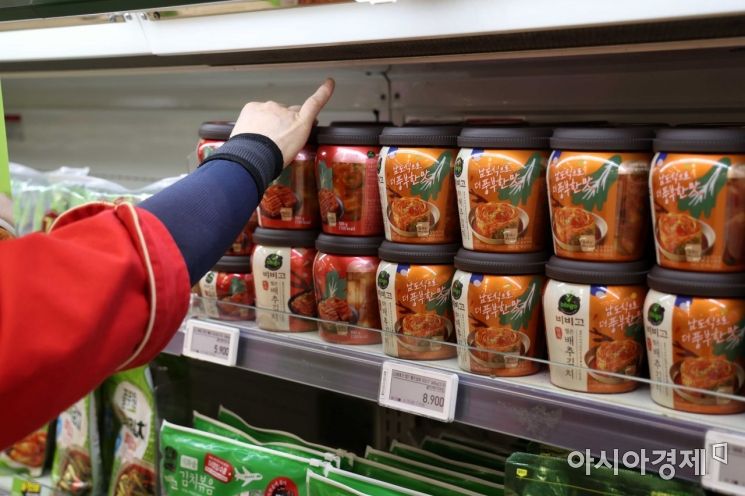
Amid the K-food craze, kimchi is increasingly recognized overseas as a health food that boosts immunity, leading to a surge in demand and an expected record high in kimchi exports this year. However, domestically, cheap Chinese-made kimchi is dominating the market, causing the trade deficit to widen.
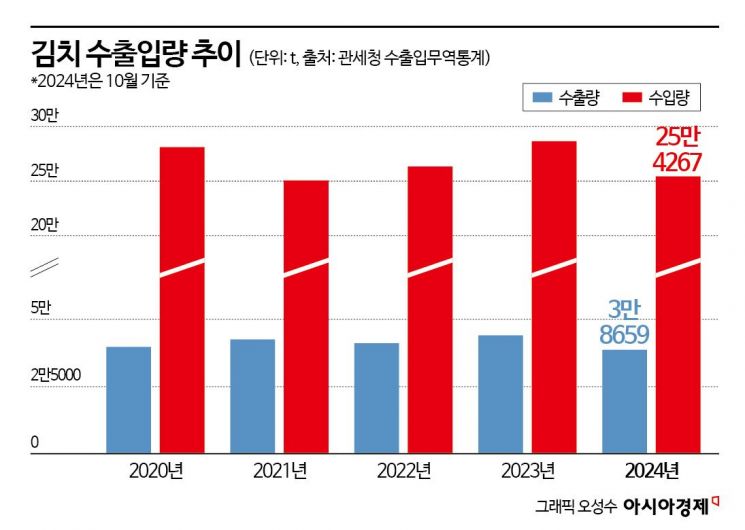
According to export-import trade statistics from the Korea Customs Service on the 5th, kimchi exports this year reached 38,659 tons as of October, a 4.2% increase compared to the same period last year (37,115 tons). This surpasses the previous record set last year. Kimchi exports, which were around 28,197 tons in 2018, have grown rapidly, increasing by more than 50% over the past five years. As export volume rises, export value is also increasing. This year, kimchi export value reached $134.66 million (approximately 190 billion KRW), up 3.1% from $130.57 million during the same period last year, continuing the growth trend.
Although the kimchi industry is growing with strong export performance, the situation is not entirely positive. Imports have increased at a faster rate than exports, deepening the trade deficit. Kimchi imports this year totaled 254,267 tons, a 7.4% increase from 236,816 tons during the same period last year, and import value rose 13.1% to $154.69 million (approximately 218 billion KRW). With the import value growth rate in double digits, the trade deficit, which was $6.16 million (about 870 million KRW) during the same period last year, has more than tripled to $20.03 million (about 2.8 billion KRW). Depending on export-import trends over the remaining two months, the deficit could widen further.
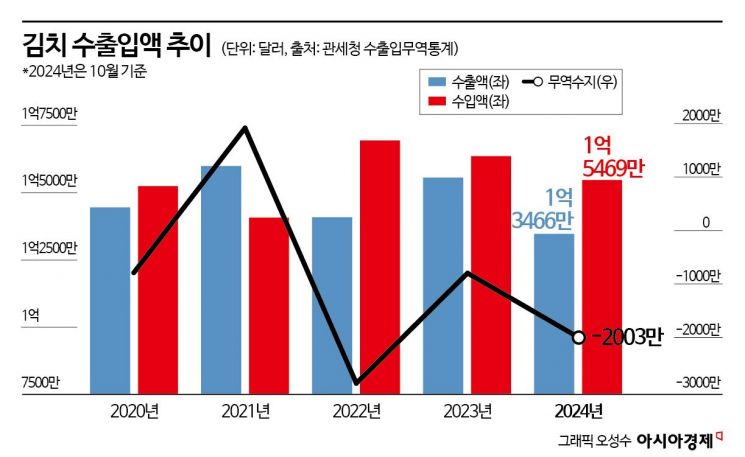
Most of the kimchi consumed in Korea, the home country of kimchi, is actually Chinese-made, and the reason for the steady demand for Chinese kimchi is ultimately price. Due to significant price differences, imported kimchi demand is increasing mainly among food service businesses with high consumption. As of October this year, the domestic retail price of kimchi was 12,193 KRW per kilogram, up 19.1% from 10,238 KRW during the same period last year. In contrast, the average export price of kimchi this year was $3,484 per ton, nearly six times higher than the average import price of $608 per ton.
Recently, due to abnormal weather and other factors causing raw material price increases, general consumer kimchi consumption has also slowed. According to the Ministry of Agriculture, Food and Rural Affairs, the nominal sales value of domestic kimchi was 28 billion KRW as of October, a 10.7% increase from 25.3 billion KRW during the same period last year. However, the real sales value adjusted for inflation was 22 billion KRW, only a 1.8% increase from 21.6 billion KRW in the previous year. During the same period, sales volume also decreased by 3.5% to 2,224 tons from 2,306 tons in the previous year.
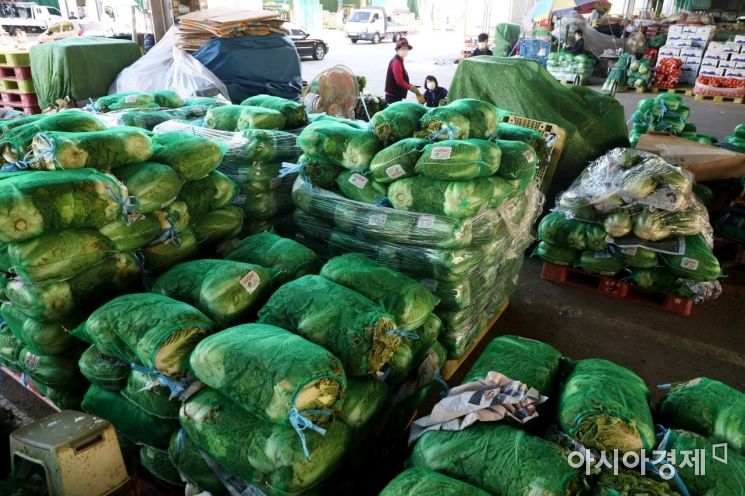
To reduce the kimchi trade deficit, the prices of agricultural products, which are the raw materials for kimchi, need to stabilize. High volatility in agricultural product prices significantly affects the sales prices and operating costs of domestic kimchi manufacturers. The shipment value of kimchi manufacturers with 10 or more employees increased at an average annual rate of 6.3%, from 1.1751 trillion KRW in 2016 to 1.6917 trillion KRW in 2022, but total costs also rose from 1.0539 trillion KRW to 1.685 trillion KRW during the same period, an 8.1% increase, exceeding the growth rate of shipment value. As costs rose faster than shipment value, operating profit margins fell from 10.3% in 2016 to 7.4% in 2021.
However, the recent domestic and international conditions surrounding the kimchi industry are developing favorably to drive market expansion centered on commercial kimchi products. Park Ki-hwan, a researcher at the Korea Rural Economic Institute, said, "It has been more than 10 years since the kimjang culture was registered as a UNESCO Intangible Cultural Heritage of Humanity in 2013. Domestically, Kimchi Day was established as a legal holiday in 2020, and countries such as the United States, Brazil, Argentina, and the United Kingdom have also established and proclaimed Kimchi Day, strengthening the status of the kimchi industry both domestically and internationally." He added, "The market size of the kimchi industry is expected to continue growing in the future."
© The Asia Business Daily(www.asiae.co.kr). All rights reserved.
![Clutching a Stolen Dior Bag, Saying "I Hate Being Poor but Real"... The Grotesque Con of a "Human Knockoff" [Slate]](https://cwcontent.asiae.co.kr/asiaresize/183/2026021902243444107_1771435474.jpg)

















