Museom Village Bannam Bakssi and Seonseong Kimssi Representative Historic Houses Designated Side by Side
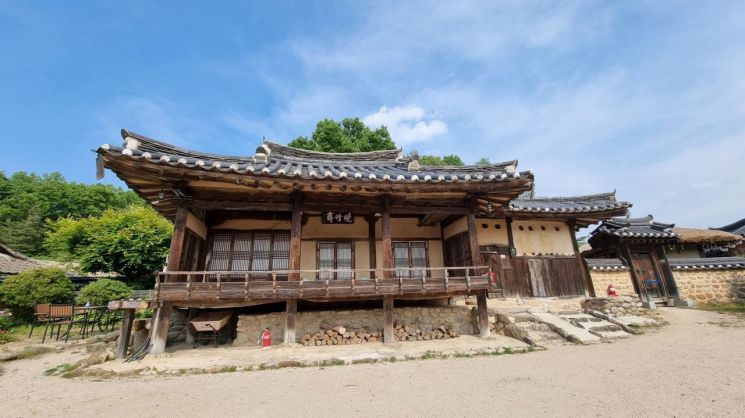
On the 3rd, Yeongju City in Gyeongbuk announced that the representative traditional houses of Museom Village (a National Folk Cultural Heritage site), ‘Yeongju Manjukjae Traditional House and Artifacts Collection’ and ‘Yeongju Haewoodang Traditional House and Artifacts Collection,’ have been designated as National Folk Cultural Heritage.
The designated national heritage includes ▲ Manjukjae Traditional House (one building) and 10 artifacts from 4 items such as the anti-Japanese militia proclamation collection ▲ Haewoodang Traditional House (two buildings) and 8 artifacts from 5 items including the Haewoodang nameplate.
Manjukjae (晩竹齋) is a traditional house built in 1666 (the 7th year of King Hyeonjong) by Park Su (朴?, 1641?1729) of the Bannam Park clan, who settled in ‘Yeongju Museom Village’ after the Byeongjahoran invasion. Over 360 years and 13 generations, the eldest sons have preserved the site and house intact, maintaining the layout, floor plan, and surrounding environment with almost no alterations, which has been recognized for its value.
Along with this, artifacts such as a marriage document, household register, Seungyeongdo (a painting of scenic spots), and the anti-Japanese militia proclamation collection were also designated.
Haewoodang (海愚堂) is known to have been built in the early 1800s by Kim Younggak (金永珏, 1809?1876), the grandson of Kim Dae (金臺, 1732?1809), the founding ancestor of the Seonseong Kim clan in Museom Village. Later, Kim Nakpung (金樂?, 1825?1900), Haewoodang’s Kim Younggak’s son, renovated the traditional house between 1877 and 1879. Since then, the house has not undergone dismantling or repair work, preserving its original form well, which has been recognized for its value.
Additionally, related artifacts such as the Haewoodang and Daeunjeong nameplates, past exam answer sheets, a gat box, and Seongju jars were collectively designated.
This designation marks the elevation of the site to National Folk Cultural Heritage after more than 30 years since it was designated as a Gyeongsangbuk-do Folk Cultural Heritage in 1990. ‘Yeongju Museom Village’ now holds a total of seven designated heritages, including two National Folk Cultural Heritages, two Gyeongsangbuk-do Folk Cultural Heritages, and five cultural heritage materials, establishing itself as a representative folk village of Korea.
Park Nam-seo, Mayor of Yeongju City, said, “Since Museom Village was designated as a National Folk Cultural Heritage in 2013, it is a great pride that the representative traditional houses of the Bannam Park and Seonseong Kim clans have been elevated to national heritage status side by side after more than 10 years. The city is doing its best to preserve and utilize Museom Village, including the ongoing ‘Museom Village Comprehensive Maintenance Plan.’ We will continue to preserve and utilize these precious traditional house heritages in the future.”
© The Asia Business Daily(www.asiae.co.kr). All rights reserved.
![Clutching a Stolen Dior Bag, Saying "I Hate Being Poor but Real"... The Grotesque Con of a "Human Knockoff" [Slate]](https://cwcontent.asiae.co.kr/asiaresize/183/2026021902243444107_1771435474.jpg)















