National Assembly and Government Must Actively Promote Korea's Investment Achievements in the U.S.
Government Support Needed to Strengthen Battery Competitiveness
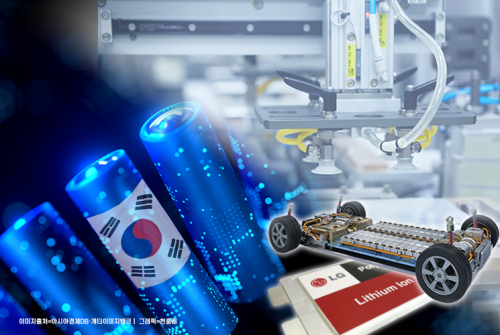
Amid growing uncertainty in the Korean battery industry ahead of the launch of the second term of the Donald Trump administration, the National Assembly and the government have suggested that Korea should actively promote its investment achievements in the U.S. to the new American administration at the national level. There were also calls for more bold government support to strengthen the competitiveness of the domestic battery industry.
The National Assembly Secondary Battery Forum announced on the afternoon of the 3rd that it would hold a discussion session at the National Assembly Members' Office Building, hosted by the Korea Battery Industry Association, on the impact of the new U.S. administration's launch on the battery industry and countermeasures.
According to the materials distributed in advance, participants at the discussion agreed that it is important for the public and private sectors and the National Assembly to work as one team to actively promote the role of K-battery as ▲the largest investor in U.S. batteries ▲aligned with the Trump administration’s manufacturing renaissance ▲a key asset in U.S.-China strategic competition ▲a core partner in advanced technology security such as U.S. automobiles and space ▲and a contributor to regional economies and job creation, in order to secure the Trump administration’s support for the Korea-U.S. battery alliance.
Representative Park Sung-min (People Power Party) emphasized in his opening remarks, "Secondary batteries are not just a simple technological advancement but an essential task for Korea to leap forward as a future industrial powerhouse," adding, "We will seek new strategies together with industry, government, and academia." Representative Shin Young-dae (Democratic Party) said, "Discussions such as the abolition of electric vehicle subsidies under the Inflation Reduction Act (IRA) and advanced manufacturing production tax credits following President Trump’s election require new response strategies from our companies," and added, "We will spare no policy support including expanding research and development (R&D), strengthening global cooperation, and tax benefits." Representative Lee Sang-hwi, research director (People Power Party), mentioned, "The launch of the new U.S. administration will bring both new challenges and opportunities to our battery industry," and stressed, "A strategy to secure a stable position amid changes in the global supply chain is important."
Professor Kang Yong-mook of Korea University, who presented at the session, stated that the competitiveness of Chinese battery companies such as CATL and BYD is the result of strong policy support from the Chinese government, and emphasized that to overcome the current gap, the Korean government’s bold support and a strong platform based on open innovation by domestic battery cell companies are required, enabling collaboration with top domestic secondary battery scientists similar to the U.S. 'Battery500' initiative.
Attorney Park Jun-mo of Yulchon LLC forecasted a low possibility of IRA repeal, considering that IRA-related investments and jobs are concentrated in Republican-leaning areas and that the Republicans have not secured enough seats to push for IRA repeal. However, he warned that preparations should be made for the possibility of the presidential executive order strictly applying electric vehicle purchase subsidy (30D) requirements to reduce the range of eligible vehicles or adding requirements for the advanced manufacturing production tax credit (AMPC). He emphasized the need for National Assembly-level diplomacy toward the U.S., such as sending a letter signed by the Speaker of the National Assembly to the U.S. Congress to maintain IRA benefits.
Researcher Park Jae-bum of POSCO Research Institute mentioned that to resolve the electric vehicle chasm and growing uncertainty in the U.S., it is urgent to secure a super-gap competitiveness resilient to geopolitical risks through tailored policies such as expanding policy financial support and easing support conditions, supporting the activation of the battery energy storage system (ESS) industry, increasing battery R&D budgets, direct refunds and third-party transfer systems for national strategic technology investment tax credits, and production tax credits for companies contributing to supply chain stabilization.
In the subsequent discussion, Park Jae-jung, Director of the Battery and Electric Electronics Division at the Ministry of Trade, Industry and Energy, emphasized, "We are closely communicating with companies to prepare for various scenarios following changes in the new U.S. administration’s policy direction, and we will strive to fundamentally strengthen the competitiveness of the Korean battery industry through support for securing future super-gap technologies in the mid to long term."
Chwa Jong-seo, Head of the Korea Battery Industry Association, said, "Due to the universal tariffs announced by President Trump, there are concerns about huge additional costs for raw material imports by our companies producing batteries in the U.S.," and stressed the need for close consultations with the U.S. government to receive exemptions, considering the positive impact of our battery industry on the U.S. economy, such as job creation.
People Power Party Floor Leader Chu Kyung-ho stated in his congratulatory remarks that the launch of the Trump administration is an unavoidable variable requiring nationwide management, and pledged to spare no legislative and policy support using the valuable opinions derived from the discussion as a milestone. Lee Cheol-gyu, Chair of the Industry, Trade, and Small and Medium Venture Business Committee, said he would do his best to provide institutional support so that our secondary battery industry can create new momentum for a leap forward amid global competition.
Minister Ahn Duk-geun of the Ministry of Trade, Industry and Energy said, "One common opinion I heard from industry officials is that the launch of the new U.S. administration is both a crisis and an opportunity for our companies that have entered the U.S. ahead of other countries, producing batteries and creating jobs," and pledged to actively listen to and communicate with the industry’s voices.
Park Tae-sung, Executive Vice President of the Association, said, "It is necessary to actively promote the role of K-battery in leading the manufacturing renaissance in the Rust Belt and Sun Belt regions, revitalizing regional economies, and creating jobs," and urged for legislative and policy support at the National Assembly and government levels for the measures discussed at today’s forum to ensure that our battery industry can maintain fundamental competitiveness regardless of any external environment.
© The Asia Business Daily(www.asiae.co.kr). All rights reserved.
![Clutching a Stolen Dior Bag, Saying "I Hate Being Poor but Real"... The Grotesque Con of a "Human Knockoff" [Slate]](https://cwcontent.asiae.co.kr/asiaresize/183/2026021902243444107_1771435474.jpg)















