On the 2nd, the International Financial Center, in commemoration of the 10th anniversary of the opening of the KRW-CNY direct trading market, jointly held the "KRW-CNY Direct Trading Market and Challenges for the Development of the Korea-China Financial Market" conference with the Bank of Communications Seoul Branch at The Plaza Hotel in Jung-gu, Seoul.
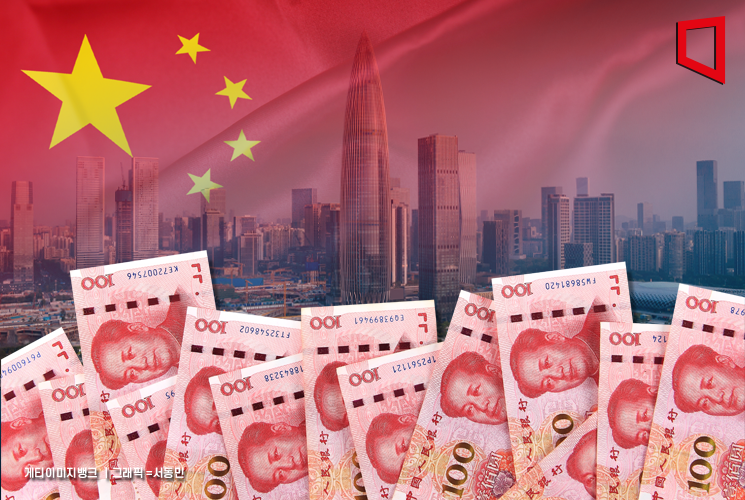
At the conference, prospects and activation plans for yuan transactions were discussed. Presenters predicted that with the Chinese government's expansion of external cooperation and the internationalization of the yuan, the use of the yuan in overseas direct investment and bond markets will gradually increase. From January to September this year, the yuan's share in China's total trade settlements reached a record high of 27%, and the number of countries participating in the yuan international settlement system increased from 6 countries in June 2015 to 117 countries this year. Although the re-election of former President Donald Trump recently poses a burden on the Chinese economy, expectations are rising that China will respond by expanding yuan-denominated foreign direct investment and trade settlements with Asia, the Middle East, and other regions.
The scale of yuan settlements in South Korea has increased by about 30% annually over the past 10 years. The share of yuan settlements in trade with China surpassed 10% for the first time this year. It is expected that the utilization of the yuan will further increase when the Korea-China Financial Services Free Trade Agreement (FTA) is concluded, and the scale of yuan settlements is projected to approximately double by 2030 compared to this year.
On the day, the Bank of Communications forecasted that China's economic growth rate next year will be maintained between 4.5% and 5%, supported by government stimulus and domestic demand recovery, which will lead to yuan stability. Although private sentiment is somewhat sluggish, economic stimulus measures such as expanded issuance of local special bonds and interest rate cuts are expected to drive demand recovery. The rapid increase in exports of advanced equipment and the recovery of the economy focused on high-quality consumption such as digital and services also contribute to yuan stability. However, in a situation where China's net foreign currency inflow is decreasing, real estate risks and the risk of high tariffs imposed by the U.S. under Trump act as downward pressure on the yuan exchange rate. Some have also mentioned the possibility that with the expanded use of the yuan, the Korean financial market may respond more sensitively to changes in the Chinese economy and policies compared to the past.
Meanwhile, major domestic and international economic institutions such as the Ministry of Economy and Finance, the Bank of Korea, the International Financial Center, the People's Bank of China, and the Chinese Academy of Social Sciences attended the conference. Presentation topics included a 10-year review of the KRW-CNY direct trading market (Kim Shin-young, Bank of Korea), a review and prospects of yuan financial transactions between Korea and China (Lee Chi-hoon, International Financial Center), the Chinese yuan bond investment market (Qing Lian, Chinese Academy of Social Sciences), and China's economic outlook and yuan internationalization (Tang Weixin, Bank of Communications). The panelists included the four presenters and Jung Hwa-young, a research fellow at the Korea Capital Market Institute, with Professor Koo Ki-bo from Soongsil University serving as the moderator.
© The Asia Business Daily(www.asiae.co.kr). All rights reserved.
![Clutching a Stolen Dior Bag, Saying "I Hate Being Poor but Real"... The Grotesque Con of a "Human Knockoff" [Slate]](https://cwcontent.asiae.co.kr/asiaresize/183/2026021902243444107_1771435474.jpg)















