A court ruling has held a secondary treatment hospital jointly liable for damages amounting to hundreds of millions of won along with the dentist who performed the surgery at a private dental clinic, on the grounds that proper follow-up emergency hemostasis measures were not taken for a patient who visited the emergency room due to massive bleeding after undergoing double jaw surgery.
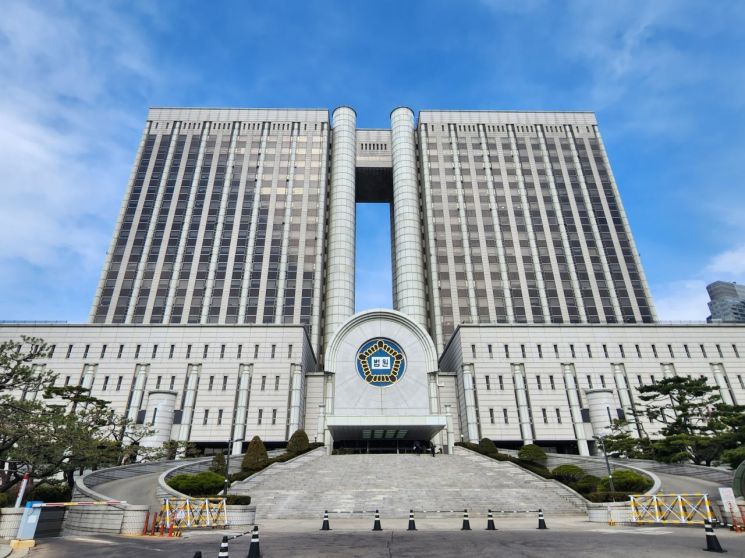
According to the legal community on the 2nd, the Civil Division 15 of the Seoul Central District Court (Chief Judge Choi Gyu-yeon) ruled on October 16 that defendants B (a dentist) and Ewha Hakdang School Corporation must jointly pay plaintiff A (28, male) 289.59 million won plus interest in a damages claim lawsuit filed by A against dentist B and Ewha Hakdang.
The court recognized property damages totaling 269.59 million won, including 80.83 million won for past medical expenses, 81.56 million won for future medical expenses, and 37.07 million won for nursing care costs incurred during treatment, as well as 20 million won in consolation damages for B’s breach of duty to explain. Including interest, B and Ewha Hakdang must compensate about 400 million won. All parties?plaintiff A, defendant B, and defendant Ewha Hakdang?withdrawn their appeals, confirming the first-instance ruling on the 12th of last month.
A underwent double jaw surgery at a dental clinic in Gangnam operated by B on February 14, 2017, when he was 21 years old. The surgery included jaw correction, cheekbone reduction, and liposuction under the chin. The operation lasted about 5 hours and 40 minutes, from around 10:10 a.m. to 3:50 p.m.
During observation in the recovery room, A complained of slight chills and pain at the surgical site but was discharged on February 17, 2017, without any particular complaints.
However, at around 1 a.m. on February 19, 2017, two days after discharge, A suddenly experienced severe oral bleeding and was transported by a 119 ambulance to the emergency room of Ewha Mokdong Hospital.
The emergency room medical staff administered a blood transfusion and fluids to A, whose blood pressure had dropped and who was in a drowsy state, and performed CT scans of the brain and neck areas.
The CT scan conducted around 3 a.m. revealed a hematoma around the left mandible (lower jawbone), and a diagnosis indicated the possibility of a pseudoaneurysm in the external carotid artery branch caused by surgical trauma, necessitating angiography confirmation. Angiography is a procedure where a contrast agent is injected into blood vessels to locate ruptured vessels via X-ray and block them with embolic materials. At that time, A had bleeding in both maxillary sinuses, a large acute hematoma in the left jaw area, and swelling in both cheeks and the left mandible.
The dental (oral and maxillofacial surgery) team, requested for collaboration by the emergency room staff, performed emergency general anesthesia on A and conducted hemostasis surgery on the bleeding area from 5:20 a.m. to 6:40 a.m. on February 19, 2017.
Immediately after surgery, the dental team requested the radiology department to perform angiography of the maxillary artery to determine the presence of a pseudoaneurysm.
Between 5:20 a.m. and 6:40 a.m. on that day, during the hemostasis surgery behind the left mandible, A’s hemoglobin level dropped from 8.4 to 5.5. After surgery, A went into shock and began convulsing violently enough to shake the bed.
A underwent coil embolization and angiography between 4 p.m. and 5:19 p.m. the following day, February 20, 2017.
At around 7 a.m. on February 19, 2017, A was transferred to the dental intensive care unit. However, starting at about 6:30 p.m. that evening, A began having seizures. On February 20, 2017, at 3:43 p.m., A was moved to the angiography room to undergo angiography and embolization.
The medical staff performed angiography and coil embolization to block the pseudoaneurysm of the internal maxillary artery, a branch of the external carotid artery, from 4 p.m. to 5:19 p.m. on February 20, 2017.
Subsequently, A was diagnosed with epilepsy accompanied by orthostatic intolerance seizures, a pseudoaneurysm of the left maxillary artery, anoxic brain injury, and Lance-Adams syndrome without intractable epilepsy (a condition where transient cardiac arrest or severe hypotension causes cerebral ischemia followed by recovery with myoclonus mainly in the limbs). Myoclonus refers to sudden, rhythmless, startling movements occurring within 10 to 50 milliseconds, less than one second.
In September 2019, A filed a lawsuit seeking 2 billion won in damages against B, who originally performed the double jaw surgery, and Ewha Hospital. The lawsuit involved multiple expert evaluations of A’s medical records and physical examinations over several years, with the trial date postponed three times. Finally, after 5 years and 1 month since filing, a partial victory for the plaintiff was handed down on October 16 this year.
The court acknowledged that B was negligent during the double jaw surgery and recognized a causal relationship between that negligence and the pseudoaneurysm that occurred to A.
The court stated, "It can be presumed that the pseudoaneurysm that occurred to the plaintiff was caused by defendant B’s negligence in excessively manipulating surgical instruments during the double jaw surgery, resulting in damage to the internal maxillary artery."
This judgment was based on expert evaluations of medical records by various doctors and organizations. Regarding the nearly six-hour surgery and approximately 1000cc blood loss, the court noted, "Although the surgery duration was not abnormal enough to be considered unusual, it was longer than usual, and the blood loss was greater than typical cases. These circumstances indirectly support the negligence during surgery."
However, the court rejected A’s claims that B failed to fulfill the duty of follow-up observation and violated the duty to provide guidance on care methods.
Meanwhile, the court did not find negligence on the part of Ewha Mokdong Hospital medical staff for delaying angiography and other procedures from the time A arrived at the emergency room until hemostasis surgery was performed.
The court explained, "The defendant hospital’s medical staff transferred the plaintiff, who arrived at the emergency room at 1:39 a.m. on February 19, 2017, to the operating room at 4:40 a.m. the same day and performed emergency hemostasis surgery. It is difficult to consider it negligence that angiography and embolization were not performed immediately upon arrival and instead hemostasis surgery was done."
Although A’s internal maxillary artery was damaged during the double jaw surgery causing a pseudoaneurysm that required angiography and embolization, and the hemostasis surgery performed by Ewha Mokdong Hospital medical staff was not completely effective, the court reasoned that:
- Based solely on the initial CT images, the dental medical staff, who were not radiology specialists, could not accurately identify the bleeding vessel or determine that surgical intervention was difficult, so this cannot be considered negligence.
- The occurrence of a pseudoaneurysm in the internal maxillary artery after double jaw surgery is extremely rare, so it is difficult to say that suspicion of such a pseudoaneurysm should have been immediate solely because A had undergone double jaw surgery.
Therefore, the court ruled, "Even if it was later confirmed that angiography and embolization would have been more appropriate than hemostasis surgery, performing hemostasis surgery in this case cannot be considered negligence."
On the other hand, the court recognized negligence for the delay in performing angiography and related procedures after the hemostasis surgery.
The court stated, "After completing the hemostasis surgery at 6:40 a.m. on February 19, 2017, the defendant hospital’s medical staff managed the plaintiff in the intensive care unit and performed embolization at 4 p.m. on February 20, 2017. Since embolization was done about 33 hours after hemostasis surgery, it is reasonable to view this delay as negligence in suspecting the occurrence of a pseudoaneurysm due to internal maxillary artery injury and delaying prompt angiography and embolization."
Considering that A had already experienced massive bleeding upon arrival at the emergency room, had two episodes of drowsiness while there, and that his hemoglobin level remained low despite transfusions, the court held that even if hemostasis surgery had somewhat controlled bleeding, angiography should have been promptly performed to confirm and occlude the pseudoaneurysm.
The court also cited the following reasons:
- Although A first visited the emergency room on Sunday, February 19, 2017, when radiology staff capable of performing angiography were unavailable, there was no evidence that the medical staff made any effort to locate radiology personnel.
- Even if immediate action was difficult on Sunday, angiography could have been arranged early the next morning, but the initial CT image was not read by radiology staff until 10:42 a.m. on February 20.
- Despite the CT reading suggesting multiple pseudoaneurysms and the need for angiography, embolization was not performed until about 5 hours later, around 4 p.m.
The court concluded, "It appears that the absence of radiology staff was not the reason for not performing angiography, but rather that the medical staff failed to suspect that the symptoms were due to massive bleeding from a ruptured pseudoaneurysm or misjudged the urgency, resulting in failure to perform angiography immediately."
Notably, even though A continued to have seizures and oral bleeding after hemostasis surgery, which were reported to doctors, the nursing records only mention administration of Ativan (a sedative), suggesting that the medical staff took no measures to block the ruptured pseudoaneurysm.
However, the court rejected A’s claim that Ewha Mokdong Hospital medical staff were negligent for insufficient blood transfusions.
The court stated, "Defendant B is liable for damages caused by breach of contract or tort for causing the pseudoaneurysm by damaging the internal maxillary artery through excessive manipulation of surgical instruments during the double jaw surgery, resulting in A’s anoxic brain injury and other harm."
It also stated, "Defendant corporation is liable for damages as the party to the medical contract or as an employer for the negligence of the hospital medical staff in delaying necessary measures such as embolization for the ruptured pseudoaneurysm, which caused A’s anoxic brain injury and other harm."
Furthermore, "Since it is reasonable to view that A’s damages were caused by the concurrent negligence of defendant B and the hospital medical staff, both defendants are jointly liable for compensation."
The court also recognized B’s liability for mental damages (consolation damages) due to breach of duty to explain.
The court explained, "Damage to the internal maxillary artery causing a pseudoaneurysm during double jaw surgery is known as one of the serious complications that can occur in standard procedures. Therefore, even if specific and technical terms like ‘internal maxillary artery injury’ or ‘pseudoaneurysm occurrence’ were not explained, at least the risk of delayed massive bleeding due to arterial injury during the surgery should have been explained despite its rarity."
It continued, "Based on the evidence submitted, it is insufficient to conclude that defendant B explained to the plaintiff the risk of pseudoaneurysm and delayed massive bleeding during the double jaw surgery, and there is no other evidence to support such explanation."
Considering A’s pre-existing psychiatric issues and drinking habits, the court limited the negligence ratio of B and Ewha Hakdang to 70% and assessed mental damages at 20 million won.
Shin Hyun-ho, lead attorney at Law Office Haewool representing A in this lawsuit, explained the significance of the ruling: "It is notable that the dentist was held liable for breach of duty to explain the bleeding risk during cosmetic double jaw surgery and for negligence regarding delayed bleeding after surgery; that the university hospital emergency room was found negligent in its division of duties (since bleeding from the maxillary artery should have been treated by ENT or radiology specialists, but emergency treatment was done by dental staff, delaying embolization by over two days and causing anoxic brain injury); and that the dentist and university hospital were jointly liable for the tort."
© The Asia Business Daily(www.asiae.co.kr). All rights reserved.
![Clutching a Stolen Dior Bag, Saying "I Hate Being Poor but Real"... The Grotesque Con of a "Human Knockoff" [Slate]](https://cwcontent.asiae.co.kr/asiaresize/183/2026021902243444107_1771435474.jpg)















