Sullivan "Biden Won't Fire Trump-Appointed FBI Director"
Indirect Criticism Within Republican Party
WP "Republicans Must Block Senate Confirmation"... NYT "Senate Independence on Trial"
President-elect Donald Trump of the United States has decided to break precedent after his inauguration in January next year by replacing the Federal Bureau of Investigation (FBI) Director with his close aide, former Secretary of Defense Chief of Staff Kashy Patel, sparking criticism not only within the White House but also inside the Republican Party. Local U.S. media predict that this controversy will be similar to the case of Matt Gaetz, the first nominee for Attorney General in Trump’s second administration who was rejected, and voices are growing that the Republican Party should put a stop to the attempt to replace the FBI Director. The U.S. daily New York Times (NYT) reported, "The Republican Party, which will be the majority in January next year, may find itself in an unstable and precarious position where it must choose whether to stand up for Congress or succumb to a president who ignores government norms," adding, "Trump’s second term will be a significant test of the Senate’s independence."
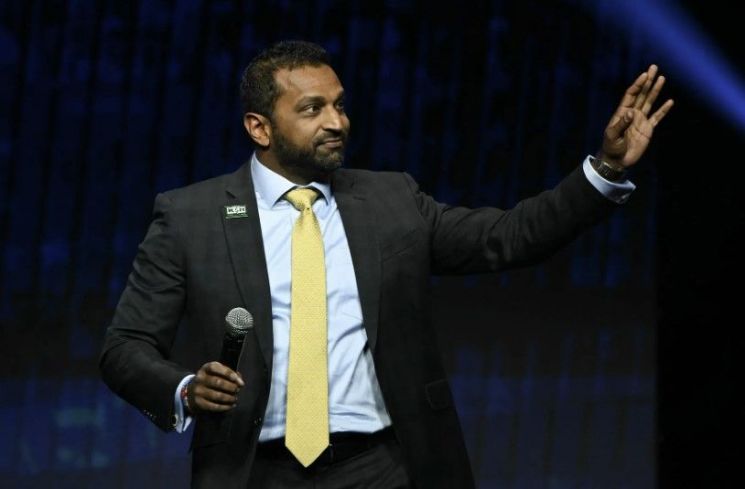 Donald Trump, the President-elect of the United States, nominated his close aide Kathy Patel, former Chief of Staff to the Secretary of Defense, as the Director of the Federal Bureau of Investigation (FBI).
On the 1st (local time), Jake Sullivan, White House National Security Advisor, appeared on NBC’s "Meet the Press" and said, "The FBI must remain an independent agency free from politics."
He explained, "Christopher Wray, the current FBI Director, was actually appointed by Donald Trump," and "Joe Biden did not fire him." He continued, "He (Biden) expected Wray to fulfill his responsibilities as FBI Director and allowed him to serve his full term during the Biden administration," emphasizing, "This is how we approach our work, and we want the FBI to remain an independent agency separate from politics."
This was an indirect criticism of Trump’s announcement the previous day that he would appoint Patel, the former Chief of Staff whom he appointed in 2017, as Wray’s successor. The FBI Director’s term is 10 years, and Wray’s term runs until August 2027. After taking office, Director Wray faced criticism from then-President Trump during his first term, including congressional testimony on Russia’s interference in the election. Patel, whom Trump broke precedent to nominate as FBI Director this time, is a close loyalist who shares Trump’s views, having claimed election fraud in 2020 and identified the FBI as the core of the "deep state" (an unelected power group).
Within the Republican Party, voices defending current Director Wray have emerged regarding Trump’s attempt to replace the FBI Director. Mike Rounds (Republican, South Dakota), a U.S. Senator, appeared on ABC’s "This Week" and said, "It’s not surprising that Trump chooses people very loyal to him," adding, "Trump chose a very good person in Wray." He noted that the FBI Director’s term is "usually 10 years," and said, "We will watch how the process unfolds and whether he actually pushes the nomination forward."
Local media expect Patel’s nomination to become controversial, similar to the case of Matt Gaetz, who voluntarily resigned amid allegations of soliciting sex from a minor. Concerns are also pouring in that the independence of the FBI could be undermined. Since the FBI Director requires Senate confirmation, attention is focused on whether Republican senators will block Trump’s attempt to replace the FBI Director.
The U.S. daily Washington Post (WP) reported, "It is important to understand that it is never a common practice but rather a dangerous deviation for a new president to choose the FBI Director according to their preference," adding, "Republican senators who opposed the Gaetz Attorney General nomination and fulfilled their constitutional duties must now stand up to Trump again, no matter how unpleasant or politically risky it may be."
Concerns have also been raised that Trump’s reckless personnel appointments, stacking loyalists, pose a serious test to the independence of the U.S. Congress. The NYT warned, "As Trump tries to bypass the Senate’s traditional confirmation process to appoint his loyalists to the cabinet, this is likely to become a clear and immediate point of tension between the Republican Party and Trump," and "If Trump appoints cabinet members during recess or allows the erosion of Senate authority by not thoroughly conducting background checks, it will cause permanent damage to the Senate and undermine the constitutional system."
Meanwhile, Trump has nominated his in-laws to key positions following the U.S. Ambassador to France. After nominating Charles Kushner, father-in-law of his eldest daughter Ivanka Trump, as the U.S. Ambassador to France, he announced the appointment of Massad Boulos, a Lebanese-American and father-in-law of his second daughter Tiffany Trump, as senior advisor on Arab and Middle Eastern affairs. Given that Trump is placing his in-laws in major public offices, it seems difficult to avoid conflicts of interest and nepotism controversies. In particular, Kushner, nominated as U.S. Ambassador to France, has a criminal record, having served a prison sentence in 2004 for tax evasion and witness tampering. He was pardoned in December 2020 during the final days of Trump’s first administration.
© The Asia Business Daily(www.asiae.co.kr). All rights reserved.
![Clutching a Stolen Dior Bag, Saying "I Hate Being Poor but Real"... The Grotesque Con of a "Human Knockoff" [Slate]](https://cwcontent.asiae.co.kr/asiaresize/183/2026021902243444107_1771435474.jpg)















