Applied to 226 City, County, and District Offices Nationwide from Next Year
Immediate Automatic Classification Upon Input Expected to Save 11,300 Hours Annually
The "Automatic Evaluation Sheet for Public Hygiene Businesses" developed by Paju City, Gyeonggi Province (Mayor Kim Kyung-il) is scheduled to be applied to the tasks of 226 cities, counties, and districts nationwide starting next year.
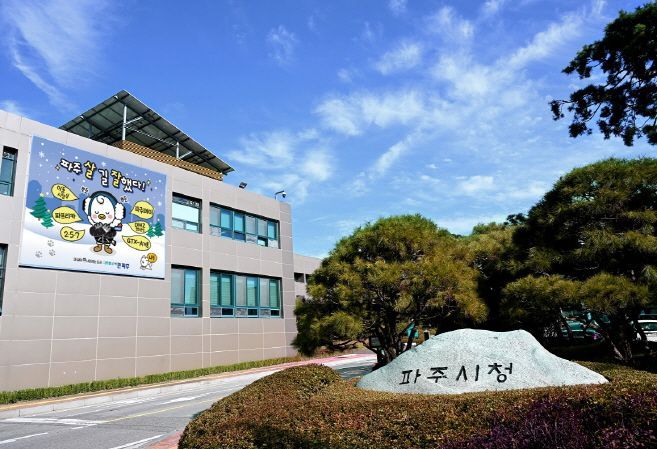
According to Paju City on the 28th, under Article 13 of the Public Hygiene Control Act, public hygiene businesses undergo evaluations of their public hygiene services every two years, alternating by business type. The evaluation items consist of about 30 to 40 categories depending on the business type, including disinfection and cleanliness status. Based on the evaluation results, businesses are classified as top-tier (green grade), excellent (yellow grade), or general (white grade).
Until now, Paju City has manually evaluated over 2,000 businesses, checking for disqualifications and calculating scores by hand. Due to the vast amount of work, processing took up to a year, and overtime work among nationwide staff was common as deadlines approached.
In response, Paju City created the "Automatic Evaluation Sheet for Public Hygiene Businesses," which automatically classifies grades and the number of businesses by type upon entering scores. This was distributed to local governments nationwide on August 19, and 18 institutions responded that it helped perform tasks more efficiently.
Subsequently, Paju City submitted a proposal to the government requesting the incorporation of the automatic evaluation sheet, and the proposal was adopted on the 22nd. With this adoption, the revised evaluation calculation sheet will be applied to the tasks of 226 cities, counties, and districts nationwide starting next year.
While manual processing took at least 50 hours, the automatic calculation sheet classifies evaluations immediately upon score entry, expected to reduce over 11,300 hours annually.
Jang Yeon-hee, head of the Hygiene Division, said, "Through the automation of the public hygiene business evaluation calculation sheet, the workload of responsible staff will be reduced, and it is also expected to save on overtime budget."
© The Asia Business Daily(www.asiae.co.kr). All rights reserved.
![Clutching a Stolen Dior Bag, Saying "I Hate Being Poor but Real"... The Grotesque Con of a "Human Knockoff" [Slate]](https://cwcontent.asiae.co.kr/asiaresize/183/2026021902243444107_1771435474.jpg)















