Investigation of Trees in Scenic Forests by the Cultural Heritage Administration
Economic Value 23.8 Billion KRW, Public Value 54.1 Billion KRW
"Absorbs CO2 Emitted by 2,272 People Over One Year"
A study has revealed that the economic value of the landscape forest (景觀林; a forest cultivated to enhance natural scenery for people’s enjoyment) of the Joseon Royal Tombs amounts to 77.9 billion KRW.
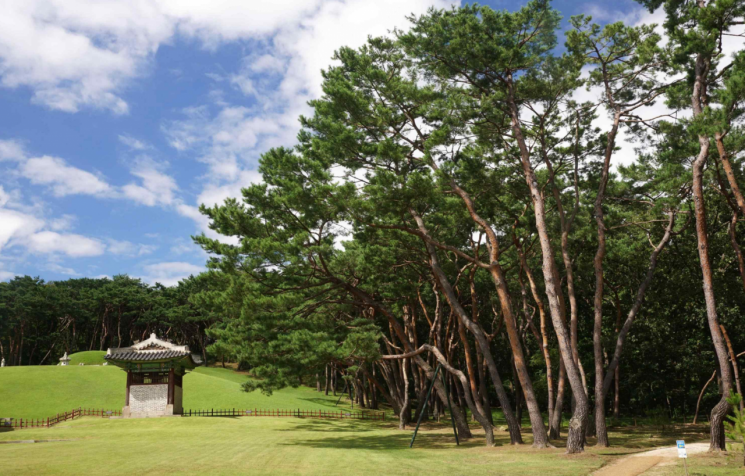
The Cultural Heritage Administration’s Bureau of Royal Palaces and Tombs announced on the 28th that it reached this conclusion after surveying the trees within the landscape forest from 2021 to recently.
The study involved investigating the types and sizes of growing trees and calculating their respective volumes. The total average tree volume (average standing timber volume) across twenty-eight Joseon Royal Tomb sites was 258㎥/ha, which is 1.7 times the Seoul city average of 146.1㎥/ha.
Based on this, the bureau estimated the amount of carbon stored and absorbed. The economic value of the carbon stored by the trees at the Joseon Royal Tombs, converted into carbon credit trading value, was approximately 23.8 billion KRW.
Carbon credits are rights to emit greenhouse gases that cause or exacerbate global warming. Companies allocated emission allowances must use greenhouse gases within their assigned limits. Surplus or deficient credits can be traded on the market.
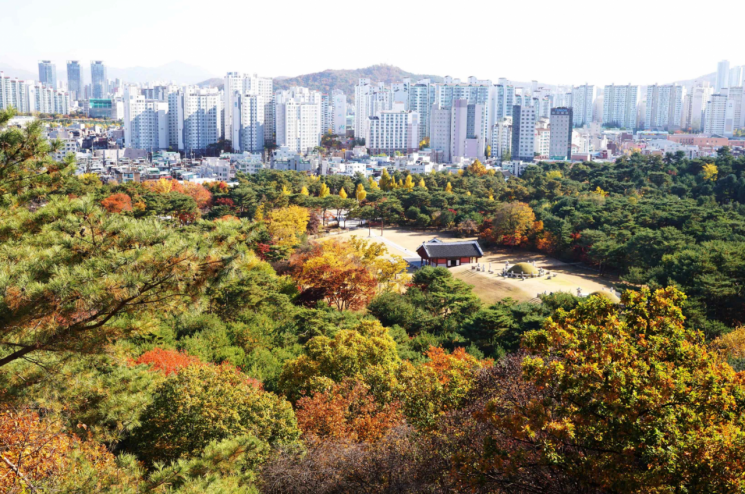
The bureau also converted the public benefits of the Joseon Royal Tomb trees?such as greenhouse gas absorption and storage, biodiversity conservation, air quality improvement, forest landscape provision, soil erosion prevention, oxygen production, biodiversity conservation, and air quality improvement?into economic value. The total amounted to 54.1 billion KRW.
An official explained, “Trees absorb and store carbon dioxide from the air, and the carbon absorption by trees growing at the Joseon Royal Tombs is about 30,000 tons. Considering that the annual per capita carbon dioxide emission is 13.1 tons (as of 2021), this is equivalent to absorbing the carbon dioxide emitted by 2,272 people in one year.”
Composed mostly of landscape forests, the Joseon Royal Tombs have been strictly managed and preserved from their establishment until now. According to the Annals of the Joseon Dynasty, the area surrounding the royal tombs was a forbidden mountain (Geumsan). Entry or tree cutting was prohibited. If anyone was caught cutting trees, they were severely punished.
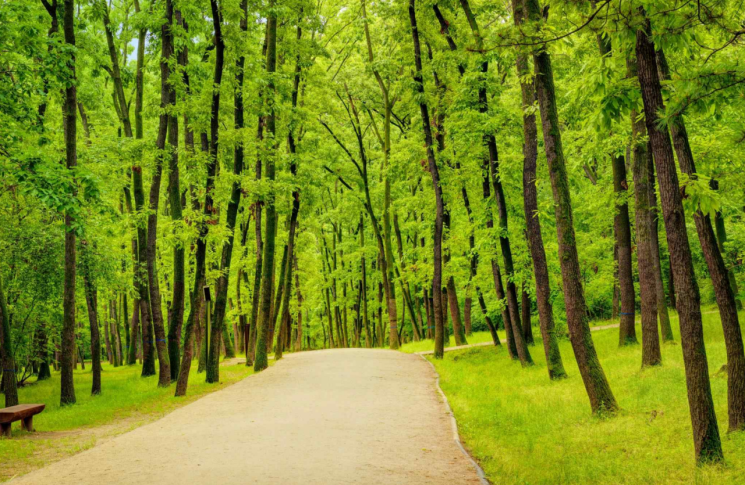
The bureau is also conducting surveys on the Four Grand Palaces and Jongmyo Shrine. They plan to reveal the ecological value of the palaces.
An official stated, “Since these sites have been thoroughly protected and managed for over 600 years, we will strive to ensure they are fully passed on to future generations and established as national heritage that contributes to the environment through related research and preservation efforts.”
© The Asia Business Daily(www.asiae.co.kr). All rights reserved.
![Clutching a Stolen Dior Bag, Saying "I Hate Being Poor but Real"... The Grotesque Con of a "Human Knockoff" [Slate]](https://cwcontent.asiae.co.kr/asiaresize/183/2026021902243444107_1771435474.jpg)


















