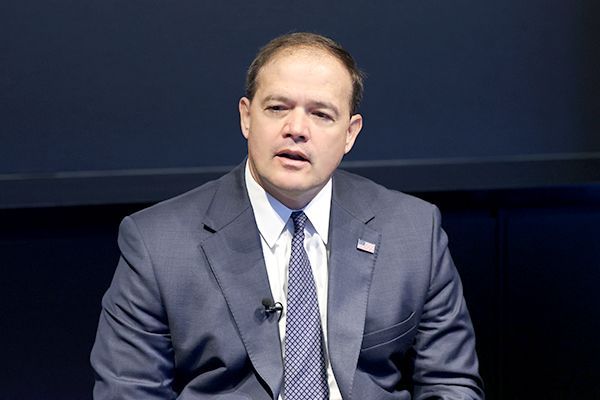
Raymond A. Tierney (photo), the District Attorney of Suffolk County, New York, is a veteran prosecutor renowned for his 30 years of experience in investigating violent crimes. Shortly after assuming office, he led the reinvestigation of the "Gilgo Beach Murder Case," which had remained unsolved for over a decade, successfully prosecuting the perpetrator. This case is one of the most famous serial murder cases in the United States and is known in Korea as the "American version of Memories of Murder." At the Korean Prosecutors Exchange and Cooperation Seminar held at the JW Marriott Hotel Seoul from the 20th to the 22nd, DA Tierney presented the Gilgo Beach Murder Case as an example of direct investigation. He later shared more insights in an exclusive interview with Law Times.
- The Gilgo Beach case is so well-known that it was featured in special broadcasts in Korea. How did you solve a cold case that had remained unsolved for over 10 years?
When we decided to reinvestigate, we expected that by leveraging the expertise of prosecutors and investigators to analyze existing evidence, we could uncover new evidence. Therefore, we formed a task force comprising prosecutors and investigators from multiple agencies, including the New York State Police, Suffolk County District Attorney’s Office, and the FBI. The FBI played a crucial role by forming surveillance and tailing teams to track the suspect. They also provided significant assistance in investigating cellphone call records.
- You solved a cold case through cooperation and collaboration. Why is close cooperation among investigative agencies necessary?
We live in a digitalized world. There is a vast amount of digital evidence and forensic data. However, digital evidence can disappear quickly within a short period. Therefore, when a crime occurs, it is extremely important to capture evidence early through cooperation. Based on such evidence, prosecutors can prove the guilt of criminals while simultaneously demonstrating the innocence of the wrongly accused.
- Intelligent and organized large-scale crimes are increasing worldwide. How is the United States responding?
As the world becomes increasingly digitalized, the physical distance where crimes occur is shrinking. In the U.S., there are growing cases where citizens suffer harm from crimes committed beyond national borders. Some may think there is no legal responsibility because the crime did not occur within the U.S., but that is not the case. To investigate and prosecute such criminals, the U.S. cooperates with multiple partner countries.
- In Korea, prosecutorial independence and neutrality are considered paramount. How about in the U.S.?
The U.S. also regards maintaining prosecutorial independence and neutrality as the most important values. Ethical responsibilities that prosecutors must adhere to are clearly defined in the U.S. While prosecutors may maintain political party affiliations in some cases, it is essential that the prosecution remains strictly independent from external influences. Additionally, confidential information used by prosecutors during investigations or prosecutions must be thoroughly protected, and confidentiality must be guaranteed.
- In Korea, there have been attempts to impeach prosecutors who investigated politicians. Are there similar cases in the U.S.?
Upholding justice is unrelated to politics. In the U.S., there has never been an attempt to impeach or an actual impeachment of a prosecutor simply because they indicted a particular politician. However, there have been cases where prosecutors faced disciplinary actions or resigned for failing to fulfill their duties or responsibilities. Like other public officials, prosecutors have a legal obligation to perform their duties faithfully. If they fail to do so, appropriate disciplinary or dismissal measures should be taken following proper procedures.
Woo Bin, Law Times Reporter
※This article is based on content supplied by Law Times.
© The Asia Business Daily(www.asiae.co.kr). All rights reserved.
![Clutching a Stolen Dior Bag, Saying "I Hate Being Poor but Real"... The Grotesque Con of a "Human Knockoff" [Slate]](https://cwcontent.asiae.co.kr/asiaresize/183/2026021902243444107_1771435474.jpg)















