Chinese Luxury Shoppers with Thin Wallets Flock to 'Secondhand Market'
Secondhand Luxury Platforms like ZZER and Senwi Gain Spotlight
Domestic Demand Slump and Economic Downturn Impact Post-Pandemic in China
Amid concerns over an economic downturn causing a contraction in China's luxury market, consumers are increasingly turning to the 'pre-owned luxury' market.
Major foreign media reported on the 24th (local time) that "Chinese shoppers struggling with cash flow are becoming captivated by pre-owned luxury goods," adding, "A massive underground store near Shanghai Hongqiao Airport is filled with top luxury brand items such as Louis Vuitton, Dior, and Gucci, welcoming shoppers with secondhand products rather than new ones."
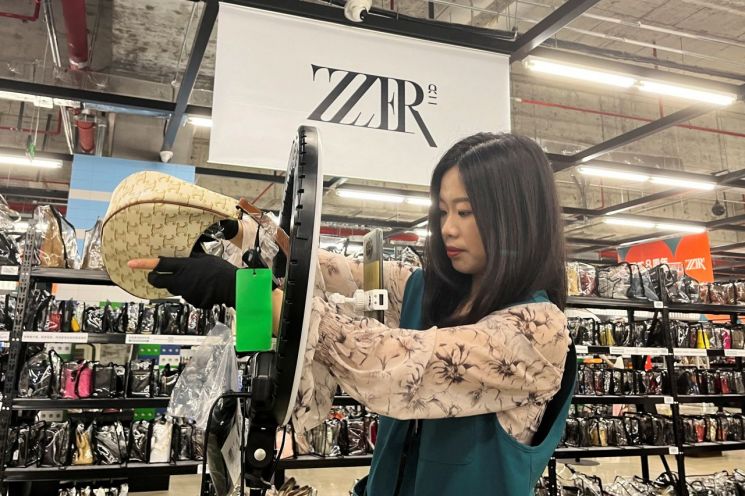
Recently in China, as the wallets of consumers who once dominated the luxury market have thinned, the pre-owned luxury market is emerging as an alternative. According to reports from consulting firm Frost & Sullivan and Tsinghua University, the size of China's pre-owned luxury market, which was around 300 billion yuan (approximately 55 trillion KRW) in 2015, surpassed 1 trillion yuan (approximately 190 trillion KRW) in 2020, and is estimated to have maintained an annual growth rate of over 30% since 2020.
Foreign media noted, "Especially, the number of users on online pre-owned luxury trading platforms such as ZZER and Xianyu, which provide places to resell pre-owned luxury goods for a commission, is increasing," adding, "On ZZER, a Louis Vuitton bag priced at 14,300 yuan is being sold for 4,762 yuan (about 900,000 KRW)." ZZER, which opened an offline pre-owned luxury store in Shanghai in 2022, also revealed that 5,000 items such as handbags and high-end clothing are received daily.
The growing popularity of the pre-owned luxury market among consumers is analyzed to be closely related to China's economic downturn. Jacob Cook, CEO of Beijing-based marketing group WPIC, diagnosed, "After the pandemic, due to economic pressure and travel restrictions, people have been unable to purchase goods overseas, increasing interest in pre-owned luxury as a cost-effective alternative." Earlier, the world's largest luxury group, Louis Vuitton Mo?t Hennessy (LVMH), announced that its sales in the third quarter fell by 3% year-on-year due to weakened demand in China, marking the first quarterly sales decline since the pandemic.
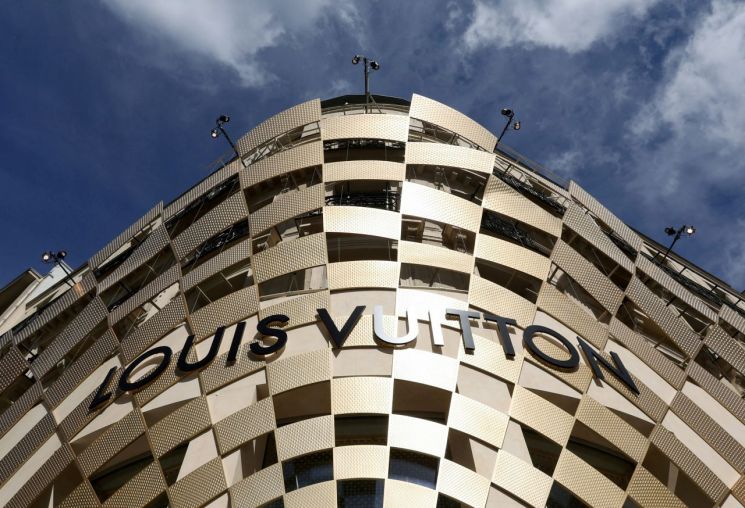
However, despite this slump in the luxury industry, related companies are either launching more affordable product lines or drawing a line on intervening in the pre-owned market. After announcing third-quarter results, LVMH executives stated that the company strictly controls distribution and has no plans to intervene in the pre-owned market, reaffirming their commitment to their existing premium strategy. This is interpreted as a concern that hastily lowering product prices to improve performance could damage the high-end brand image.
Federica Levato, Global Partner for Luxury Goods and Fashion at Bain & Company, evaluated that while the pre-owned luxury market may reduce demand for new products released by companies and potentially harm brand value, "at least it brings new customers who have never purchased luxury goods into the market." She explained that people who first enter luxury consumption through pre-owned luxury goods may develop a desire to purchase new products in the future, providing the luxury industry with an opportunity to attract new customers in the long term.
© The Asia Business Daily(www.asiae.co.kr). All rights reserved.
![Clutching a Stolen Dior Bag, Saying "I Hate Being Poor but Real"... The Grotesque Con of a "Human Knockoff" [Slate]](https://cwcontent.asiae.co.kr/asiaresize/183/2026021902243444107_1771435474.jpg)
















