125 Cases of Origin Labeling Violations Detected
General Restaurants Account for 104 Cases, the Most
Nonggwanwon "Strengthening Origin Inspections"
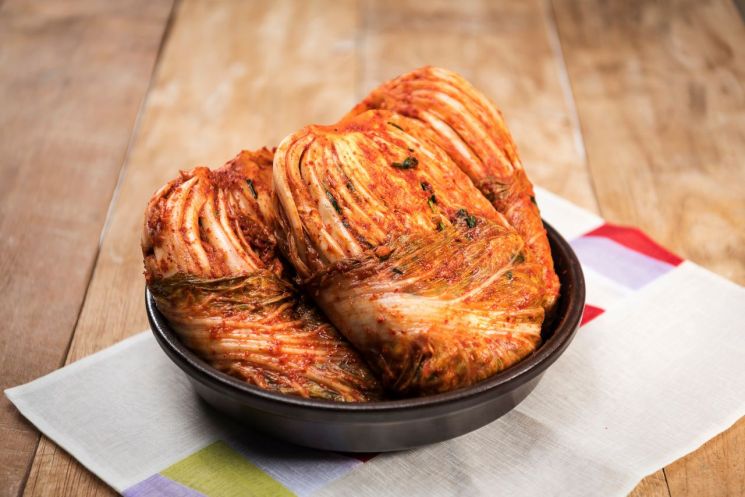
Over 100 companies were caught falsifying the origin of kimchi vegetables such as dried chili peppers ahead of the kimjang season.
On the 24th, the National Agricultural Products Quality Management Service (NAQS) announced that it investigated about 24,000 places including restaurants, manufacturers, and distributors from the 10th of last month to inspect the distribution status of kimjang vegetables and napa cabbage kimchi, and found 125 companies violating origin labeling regulations. Among the violators, 97 companies falsely labeled the origin, and 28 companies did not label the origin at all.
By business type, general restaurants accounted for the largest number with 104 cases, followed by 7 manufacturers, and 4 each from consigned catering companies and online sales companies. In major cases, one restaurant falsely labeled Chinese napa cabbage kimchi as domestic and imported products, and one kimchi manufacturer made napa cabbage kimchi with Chinese napa cabbage but sold it by falsely labeling the cabbage origin as domestic. Additionally, one wholesale company mixed Chinese frozen dried red chili peppers with domestic dried chili peppers and labeled the origin as domestic.
However, no cases were found in this inspection of fresh imported napa cabbage being sold as domestic. In the past three years, there has been only one case of origin labeling violation for fresh napa cabbage. Nevertheless, consumers have raised their voices for stronger origin inspections as agricultural product prices have risen sharply due to the heatwave, leading to a surge in imports such as Chinese products. According to the Korea Customs Service, the import volume of Chinese napa cabbage from January to October this year was 3,037 tons, an 18.5-fold increase compared to 164.2 tons during the same period last year. The import volume of radish also increased 7.4 times to 8,591 tons compared to last year. Especially, the import volume in October alone reached 1,842 tons, exceeding last year’s annual import volume.
A NAQS official urged, "If the origin of kimjang vegetables such as napa cabbage and radish seems suspicious when purchasing, please report it through the Illegal Distribution Reporting Center or the NAQS website," and added, "We plan to strengthen origin inspections until the 6th of next month." The Ministry of Agriculture, Food and Rural Affairs also stated, "We have conducted regular intensive inspections on origin labeling every year during the kimjang season when demand for kimjang ingredients is high," and added, "We will continue real-time monitoring and promotion to eradicate illegal origin distribution."
© The Asia Business Daily(www.asiae.co.kr). All rights reserved.