Formal Attire for Work and Guests: An Old Debate
Koreans Respect Autonomy but Seek Influence
Sometimes Overstate Issues and Give Up Autonomy
Currently a Cultural Transition... "Will Change Quickly"
Office worker Jeong Mo (29) once got scolded by a so-called 'young kkondae' senior colleague for wearing Crocs to work. The criticism was about paying more attention to his attire. Jeong’s workplace was a call center. Due to the nature of the counseling job, there was no opportunity to collaborate with outsiders. There was no dress code either. Jeong said, "I wasn’t even dragging slippers around, so it was awkward. If I had been informed about the acceptable dress range beforehand, I wouldn’t have worn them."
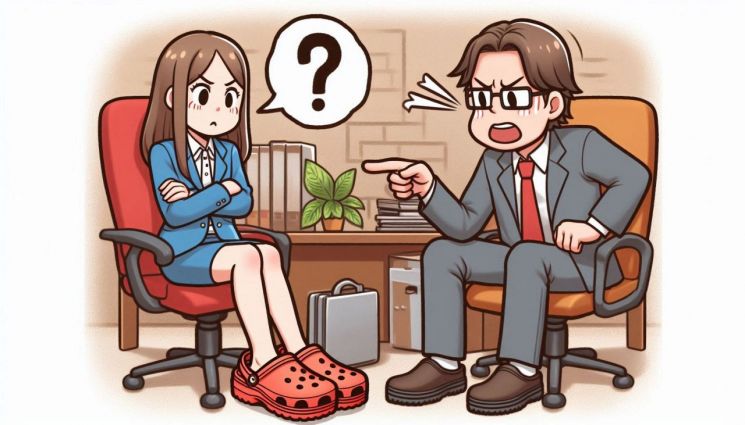
Many domestic companies allow comfortable clothing for commuting, but due to lingering conservative culture, there are differing views on some items. Crocs are a representative example. Originally, they are outdoor shoes for summer water activities like surfing. Many people nowadays choose Crocs for their practicality and comfort. However, perhaps because of their rough design resembling bathroom slippers, they are often treated harshly depending on the situation and place.
This trend is easily found online as well. An internet post titled "How about wearing Crocs to work?" included comments like "Personally, I have a kkondae tendency. I can’t say it out loud, but inside, I can’t understand wearing Crocs to work." Opinions were divided, with some defending it as "thoughtless behavior, just trying to act cool online," while others rebutted, "If there’s no dress code, why does it matter?"
Workplace and Weddings... The Age-old Debate on 'Appropriate Attire'
The concept of dressing appropriately is often discussed in terms of TPO. It means dressing according to Time, Place, and Occasion.
TPO is a Japanese way of thinking and a form of Japanese English (Japlish). It is known to have been established by Kensuke Ishizu (1911?2005), founder of the Japanese men’s clothing brand VAN in the 1960s. The purpose was to justify wearing Western clothing (Ivy League look) properly and to change Japanese men’s perceptions. On the other hand, TPO is an unfamiliar concept in the West. In Western countries, unless there is a pre-specified 'dress code,' people are relatively free from others’ gaze regarding attire.
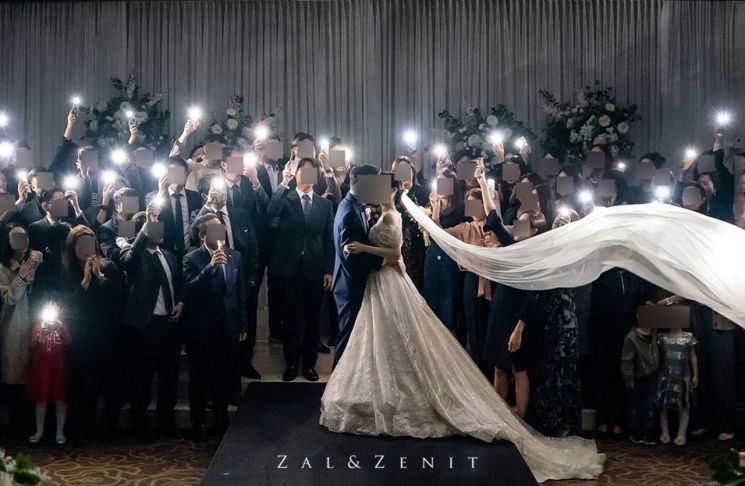
Korean wedding culture can be seen as a distorted mix of Western culture and Japan-originated TPO. Wedding guest attire is as sensitive an issue as the amount of congratulatory money. It is even more so for female guests. There is an unwritten rule that one must not outshine the bride. TPO serves as a good tool for this unwritten rule protecting the bride. A female office worker in her 30s, Lee Mo, confessed, "Even when my friend, the bride-to-be, said it was okay to wear bright clothes, I worried about others’ reactions." She disliked being labeled a troublesome guest.
Jennie, a member of the girl group BLACKPINK, attended a friend’s wedding last month wearing an all-black outfit except for a pure white shirt. When photos of this were posted online, the reaction in Korea was mostly positive, calling it 'manner wear.' However, overseas responses included comments like 'It looks like a funeral' or 'It looks like office wear.'
Korean Society Trapped by 'Unwritten Rules': The Reason
Korean society is changing into an open and autonomous society influenced by the West. The existence of unwritten rules in this trend is paradoxical. People constrain each other with unwritten rules and self-regulate out of fear of causing inconvenience to others. Why are Koreans trapped by invisible unwritten rules?
According to indigenous psychology, Korean society respects individual autonomy. However, Koreans have a stronger inner desire to exert influence over others compared to other East Asian countries. In other words, while individual standards are respected, there is a unique duality where demanding one’s own standards is not seen as a big problem.

Hanmin, a cultural psychologist, said, "Unwritten rules arising in such situations are often 'my own rules' rather than social consensus," adding, "Even though Korean society has evolved into an open society, it is still a collectivist society reluctant to deviate from common standards. Conflicts arise as collectivist values clash with individualistic desires."
One scholar explained, "Diversity creates diverse standards. In the past, when premodern thinking dominated, there was little conflict under the single rule of Confucian order. Rather, as society emphasizes individual diversity more, people try to exert influence through their autonomy, leading to conflicts."
He also said, "In this context, the possibility of infringing on others’ autonomy is high. Sometimes, people use their status, position, or the legitimacy of their own standards as tools to pressure others, making them feel 'I have no choice but to comply.'” This often results in the other party exaggerating minor issues and giving up their autonomy. The earlier examples of Crocs as work attire and wedding guest outfits illustrate this. The same applies to 'young kkondae.'
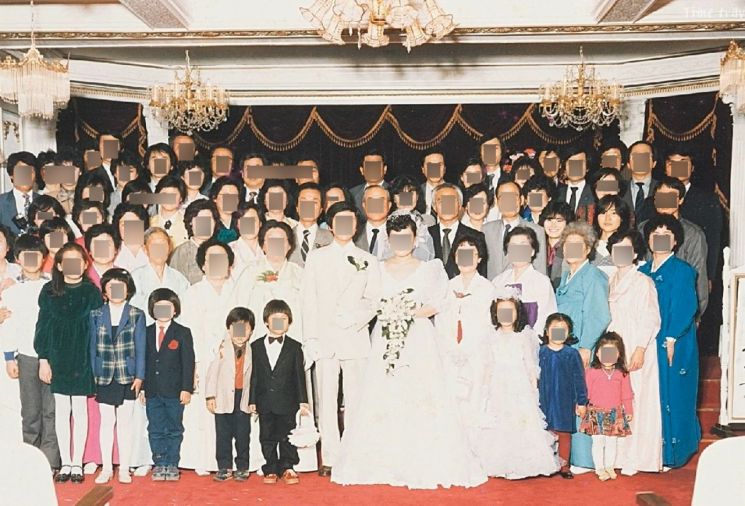
Additionally, "Especially in the 1970s and 1980s, when premodern thinking remained, wedding ceremonies were mainly based on the standards of elders in the family, so the color of guests’ clothes was not very important," he said. "Nowadays, that standard has shifted to the bride and groom. The bride’s 'absolute satisfaction' standard, where she must stand out the most, leads to obsession over guests’ clothing colors." Guests give up their autonomy for fear of being a nuisance due to these unwritten rules from the bride’s side.
Korean Society Is in a Cultural Transition Period... "It Will Change Quickly"
There is also a diagnosis that this is a cultural transition period. The rapid pace of cultural change outpaces traditional community regulations, causing social conflicts.
Professor Lim Myung-ho of Dankook University’s Department of Psychology said, "In the past, members of collective communities had no choice but to create laws or implicit rules to maintain the community. In modern society, people’s thoughts and lifestyles change very quickly. Although freedom and efficiency are emphasized, rules are difficult to change accordingly." He also said, "Young kkondae ride on the older generation to enhance group cohesion or leadership."

Professor Lim added, "East Asian cultures are somewhat rigid. There is a strong rule that everyone wears black at funerals and that guests must not outshine the bride at weddings. Thinking about it, the disappearance of the wedding officiant is a huge change. It was unheard of before for both parents to come out and give blessings. Wedding culture has changed a lot." He predicted, "Unwritten rules like wedding guest attire will also loosen very quickly."
He further said, "Young people value autonomy highly and will likely adopt a more open culture faster, like abroad. Nobody points fingers anymore if someone wears leggings outside, right?"
© The Asia Business Daily(www.asiae.co.kr). All rights reserved.
![Clutching a Stolen Dior Bag, Saying "I Hate Being Poor but Real"... The Grotesque Con of a "Human Knockoff" [Slate]](https://cwcontent.asiae.co.kr/asiaresize/183/2026021902243444107_1771435474.jpg)

















