Intelligent Fraud Like Bulk Orders and Identity Impersonation
Self-Employed Suffer Losses Ahead of Year-End, "Only Sighs"
Recently, the 'No-show' tactic, where customers fail to appear after making reservations, has become more sophisticated, causing severe damage to small business owners. Especially as the year-end approaches, there has been a surge in mass no-shows, with cases involving impersonation of public officials or military personnel increasing consecutively.
Until around 2010, no-shows were referred to as 'reservation defaults,' but now the term has become commonplace. However, recently, the methods have evolved beyond simple no-shows to include mass orders and identity impersonation, increasing the scale of damage to small business owners.
At a cafe in Songpa recently, about 100 products were ordered, including 50 scones, 25 Americanos, and 25 strawberry lattes, but the customers did not show up, resulting in a no-show loss. The owner, suspicious, requested prepayment, but was refused with the excuse, "You can pay when you come to pick it up," and ultimately, the customers did not appear on the day. Moreover, attempts to contact them were unsuccessful as the phone number was blocked.
The no-show incident involving public officials from Jeongseon County Office caused a social stir. After reserving 40 servings at a barbecue restaurant in Yeouido and failing to show up, the issue sparked controversy on social media. Once the incident became known, the Jeongseon County Office bulletin board was flooded with protest messages, and local residents criticized, saying it "tarnished the county's image." Eventually, the county office apologized, stating they would "compensate as much as possible."
No-shows impersonating military units are also on the rise. At a restaurant on Yeongjongdo Island, someone impersonating a Marine Corps sergeant ordered 100 servings of bulgogi and then no-showed. The owner even prepared tangerines for the soldiers but ended up suffering losses. The tactic of ordering while falsely claiming to be "Sergeant Lee Kyungho" and then cutting off contact is repeated, but it is difficult for individual businesses to verify and respond to each case.
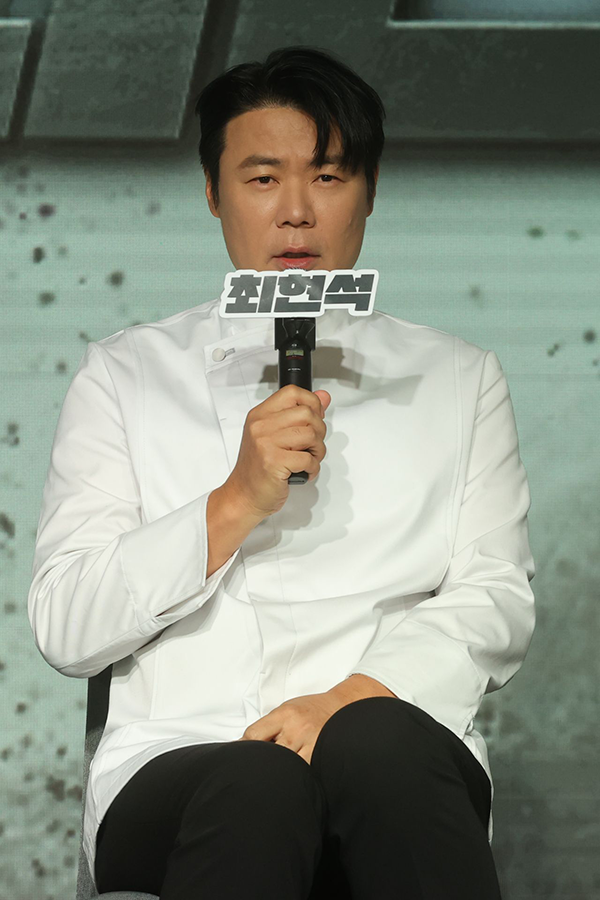
Famous chefs are not immune to no-show damages either. Chef Choi Hyun-seok, who appeared on the TV program 'Black and White Chef,' revealed that he experienced a no-show after a 100-person meal reservation. In the past, a construction company caused controversy by no-showing after reserving for 400 people. The construction company explained that "it was 300 people, cancellation possibilities were notified, and a deposit of 600,000 won was made," but it is known that they eventually compensated an additional 400,000 won.
"One No-show Can Be a Survival Crisis for Small Business Owners"
No-shows are not limited to restaurants. In hair salons, reservations are made in 30-minute increments through systems like Naver Reservation, and if a no-show occurs, there is no income for that time slot. A hair salon owner expressed difficulties, saying, "I want to introduce a deposit system, but I worry about customer backlash."
No-show damages also occur at wedding halls. Since food must be prepared based on the expected number of guests, if the actual attendance is significantly lower than expected, the couple has to bear the cost difference. Even at funeral homes, there are cases where people promise to attend memorial services but do not show up, causing emotional pain to the bereaved families.
The industry is implementing various measures to counteract no-shows. These include introducing prepayment deposit systems, providing reminder services that send alert messages as the reservation time approaches, and creating blacklists of no-show customers shared across the industry.
Specific penalty policies are also operated by sector. For taxis, KakaoT restricts additional calls for 5 minutes if a cancellation occurs more than 5 minutes after dispatch completion, and if cancellations exceed five times within a week, service use is restricted for 24 hours. If a passenger does not show up at the scheduled time, 100% of the fare is charged as a penalty.
In the medical industry, especially dermatology and plastic surgery clinics, there is an increasing demand for prepayment of consultation fees. According to the Korea Consumer Agency, consumer disputes related to hospital prepayments have increased about fivefold compared to two years ago, with dermatology having 157 cases and plastic surgery 131 cases.
In the hotel industry, more places are applying non-refundable cancellation policies. Among some consumers, there is controversy over intentionally booking low-priced hotels to earn hotel mileage and then no-showing. Airlines have also introduced policies that do not recognize boarding records or mileage for no-show passengers.
For railways, differential penalties are imposed based on departure times. Up to 20 minutes before departure, a 20% refund fee applies; up to 60 minutes before, a 40% refund fee applies. Golf courses are even stricter, imposing penalties for no-shows and sometimes restricting reservations for a certain period.
Recently, deposits have been rising sharply, especially at high-end restaurants. An omakase restaurant in Yeouido requires the full meal price per person as a deposit, and a Mediterranean restaurant in Hannam-dong demands a 105,000 won deposit for a party of three. As deposits become more expensive, the burden on consumers is also increasing.
Legal Action Possible but Challenging
Legally, no-shows constitute a breach of contract, allowing claims for damages. However, it is difficult to calculate actual damages, which can lead to disputes. The scope of damages can include not only the cost of prepared food ingredients but also opportunity costs caused by the no-show. Some argue for the need for criminal penalties, such as applying obstruction of business charges.
Industry experts agree that institutional measures to prevent no-shows are urgently needed. They suggest introducing standard contracts with clear criteria based on average sales per person to prevent disputes. They also emphasize the need for society to recognize that a reservation is a contract.
Small business owners lament, "We have prepared self-help measures like '5 commandments' or '10 commandments' to prevent no-shows, but they are not fundamental solutions," adding, "We respond by requiring advance deposits, keeping text records of order details and cancellation times, preserving order forms as proof of damage, sharing blacklists, and installing CCTV."
Experts stress, "No-shows are a serious problem threatening the survival of small business owners beyond simple broken promises," emphasizing the urgent need for legal and institutional measures along with consumer awareness improvement.
© The Asia Business Daily(www.asiae.co.kr). All rights reserved.
![Clutching a Stolen Dior Bag, Saying "I Hate Being Poor but Real"... The Grotesque Con of a "Human Knockoff" [Slate]](https://cwcontent.asiae.co.kr/asiaresize/183/2026021902243444107_1771435474.jpg)















