Distributing Composite Photos and Sending to Acquaintances
Also Contacted Directly 10 Times
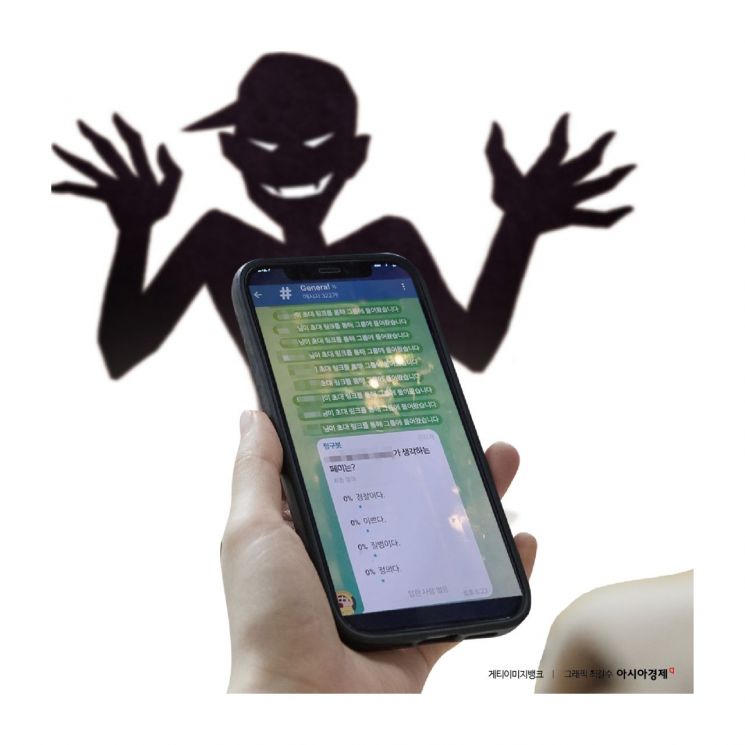
A man who distributed synthetic photos of the victim and contacted her directly 10 times in the ‘Inha University Deepfake’ case was sentenced to one year in prison in the second trial, following the first trial.
The Criminal Division 10 of the Seoul High Court (Presiding Judge Nam Seong-min) on the 21st sentenced Mr. A, who was indicted for violating the Sexual Violence Punishment Act (editing and distribution of false videos), the Stalking Punishment Act, and other charges, to one year in prison, 40 hours of stalking treatment program and sexual violence program, and a three-year employment restriction at institutions related to children, adolescents, and persons with disabilities. He had received a one-year prison sentence in the first trial.
Mr. Yoo was indicted last March on charges of downloading synthetic photos from a Telegram chatroom related to the ‘Inha University Deepfake’ case, sending them to the victim’s acquaintances, and directly calling and texting the victim.
In the first trial, it was revealed that from November to December last year, Mr. Yoo sent synthetic photos to the victim’s acquaintances eight times and called or sent text messages to the victim 10 times over about a month. He made six calls to the victim, causing missed call notifications, and when the victim did not answer, he sent texts such as “I don’t want to go to the police station.” He also sent the victim a photo in which the face of the victim’s acquaintance was synthesized onto a nude photo.
The first trial court said regarding the stalking charges, “Despite the victim warning the defendant not to contact her after receiving his messages, he rather boasted about communicating with the victim in the Telegram group chat.” It added, “He showed an insensitive attitude toward the harm and impact of his actions.” The court continued, “He showed a desperate attitude to reduce responsibility with implausible excuses, such as claiming he tried to contact the victim to inform her about the existence of the Telegram group chat targeting her.”
The appellate court reached the same conclusion. The second trial court stated, “Another prior conviction was discovered during the appeal trial,” and “Considering this, as well as the nature of the crime and the fact that the victim has not forgiven him, the sentence was maintained the same as the original judgment.”
© The Asia Business Daily(www.asiae.co.kr). All rights reserved.
![Clutching a Stolen Dior Bag, Saying "I Hate Being Poor but Real"... The Grotesque Con of a "Human Knockoff" [Slate]](https://cwcontent.asiae.co.kr/asiaresize/183/2026021902243444107_1771435474.jpg)
















