Korean Economic Association 'Healthcare Reform' Survey
97.4% of economists expressed support for increasing the number of medical school admissions as part of healthcare reform.
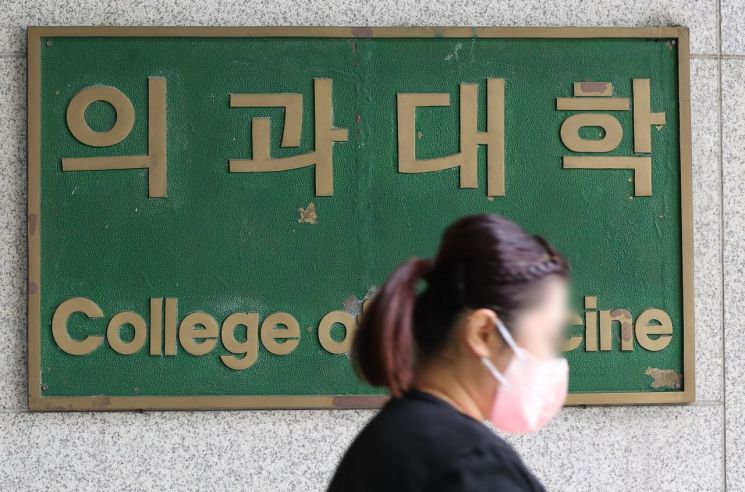
According to a survey on healthcare reform conducted by the Korean Economic Association from the 31st of last month to the 15th of this month targeting 94 domestic economists, 37 out of 38 respondents (97.4%) agreed with increasing medical school admissions.
Among the respondents, 28 (73.7%) expressed the opinion that "while agreeing on the necessity of increasing medical school admissions, considering the situation in educational settings, the increase should initially be kept below 2,000 students and then gradually expanded in stages." The remaining 9 (23.7%) answered that "since it takes 6 to 10 years from medical school admission to producing doctors, the government’s proposed increase of about 2,000 students is desirable."
Only 1 respondent (2.6%) held the view that there is no need to increase medical school admissions because there is an oversupply of doctors.
Regarding the decision-making method for whether and how much to increase medical school admissions, opinions were evenly split with 51% saying "a committee composed of medical professionals, non-medical experts, and the government should decide," and 46% saying "while consulting with the medical community, the government should have the final say on the number of doctors."
When asked about solutions to the conflict between the government and medical community from the perspective of adjusting medical school admissions, half (50%) responded that "next year’s increase in medical school admissions should proceed according to the government’s plan, and renegotiations should begin starting with the 2026 admissions."
As a solution to address essential medical service gaps and regional healthcare supply-demand imbalances, 84% expressed the opinion that "along with increasing medical school admissions, economic incentive systems such as adjusting fees by medical specialty and region should be improved simultaneously."
Regarding policies to ensure the sustainability of health insurance finances, 76% answered that "managing medical expenses, improving spending efficiency, reforming payment systems for medical services, and revising insurance premium assessment systems should precede increases in premiums and government subsidies."
© The Asia Business Daily(www.asiae.co.kr). All rights reserved.
![Clutching a Stolen Dior Bag, Saying "I Hate Being Poor but Real"... The Grotesque Con of a "Human Knockoff" [Slate]](https://cwcontent.asiae.co.kr/asiaresize/183/2026021902243444107_1771435474.jpg)















