Nigeria's Crude Oil Refining Shortage
Oil Companies Make Huge Profits from Crude Oil Exports
Ordinary Citizens Suffer from Rising Prices
Nigeria, an oil-producing country with abundant oil fields, is suffering from high 'oil prices.' The British public broadcaster BBC analyzed on the 18th (local time) that the background of this paradoxical situation lies in the power struggle over the leadership of the 'oil industry.'
According to the BBC, Nigeria first discovered oil fields in 1956. However, the oil industry has not provided economic benefits to the general Nigerian public. This is due to rampant illegal transactions between the government and monopoly companies in the process of refining crude oil into petrochemical products.
Nigeria Lacks Crude Oil Refining Industry
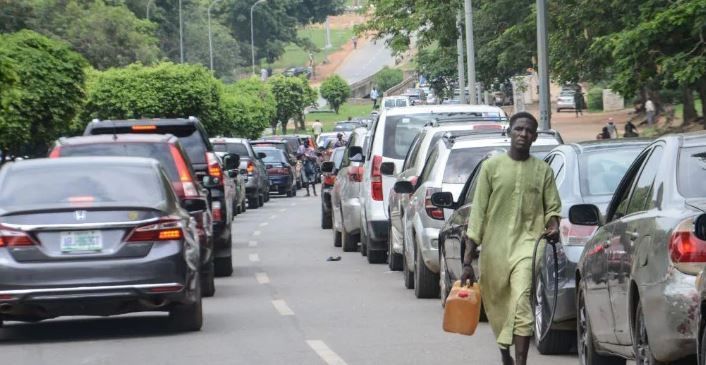 Nigeria is an oil-producing country, but it ironically faces a shortage of gasoline, leading to sporadic fuel crises. Photo by Getty Images
Generally, the oil industry is divided into two types. 'Upstream,' which involves extracting crude oil from oil fields, and 'downstream,' which processes the extracted crude oil into fuel or other chemical products. Although building facilities to extract crude oil (such as offshore platforms) requires enormous costs, developing crude oil refining facilities also demands considerable labor and capital.
Today, the world's largest oil-producing countries, such as the United States and the Middle East, have highly developed upstream and downstream sectors. However, in Nigeria, which is also an oil-producing country, the downstream industry has hardly developed. Regarding this, Amaka Anku, head of the Africa region at the think tank Eurasia Group, pointed out to the media, "There has been inefficient and corrupt monopoly in the downstream sector."
Some Cartels Monopoly Over Oil Product Export and Import Processes
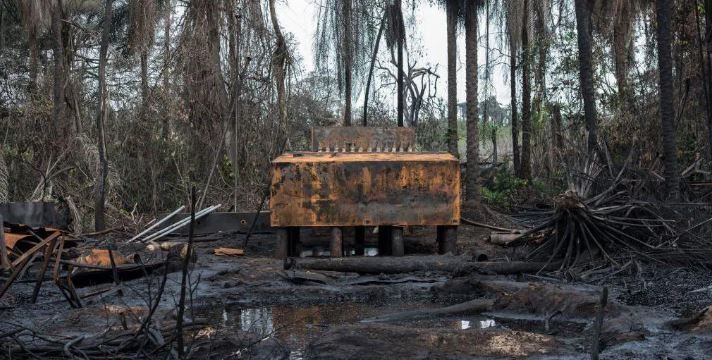 Crude oil is exported to illegal refineries overseas and then imported back into the country, where it is sold at high prices. Photo by Getty Images
Currently, Nigerian companies extract oil from oil fields, have the crude oil refined overseas, and then import and sell it to the public. Looking at Nigeria's trade structure, crude oil is exported, while refined fuel and petrochemical products rely on imports.
However, those who monopolize this process and make money are a very small number of companies and politicians. The 'oil mafia' formed by these vested interest groups is reportedly persistently obstructing efforts to build domestic downstream facilities in Nigeria. Regarding this, the BBC pointed out, "The Nigerian people have been subjected to massive fraud over the past several years."
As a result, despite being an oil-producing country, Nigeria is known for having very high prices for fuel and various daily necessities. Fearing public protests, the local government forcibly lowers fuel prices by paying subsidies amounting to a staggering 10 billion dollars (about 14 trillion won) as of 2022, but this excessive subsidy policy is also burdening the government’s finances.
Ultimately, Bola Tinubu, Nigeria's new president last year, stated, "The subsidy policy is unsustainable," and cut some of the fuel subsidies. Since then, gasoline prices in Nigeria have tripled, and the exchange rate against the dollar has fallen nearly fourfold. As a result, ordinary citizens, unable to afford fuel costs, have been forced to purchase and operate generators separately to supply electricity.
© The Asia Business Daily(www.asiae.co.kr). All rights reserved.
![Clutching a Stolen Dior Bag, Saying "I Hate Being Poor but Real"... The Grotesque Con of a "Human Knockoff" [Slate]](https://cwcontent.asiae.co.kr/asiaresize/183/2026021902243444107_1771435474.jpg)
















