Military Consolation Payments Outweigh Civilian Income
Youth Deaths Lead to GDP Increase
In the Russia-Ukraine war, an analysis by a local scholar suggesting that the economy actually grows when soldiers die is expected to cause controversy. This is due to Russia's wartime economy overwhelming the civilian economy.
Vladislav Inozemtsev, a prominent Russian economist and head of a policy think tank based in Moscow, recently analyzed the impact of the war on the Russian economy. As a result, the US financial newspaper The Wall Street Journal (WSJ) reported on the 17th (local time) that if males below a certain age die in the war, the Russian economy actually benefits.
Why does the economy benefit when the population, a core driver of Gross Domestic Product (GDP) creation, is depleted? Inozemtsev noted that young men recruited into the Russian military currently receive much higher salaries and death benefits than typical Russian youths.
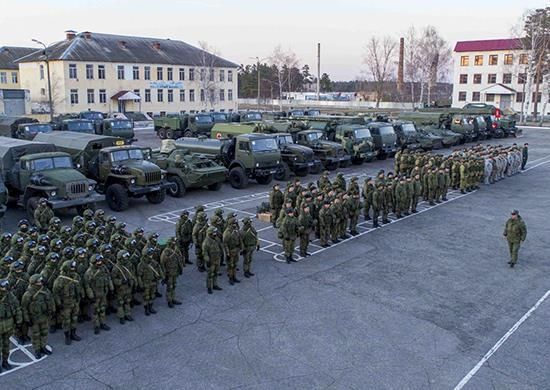
Russian soldiers who die on the battlefield receive a compensation of 14.5 million rubles, equivalent to 150,000 US dollars (about 209 million Korean won). Of course, this money does not go to the deceased soldier but is consolation money paid to the bereaved families waiting for their husbands or sons back home. Additionally, the families receive military bonuses and soldier insurance that are mandatorily paid to Russian soldiers.
This amount far exceeds the average income of ordinary Russian citizens. It is higher than the cumulative expected income an adult male could earn by working continuously until the age of 60. Inozemtsev told WSJ that "a young soldier who dies on the front line brings much greater economic benefit to the country than a middle-aged person who has worked a lifetime."
Inozemtsev called this phenomenon "Deathnomics." It means that since the war began, the Russian economy has transformed into a distorted form dependent on the military industry and the defense budget. In fact, thanks to the amounts paid by the Russian Ministry of Defense to bereaved families and soldiers' households, Russia's poverty rate has fallen to its lowest level since 1995. The salaries of millions of soldiers have effectively replaced poverty relief policies.
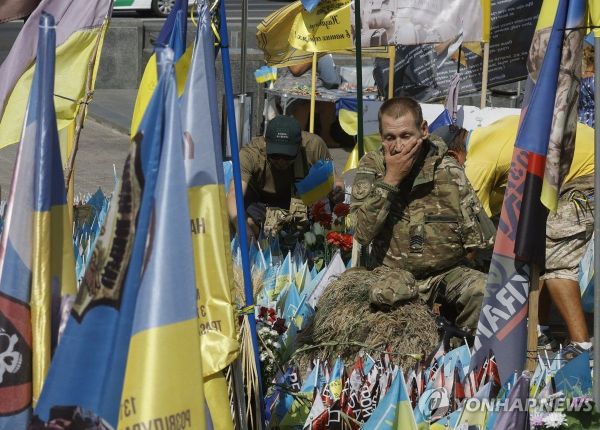
The amount the Russian government pays as soldier allowances is enormous. Until June, death compensation reached 30 billion US dollars (about 41 trillion Korean won). As this money was transferred to bereaved families, bank deposits in some poor regions surged by about 81 to 151%.
According to Western analysts' estimates, the number of Russian soldiers who have died on the front lines in Ukraine currently exceeds at least 600,000. The Russian government recruits 30,000 new soldiers monthly within the country to replace the deceased. As the war drags on, conscription resources are depleting, leading Russia to turn to foreign mercenaries. Recently, controversy arose when North Korea reportedly dispatched about 10,000 troops to Russia.
However, Deathnomics is likely to damage the Russian economy in the long term. Artificially inflated income without productivity growth only fuels inflation in Russia. The Russian Federal State Statistics Service estimates that inflation approached 10% in September this year. In particular, the price of potatoes, the most important food for the lower class, surged by 73%.
© The Asia Business Daily(www.asiae.co.kr). All rights reserved.
![Clutching a Stolen Dior Bag, Saying "I Hate Being Poor but Real"... The Grotesque Con of a "Human Knockoff" [Slate]](https://cwcontent.asiae.co.kr/asiaresize/183/2026021902243444107_1771435474.jpg)
















