September Seoul Actual Transaction Price Index -0.01%
Buyer Sentiment Weakens Due to Loan Regulations and Others
The actual transaction price index for apartments in Seoul fell for the first time this year due to loan regulations.
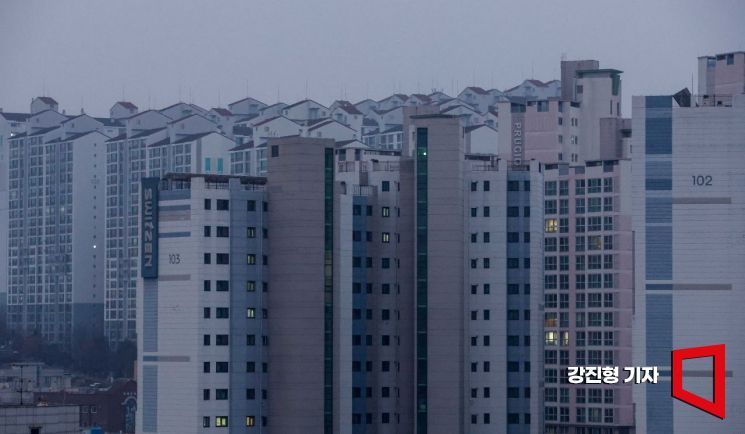
According to the apartment actual transaction price index announced by the Korea Real Estate Board on the 17th, the Seoul apartment actual transaction price index in September fell by 0.01%. This is the first monthly decline in the Seoul apartment actual transaction price index in nine months since December last year (-1.19%). It is the first decline this year.
The actual transaction price index is indexed by comparing the prices actually traded and reported with previous transaction prices, unlike price trend surveys centered on market prices. It can relatively accurately reflect recent market transaction fluctuations, but its accuracy decreases when the transaction volume is low or abnormal transactions are included.
The decline in the Seoul apartment actual transaction price index is largely attributed to the authorities tightening the money supply in the market by introducing new loan regulations starting in September. Since September, the full implementation of the second-stage stress DSR (Debt Service Ratio) has been enforced, and commercial banks have raised loan interest rates and restricted loans for homeowners under the pretext of managing household debt, which is believed to have influenced the decline in the actual transaction price index.
According to the Seoul Real Estate Information Plaza, the number of apartment transactions in Seoul reached 9,181 in July and 6,474 in August (based on contract dates) this year, but halved to 3,089 in September when loan regulations were fully enforced. As of the 17th, the transaction volume in October was 3,254, slightly higher than September, but the sluggish transaction trend continues.
Amid growing fatigue over price increases with record-high complexes emerging in some areas such as Gangnam, the strengthening of loan regulations is analyzed to have dampened buyer sentiment.
By region, the northwest area, including Eunpyeong, Seodaemun, and Mapo, saw the largest drop of 0.90%. The northeast area, where Nowon, Dobong, and Gangbuk districts are located, also fell by 0.42%. On the other hand, the southeast area, which includes the four Gangnam districts (Gangnam, Seocho, Songpa, and Gangdong), rose by 0.86%, continuing its upward trend. The southwest area (Gangseo, Yangcheon, Yeongdeungpo, Dongjak districts, etc.) and the downtown area (Jongno, Yongsan, Jung districts), which have reconstruction issues, rose by 0.3% and 0.1%, respectively.
The actual transaction price index for Gyeonggi Province in September was flat (0.00%), and Incheon rose by 0.04%. The overall metropolitan area index was flat (0.00%). Meanwhile, the apartment actual transaction price index in provincial areas rose by 0.2%. As a result, the nationwide apartment actual transaction price index rose by 0.09%, but the increase was significantly slower compared to August (0.67%).
The actual transaction price index in Seoul is expected to decline in October as well. The provisional actual transaction price index for October, calculated based on sales contracts reported by the end of last month, is expected to fall by 0.36% in Seoul and 0.06% nationwide.
© The Asia Business Daily(www.asiae.co.kr). All rights reserved.
![Clutching a Stolen Dior Bag, Saying "I Hate Being Poor but Real"... The Grotesque Con of a "Human Knockoff" [Slate]](https://cwcontent.asiae.co.kr/asiaresize/183/2026021902243444107_1771435474.jpg)















