Martial Arts Report... Slow Transition in Steel, Petrochemicals, and Cement
"Referencing US, Germany, Japan Policies... Expanding Transition Finance Support"
Regarding the development of low-carbon transition technologies in high carbon-emitting industries such as steel, petrochemicals, and cement, an analysis has revealed that South Korea's policy support is lacking compared to major countries. Experts advised that the government should actively promote the establishment of renewable energy infrastructure and transition finance policies to support corporate technology development. Transition finance refers to financial techniques that provide funding for low-carbon transitions in sectors where achieving carbon neutrality is challenging.
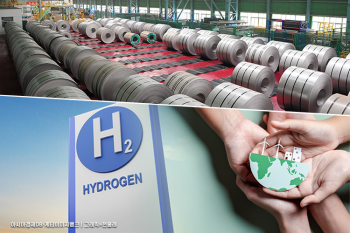
According to the report "Low-Carbon Transition of High Greenhouse Gas Emitting Industries: Comparison of Major Countries' Policies and Implications," released on the 19th by the Korea International Trade Association's International Trade and Commerce Research Institute, the provisional greenhouse gas emissions from South Korea's industrial sector last year amounted to 238.9 million tons, accounting for 38.3% of total emissions. Of this, 73% originated from three industries: steel, petrochemicals, and cement.
The report pointed out that South Korea's low-carbon transition is at a disadvantage compared to major countries such as the United States, Germany, and Japan. This is because the remaining lifespan of facilities is longer, resulting in higher marginal costs for equipment replacement. The US, Germany, and Japan industrialized earlier, so they have completed the recovery of investment costs for existing facilities and can reduce greenhouse gases by replacing only aging equipment. In contrast, South Korea has concentrated facility investments since the 1990s, meaning these facilities must continue operating for the next 20 to 30 years, leading to significant sunk costs and stranded asset issues. Furthermore, while major countries are strengthening support for hydrogen reduction steelmaking, fuel and raw material switching in chemical heating processes, raw material substitution in cement processes, and carbon capture, utilization, and storage (CCUS) technologies, South Korea's policy support is relatively slower.
For example, the United States has established industry-specific technology development roadmaps for decarbonizing five major sectors with high greenhouse gas emissions?chemicals, refining, steel, food and beverage, and cement?and supports technology development through an industrial demonstration program worth $6.3 billion (approximately 8.7 trillion KRW). Germany uses domestic and European Union (EU) funds to support technology development while introducing the Carbon Contracts for Difference (CCfD) system to encourage corporate investment in low-carbon technologies. Japan has also been utilizing a transition finance system since 2021 and announced policies for a "Decarbonized Growth-Oriented Economic Structure Transition (GX)."
The report advised that the South Korean government should significantly increase investments in carbon reduction technology development and establish a long-term roadmap to alleviate corporate investment burdens. It also emphasized the need to build renewable energy infrastructure to expand clean energy-based power generation and usage and to scale up low-carbon transition support through the transition finance system.
Hwang Jun-seok, a researcher at the Korea International Trade Association, stated, "Major countries boldly invest in low-carbon transition policies and technology development to achieve carbon neutrality while maintaining strengths in their domestic manufacturing sectors. South Korea's low-carbon transition policy should also be pursued beyond mere carbon emission reduction to protect manufacturing competitiveness and secure new markets."
© The Asia Business Daily(www.asiae.co.kr). All rights reserved.
![Clutching a Stolen Dior Bag, Saying "I Hate Being Poor but Real"... The Grotesque Con of a "Human Knockoff" [Slate]](https://cwcontent.asiae.co.kr/asiaresize/183/2026021902243444107_1771435474.jpg)















