Starting Production in 2026, Replacing Aging Radar
A long-range radar developed purely with domestic technology has been certified as 'combat-ready.'
The Defense Acquisition Program Administration (DAPA) announced on the 18th that it has succeeded in the research and development of a new long-range radar. It can detect and track aircraft within the Korean Air Defense Identification Zone (KADIZ) 24 hours a day, and it guarantees immediate air defense operations by transmitting the information captured by the radar in real time to the Air Force's Mobile Command and Reporting Center (MCRC).
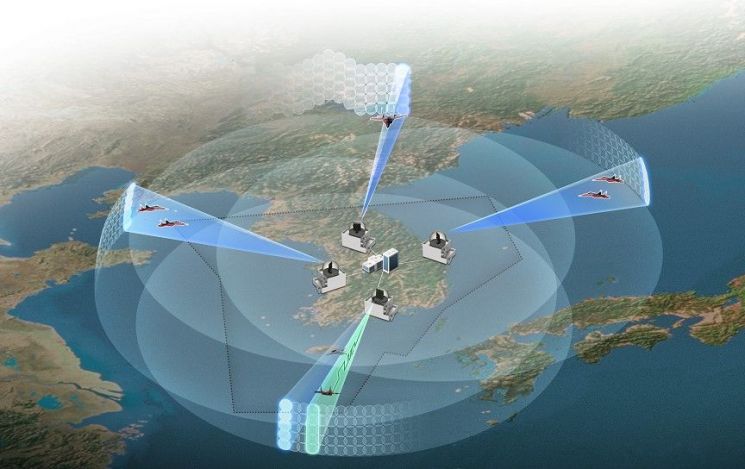
Previously, after signing a contract with LIG Nex1 in February 2021, DAPA went through design and prototype production, followed by about a year and a half of testing and evaluation. A DAPA official explained, "We confirmed that it meets the Air Force's required performance, and it was proven to have world-class performance in detection range, probability, and accuracy."
With the success of the long-range radar R&D, Korea has become one of the few countries in the world capable of independently manufacturing and producing long-range radars. Only countries such as the United States, France, Italy, and Spain can produce long-range radars of this level. Additionally, through this R&D, various proprietary technologies have been secured, including large antenna design and manufacturing, heat dissipation technology, signal focusing (beam template) operation, and optimization.
DAPA plans to start mass production of the long-range radar from 2026 and replace aging radars with the new model. The long-range radars currently operated by the Air Force are U.S.-made equipment introduced before 1990, which are severely outdated, and it is known that surveillance blind spots have occurred since the expansion of the KADIZ range in 2013.
© The Asia Business Daily(www.asiae.co.kr). All rights reserved.
![Clutching a Stolen Dior Bag, Saying "I Hate Being Poor but Real"... The Grotesque Con of a "Human Knockoff" [Slate]](https://cwcontent.asiae.co.kr/asiaresize/183/2026021902243444107_1771435474.jpg)















