Hezbollah, Leadership Collapse Deepens Chaos
Lebanese Government Requests Iran Mediation for Ceasefire
Ceasefire Likely... Remaining Variable is Unstable Israeli Regime
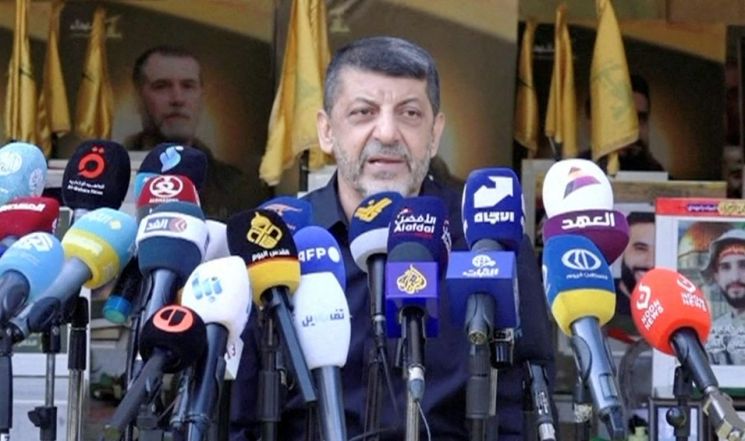 An interview footage of Mohamed Afif, the chief spokesperson of Hezbollah, who died in an Israeli airstrike on the 17th (local time). Photo by Reuters-Yonhap News.
Mohammed Afif, the senior spokesperson who was called the last focal point of Hezbollah, died in an Israeli airstrike, and significant changes are expected in the Middle East war situation. While Hezbollah has expressed its intention to review the ceasefire proposal offered by Israel, the Lebanese government has also requested Iran to mediate the ceasefire, raising hopes for a breakthrough in achieving a truce.
However, the arrest of Benjamin Netanyahu's aide over a leak of classified information is increasing political instability in Israel, posing an obstacle to the ceasefire. There are concerns that if Prime Minister Netanyahu intensifies the war to protect his regime, the Middle East conflict could become a prolonged war.
Hezbollah loses even its spokesperson... The last focal point collapses
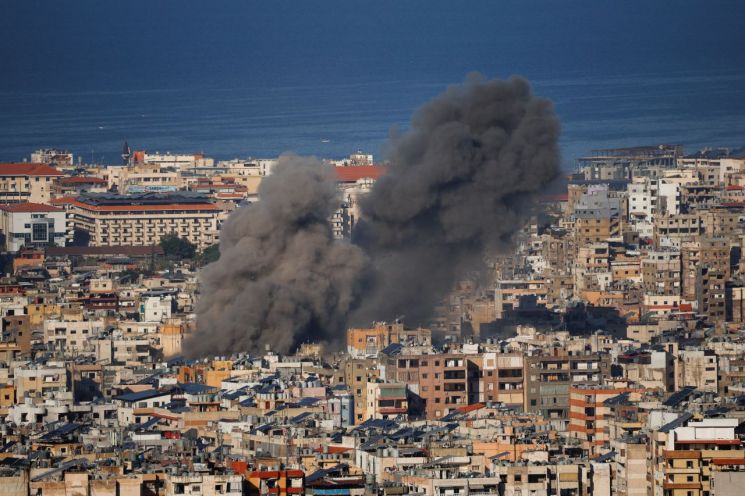 On the 17th (local time), smoke is rising in the southern suburbs of Beirut immediately after an airstrike by the Israeli military. Photo by Reuters Yonhap News
On the 17th (local time), spokesperson Afif was killed in an Israeli airstrike in central Beirut, Lebanon. The bombing reportedly killed two people and injured 22. Until now, Israel had not conducted airstrikes in the heart of Beirut city. The unusual airstrike is presumed to have targeted spokesperson Afif specifically.
With the death of Afif, Hezbollah has lost all major senior figures who had public recognition. He was a close aide to Hassan Nasrallah, the head of Hezbollah who was killed in an Israeli airstrike last September, and had been responsible for media affairs for years. Recently, as key senior figures were successively killed in Israeli airstrikes, Afif effectively served as Hezbollah's last focal point.
The Israel Defense Forces (IDF) stated in a press release after Afif’s death that "Afif joined Hezbollah in the 1980s and exerted considerable influence over military operations," adding, "He mobilized operatives to continue propaganda and psychological warfare among Hezbollah fighters." Before his death, Afif encouraged Hezbollah forces at a press conference to continue resisting. He said, "Israeli forces have not entered Lebanon, and Hezbollah has sufficient weapons and troops for a prolonged conflict."
With Afif’s death, Hezbollah’s leadership has effectively collapsed, making it difficult for the group to continue the war. Inside Hezbollah, it is known that after Afif’s death, they have continued to review the ceasefire proposal from the United States and Israel that was already underway.
Lebanese government also requests Iran to mediate ceasefire... "Please restrain Hezbollah"
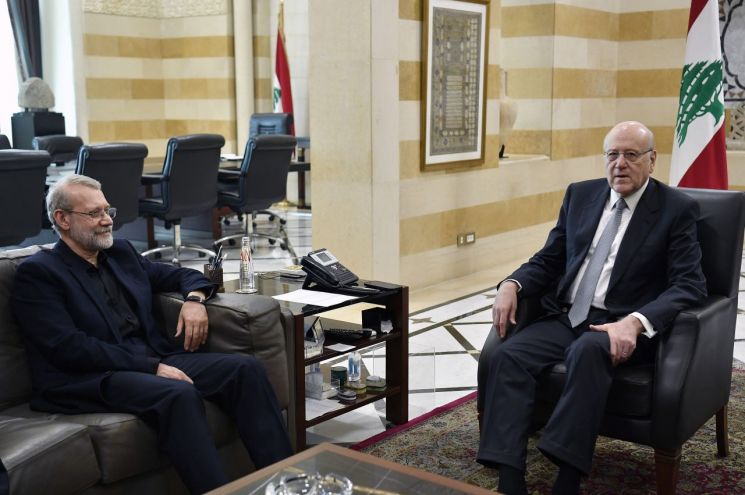 On the 15th (local time) in Beirut, Lebanon, Najib Mikati, Prime Minister of Lebanon (right), and Ali Larijani, Senior Advisor to the Supreme Leader of Iran (left), are holding a meeting. Photo by EPA
Until now, the Lebanese government had been passive regarding the clashes between Israel and Hezbollah, but it has now begun actively seeking a breakthrough for a ceasefire. The Lebanese government formally requested the Iranian government, which supports Hezbollah from behind the scenes, to restrain Hezbollah’s military activities and mediate negotiations with Israel.
CNN recently reported that Lebanese Prime Minister Najib Mikati met with Ali Larijani, the chief advisor to Iran’s Supreme Leader, to discuss the ceasefire proposal from the United States and Israel. The proposal includes a 60-day cessation of hostilities, the establishment of a temporary military demarcation line along the Lebanon-Israel border, and the creation of a buffer zone about 20 km wide along the existing boundary with Hezbollah forces.
During the meeting, Prime Minister Mikati reportedly requested that Iran induce Hezbollah forces, which continue military activities along the Israel border, to withdraw and mediate the ceasefire. The Lebanese government also sent the ceasefire draft to Hezbollah and expressed its desire for the war to end and the ceasefire to be implemented.
Obstacle to ceasefire: Netanyahu aide imprisoned
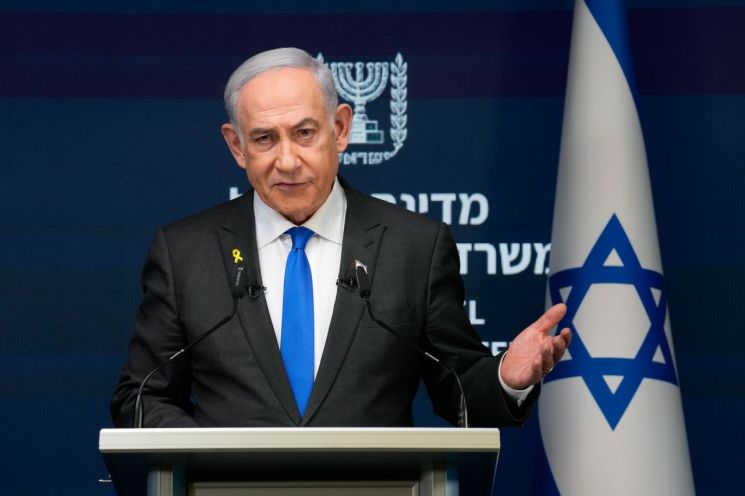
As the ceasefire proposal with Hezbollah gains momentum, the last remaining variable is Israel’s political instability. With the Netanyahu administration shaken by a political scandal, there are concerns that it may overturn the ceasefire and launch more intense attacks to prolong the war.
On the 17th, Leli Feltstein, Netanyahu’s public relations secretary, was arrested along with three accomplices. He is accused of leaking classified information that Hamas leaders Yahya Sinwar refused to agree to hostage release and ceasefire talks. It is known that he leaked the information to create public backlash against Israeli anti-government protesters demanding hostage exchanges and ceasefire negotiations with Hamas. Following this news, anti-government protests in Israel have intensified.
Netanyahu, already under investigation for various charges including bribery, fraud, and breach of trust, is now facing a political squeeze as the scandal involving his aide’s leak unfolds. The New York Times (NYT) reported, "Netanyahu’s bribery trial began in 2020 but has been suspended for over a year since the start of the conflict with Hamas," adding, "From Netanyahu’s administration’s perspective, the war must continue to delay the trial as much as possible and maintain the regime."
© The Asia Business Daily(www.asiae.co.kr). All rights reserved.
![Clutching a Stolen Dior Bag, Saying "I Hate Being Poor but Real"... The Grotesque Con of a "Human Knockoff" [Slate]](https://cwcontent.asiae.co.kr/asiaresize/183/2026021902243444107_1771435474.jpg)


















