It has been revealed that South Korean members of the National Assembly have the highest educational attainment among politicians worldwide. With one in three lawmakers holding a doctoral degree, it is interpreted that academic qualifications are one of the factors that help in entering politics.
The British magazine The Economist recently reported on a study that examined the educational backgrounds of politicians who served as members of parliament in 97 countries between 2015 and 2017. According to the paper, jointly published by researchers from six universities including Duke University in the United States, South Korea ranked first in the proportion of parliamentarians holding doctoral degrees among 56 countries with populations exceeding 2 million. Thirty-three percent of South Korean lawmakers held doctoral degrees, and master's and bachelor's degrees each accounted for 33%. Following South Korea, countries such as Ukraine, Taiwan, Slovenia, Mongolia, Romania, Poland, and the Czech Republic also had high proportions of parliamentarians with doctoral degrees, but none exceeded 25%.
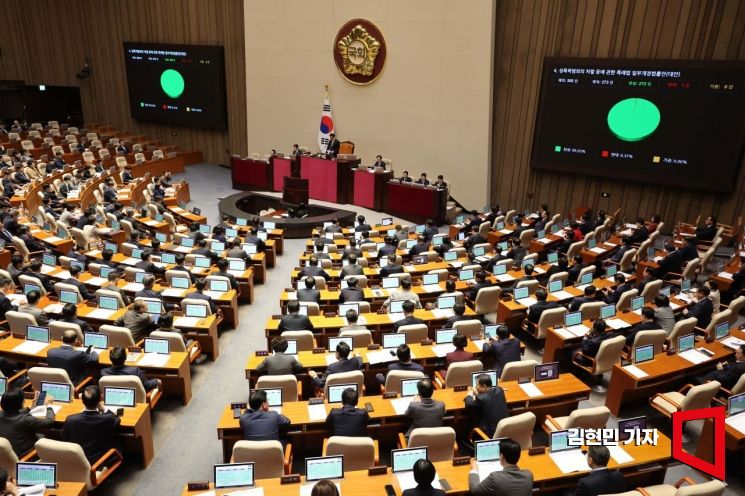
Among the 56 countries, Ukraine had the highest proportion of lawmakers with master's degrees. In Ukraine, where the majority of parliamentarians hold either doctoral or master's degrees, academic qualifications were analyzed as a significant factor aiding political entry. Since gaining independence from the former Soviet Union in 1991, all presidents except the current president Volodymyr Zelensky have been holders of doctoral degrees.
In the United States Congress, although there were few with doctorates, more than 66% held master's degrees.
Conversely, in countries such as Italy, Norway, and the United Kingdom, the proportion of lawmakers with only secondary education was around 25%. Lindsay Hoyle, the Speaker of the UK House of Commons, did not attend university, and Matteo Salvini, the Deputy Prime Minister of Italy, dropped out of university.
On average across the 97 countries, 78% of lawmakers held at least a bachelor's degree, and 40% had master's degrees.
The Economist predicted, "Since political entry routes tend not to change significantly even when regimes change, the data from the paper likely reflects the current reality as well."
© The Asia Business Daily(www.asiae.co.kr). All rights reserved.

















