Songpa-gu Donates 20 Tons of Fallen Ginkgo Leaves to Nami Island for a Golden Autumn Atmosphere and Eco-Friendly Compost... Seongdong-gu Donates 600kg of Harvest from 165 Senior Centers, Alleviating Odors and Walking Discomfort While Practicing Neighborly Love
The ginkgo tree turns a golden yellow in autumn, evoking a sense of abundance in those who see it.
This ginkgo tree benefits humans not only with its fallen leaves but also with its fruit.
Ginkgo leaves provide romance to tourists and also become compost. Additionally, ginkgo fruit plays a substantial role as a nourishing snack for the elderly.
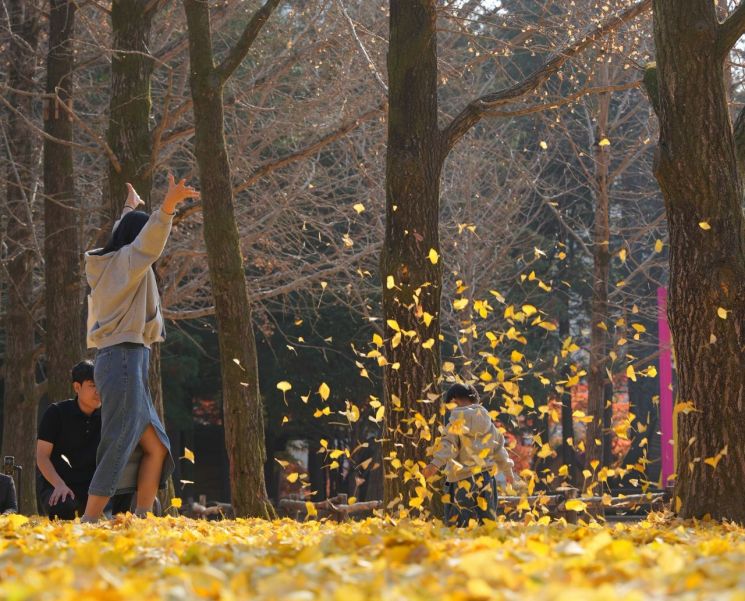
Songpa-gu Sends 20 Tons of Ginkgo Leaves to Nami Island, Chuncheon to Create 'Songpa Ginkgo Tree Road'
On the 15th, 20 tons of ginkgo leaves collected by Songpa-gu (Mayor Seo Gang-seok) will be sent to Nami Island in Chuncheon City, coloring the 'Songpa Ginkgo Tree Road' in bright yellow.
The special relationship between the two regions, which began in 2006, has now reached its 19th year. Every autumn, Songpa-gu has laid 20 tons of ginkgo leaves collected throughout the district on Nami Island to create the 'Songpa Ginkgo Tree Road.' This is why visitors can step on bright yellow ginkgo leaves even at the end of November on Nami Island, where the temperature is low and the autumn leaves fall early.
As a result, Songpa-gu has been able to dispose of fallen leaves at a cost equivalent to only 10% of the incineration expenses, covering just the transportation costs, while Nami Island has been able to attract visitors for a longer period to the otherwise barren tourist site using the ginkgo leaves supplied by the district. This ingenious idea has created a win-win effect beneficial to both sides.
In addition, the district provides about 600 tons of fallen leaves generated annually free of charge to farms in the metropolitan area. These leaves are mainly sent to eco-friendly farms in the Gyeonggi and Gangwon regions, where they are used as insulation to prevent cold damage to specialty crops or as eco-friendly compost.
In fact, the district's cost savings and recycling volume have increased every year. The savings, which were 42 million won in 2012, more than doubled to exceed 100 million won in 2019. This year, the district aims to recycle 670 tons, which is 98% of the expected fallen leaves, and plans to save 120 million won in leaf disposal costs.
On the early morning of the 15th, environmental officers personally loaded the cleanly sorted ginkgo leaves from Songpa-gu onto vehicles and transported them to Nami Island. In this way, fallen leaves, once treated as worthless, are becoming essential items for Nami Island and organic farms.
Seo Gang-seok, Mayor of Songpa-gu, said, “Achieving urban-rural coexistence and budget savings with simple fallen leaves was possible thanks to the creative and innovative public service mindset aimed at the public good,” adding, “We will continue to strive to raise residents' pride and discover ideas that consider the environment and resources.”
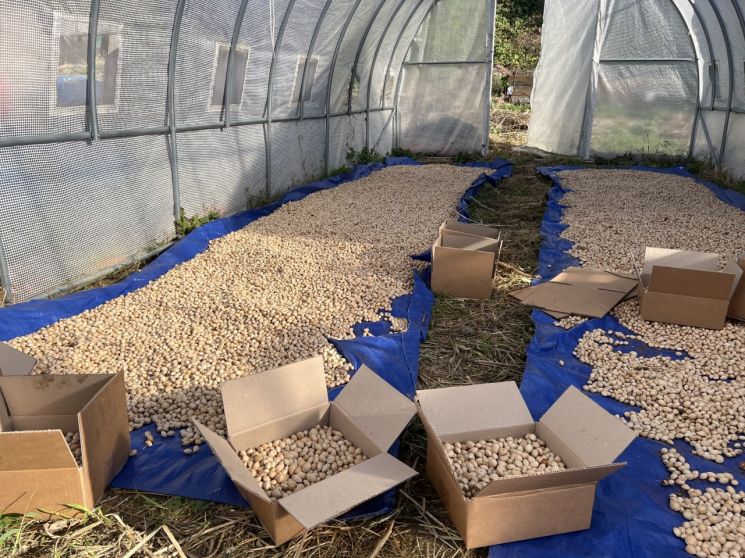
Seongdong-gu Harvests Early Ginkgo Fruit with Neighborly Love
Seongdong-gu (Mayor Jeong Won-o) harvested ginkgo fruit early from the ginkgo trees along the Jungnangcheon Songjeong Embankment area, creating a pleasant walking environment while practicing warm neighborly sharing.
The ginkgo tree is resistant to exhaust fumes, dust, and pollution from vehicles, and it absorbs harmful substances such as carbon dioxide from the air, making it excellent for air purification. It is also resistant to fire and pests, making it suitable as a street tree. However, the foul odor and residue from ginkgo fruit cause significant inconvenience to pedestrians and residents.
Songjeong Embankment Road in Seongdong-gu (around Songjeong-dong 73-851) is known as one of Seoul's representative autumn foliage paths, with 112 female ginkgo trees planted. Although it is a popular autumn destination visited by many people every year, the ginkgo fruit causes unpleasant odors and obstructs passage.
To resolve various inconveniences caused by ginkgo fruit and create a pleasant walking environment, the district conducted a ginkgo fruit harvesting project for about 20 days starting in mid-October, before the fruit began to fall.
A total of 600 kg was harvested, and the district decided to donate all the harvested fruit to local senior centers for meaningful use. Prior to donation, tests for heavy metals and residual pesticides were conducted, and all harvested fruit was deemed 'safe.'
On November 8, the harvest was delivered to 165 senior centers, where the elderly expressed gratitude for being able to share the warm sentiment of autumn.
Jeong Won-o, Mayor of Seongdong-gu, said, “This ginkgo fruit harvesting project maintains the function of street trees while minimizing inconveniences such as foul odors, resulting in high resident satisfaction,” adding, “We consider it especially meaningful to share warmth with the elderly and will continue to make meticulous efforts to create a pleasant street environment.”
© The Asia Business Daily(www.asiae.co.kr). All rights reserved.
![Clutching a Stolen Dior Bag, Saying "I Hate Being Poor but Real"... The Grotesque Con of a "Human Knockoff" [Slate]](https://cwcontent.asiae.co.kr/asiaresize/183/2026021902243444107_1771435474.jpg)
















