Yuriko Bi Passes Away, Reducing Imperial Family Members to 16
Average Age of Japanese Imperial Family Also Rises to 60.2 Years
Yuriko, Princess Mikasa, the oldest member of the Japanese imperial family, passed away at the age of 101 due to an illness. On the 16th, Kyodo News reported that Princess Yuriko had been hospitalized since March for treatment of cerebral infarction and pneumonia, but her condition worsened and she died at 6:32 a.m. the previous day at a hospital in Tokyo. Born in June 1923, she was the wife of Prince Mikasa, the fourth son of Emperor Taisho and the youngest brother of Emperor Hirohito. She was the aunt of Akihito, the 125th Emperor of Japan and current Emperor Emeritus, and the great-grandmother of the current Emperor Naruhito.
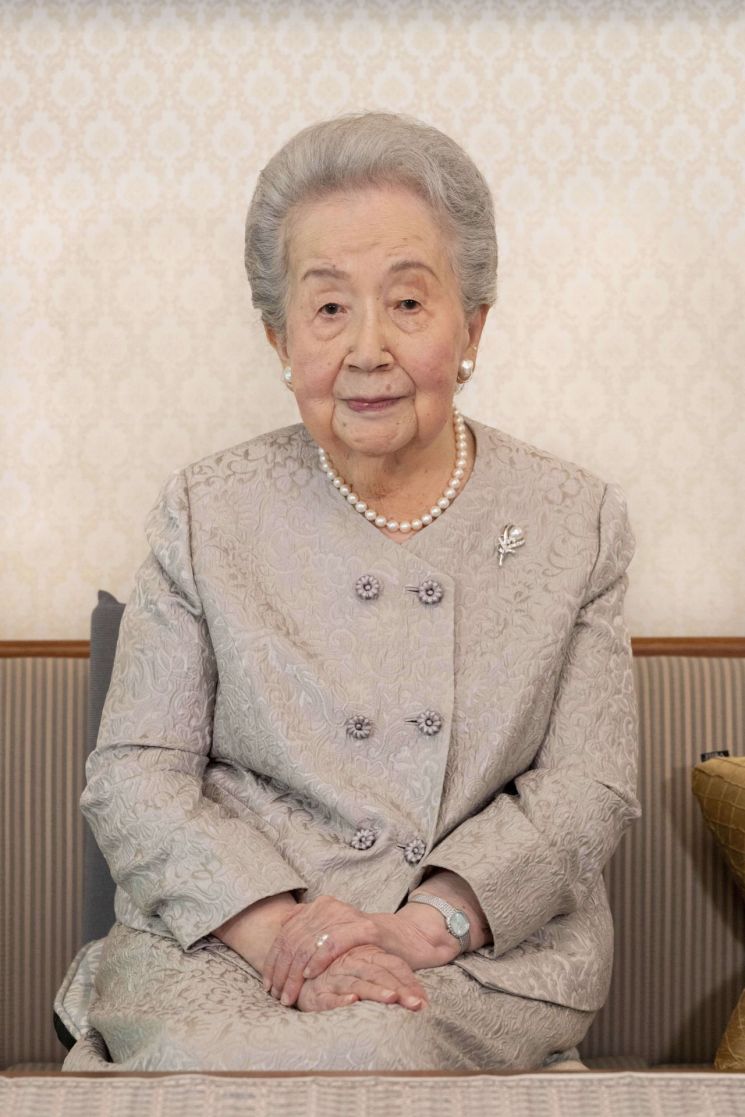 Mikasano Miya Yuriko Hi (Princess Yuriko), the oldest member of the Japanese Imperial Family, passed away at the age of 101 due to an illness. On the 16th, Kyodo News reported that Princess Yuriko had been hospitalized since March for treatment of a stroke and pneumonia, but her condition worsened, and she died at 6:32 a.m. the previous day at a hospital in Tokyo. AP Yonhap News
Prince Mikasa, who passed away in October 2016, was a pacifist who emphasized messages of reflection on war victims in Korea, China, and other countries. They had six children?three sons and three daughters?but all three sons have passed away. Princess Yuriko also served as the president of the social welfare organization "Boshiaiikukai" (Mother and Child Welfare Association) for over 60 years since 1948, supporting those involved in childbirth and childcare. Although she retired from active public duties due to her advanced age, she continued to attend official and imperial events as long as her health permitted, including the New Year's celebration ceremony this year, according to the Nihon Keizai (Nikkei) newspaper.
Meanwhile, there are currently only three members of the Japanese imperial family eligible for succession, and the average age of the imperial family has risen to 60.2 years. Twenty years ago, in 1994, there were 26 members of the imperial family, but with Princess Yuriko's passing, the number has decreased to 16. Furthermore, when princesses marry, they lose their imperial status, so the number is expected to decline further. A bigger issue is that Emperor Naruhito has no children other than Princess Aiko. Consequently, it is highly likely that Prince Hisahito, the only son of Crown Prince Fumihito, who is second in line to the throne, will become the next emperor after Naruhito.
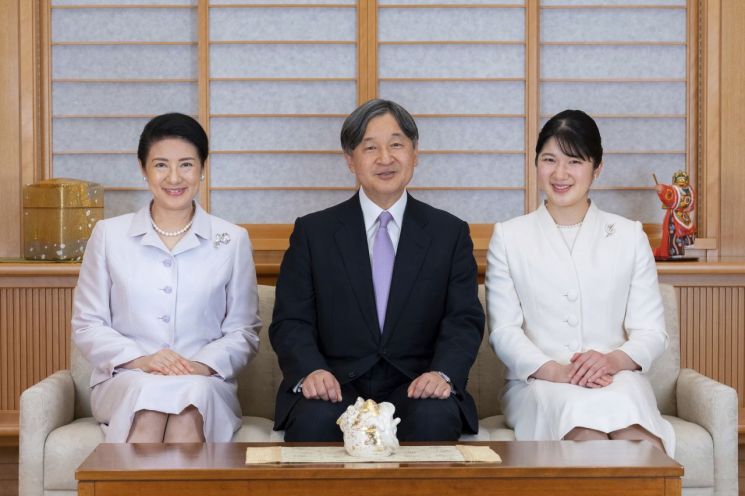 On December 23, 2023, Emperor Naruhito (center), Empress Masako (left), and their daughter Princess Aiko (right) are taking a New Year's family photo at the Tokyo Imperial Palace in Tokyo, Japan. Courtesy of the Imperial Household Agency of Japan
This is due to the provisions of Japan's "Imperial Household Law." Article 1 of the law stipulates that "the throne shall be succeeded by male descendants in the male line," and it specifies that female members of the imperial family lose their status upon marrying outside the imperial family. "Male descendants in the male line" refers to males born to male members of the imperial family. However, the reputation of the Crown Prince's family within Japan has been poor due to incidents such as the marriage controversy of former Princess Mako, the eldest daughter of the Crown Prince. In contrast, Princess Aiko is loved by the public for her characteristic humility.
Meanwhile, the United Nations has recommended that Japan allow women to succeed to the throne, as women currently cannot inherit the throne in Japan. However, the Japanese government has effectively rejected this recommendation. On the 1st, Foreign Minister Takeshi Iwaya expressed "deep regret" that the UN Committee on the Elimination of Discrimination against Women made recommendations concerning matters fundamental to the nation. Chief Cabinet Secretary Yoshimasa Hayashi also stated that it is "an issue unrelated to human rights." The far-right party Nippon Ishin no Kai also opposed the recommendation, saying that "(the issue of succession) is a matter of the country's culture and history."
© The Asia Business Daily(www.asiae.co.kr). All rights reserved.
![Clutching a Stolen Dior Bag, Saying "I Hate Being Poor but Real"... The Grotesque Con of a "Human Knockoff" [Slate]](https://cwcontent.asiae.co.kr/asiaresize/183/2026021902243444107_1771435474.jpg)
















