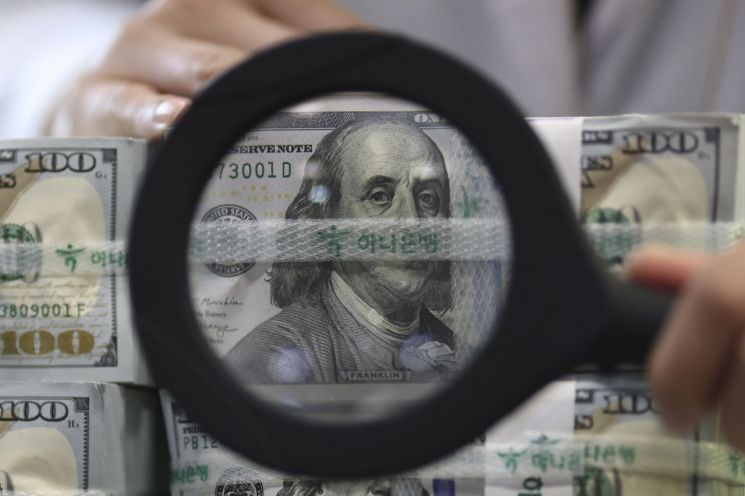
The U.S. Department of the Treasury has placed South Korea back on the currency watchlist after one year. South Korea had been included on the currency watchlist for over seven years since April 2016 but was removed last November.
On the 14th (local time), the U.S. Treasury designated seven countries, including South Korea, China, Japan, Singapore, Taiwan, Vietnam, and Germany, as currency watchlist countries in its semi-annual report to Congress titled "Macroeconomic and Foreign Exchange Policies of Major Trading Partners." South Korea was removed from the watchlist last November after more than seven years since April 2016 and was also excluded in the June report, but has now been included again. The other six countries were also on the watchlist in June.
Under the Trade Facilitation and Trade Enforcement Act enacted in 2015, the U.S. evaluates the macroeconomic and foreign exchange policies of its top 20 trading partners by trade volume. If certain criteria are met, countries are designated for in-depth analysis or placed on the watchlist. The criteria include: a bilateral trade surplus with the U.S. exceeding $15 billion, a current account surplus exceeding 3% of GDP, and net purchases of dollars for at least eight out of twelve months totaling more than 2% of GDP. Meeting two of these three criteria results in watchlist designation, while meeting all three leads to designation as a currency manipulator.
In the previous report, South Korea only met the trade surplus criterion, but this time the current account surplus criterion was added. The Treasury stated that as of the end of June this year, South Korea's annual current account surplus was 3.7% of GDP. This is a sharp increase from 0.2% a year ago, mainly due to strong external demand for South Korea's technology-related products, which boosted the goods surplus.
The U.S. Treasury analyzed that during the evaluation period, South Korea's current account surplus increased significantly, driven by a rise in the goods balance due to robust external demand for technology-related products. Regarding foreign exchange market intervention, the Treasury cited the net transaction details disclosed quarterly by the foreign exchange authorities and noted that from this year, structural improvements in the foreign exchange market have been implemented, including extended trading hours, participation of foreign financial institutions in the domestic foreign exchange market, and enhancements to foreign exchange market infrastructure, according to the Ministry of Economy and Finance.
South Korea's trade surplus with the U.S. increased from $38 billion the previous year to $50 billion. The South Korean government intervened in the market to limit won depreciation, net selling $9 billion (0.5% of GDP) from July last year to June this year, the Treasury reported. The Treasury urged that "South Korea should limit foreign exchange intervention to exceptional situations where the foreign exchange market is disorderly."
Earlier, the South Korean government held a macroeconomic and financial issues meeting chaired by Deputy Prime Minister and Minister of Economy and Finance Choi Sang-mok, stating, "With changes in the policy stance of the new U.S. administration, uncertainties remain regarding global economic growth, inflation trends, and major countries' monetary policy stances," and added, "We will closely monitor market conditions with heightened vigilance through a 24-hour joint inspection system involving related agencies," signaling verbal intervention measures in the foreign exchange market.
This report is the last from the Biden administration, and South Korea's re-designation as a currency watchlist country is a mechanical listing resulting from meeting two of the three designation criteria. However, there are forecasts that the second Trump administration, which emphasized tax cuts as a major pledge in its first one to two years in office to cover tax revenue and expand government spending through bond issuance, will prefer low-interest monetary policies and induce dollar weakness by designating countries like Japan and China as currency manipulators to improve trade balances.
© The Asia Business Daily(www.asiae.co.kr). All rights reserved.
![Clutching a Stolen Dior Bag, Saying "I Hate Being Poor but Real"... The Grotesque Con of a "Human Knockoff" [Slate]](https://cwcontent.asiae.co.kr/asiaresize/183/2026021902243444107_1771435474.jpg)















