BYD Officially Announces Launch of Passenger Cars in Korea Early Next Year
China's top electric vehicle manufacturer BYD (Biyadi) plans to introduce passenger cars in South Korea next year, drawing attention to how the market will respond. BYD has been steadily increasing sales in various overseas markets by enhancing both price competitiveness and product quality.
Considering domestic car consumption tendencies, there are forecasts that increasing sales of Chinese-made passenger cars may not be easy due to negative perceptions. However, some also expect BYD to play a certain role in dispelling the recently emerged chasm (temporary demand stagnation).
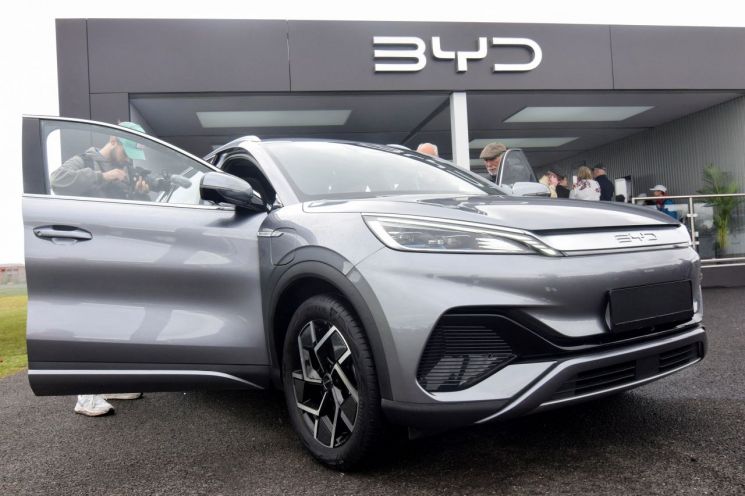
As BYD produces batteries, which largely determine electric vehicle prices, in-house, its price competitiveness among major automakers is unparalleled. With the official launch of its passenger brand in South Korea early next year, the mid-size sedan SEAL, mentioned as an initial launch model, is expected to be priced at 180,000 yuan, roughly 35 million KRW. Hyundai's Ioniq 6 with similar specifications starts at about 47 million KRW (excluding subsidies).
Even after factoring in tariffs, shipping costs, and receiving about half the subsidies, BYD's vehicles are likely to be launched at prices lower than domestic electric cars. In the UK, where both models have been released, the SEAL is about 9.5 million KRW cheaper than the Ioniq 6. BYD offers a diverse lineup ranging from affordable models priced in the 10 million KRW range to premium brands. Although plug-in hybrid models exist, their launch in Korea is unlikely due to the absence of subsidy regulations.
In Japan, known as a graveyard for foreign brands, BYD is said to have established a foothold in a short period. According to the Japan Imported Car Association, BYD's sales reached 2,015 units from the beginning of this year to last month, nearly doubling compared to the same period last year. Japan is considered a challenging market due to strong preferences for domestic car brands. Hyundai, which re-entered Japan around the same time, sold 526 units during the same period.
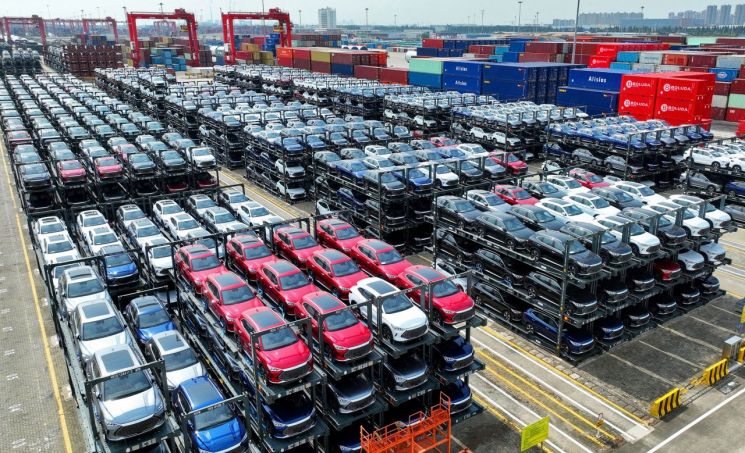
BYD is expanding its sales network in various regions including Southeast Asia such as Thailand and Vietnam, Europe, Latin America, and the Middle East. It mainly collaborates with local dealers that have established sales and maintenance networks, following a traditional approach. In South Korea, it is known to be discussing business directions with companies that have previously operated as import car dealers.
With vigorous production and sales growth, BYD has attracted significant attention from the global automotive industry for several years. Last year, its global sales reached 3.02 million units, marking its first entry into the 'Global Top 10.' This year, BYD has continued to expand production capacity, surpassing 500,000 units sold last month for the first time. If this trend continues until the end of the year, sales are expected to exceed 4 million units, surpassing last year's results of Ford and Honda, potentially reaching the 7th or 8th position globally.
While the domestic car industry remains cautious, there are also expectations that BYD could serve as a turning point to revitalize the sluggish South Korean electric vehicle market. From the beginning of this year to last month, newly registered electric vehicles in South Korea totaled 122,672 units, about 8% less than the same period last year. The market had been rapidly growing over recent years, but the electric vehicle demand slump that began late last year is expected to continue for several more years. Most potential buyers have already purchased vehicles, and factors such as charging infrastructure and high prices are hindering growth.
Given the strong tendency of Korean consumers to view cars as major assets, some believe expanding sales will be difficult. In the domestic new car market, imported cars also show a clear preference for premium brands like BMW, Mercedes-Benz, Lexus, and Porsche, while domestic cars are predominantly consumed in higher trims and specifications.
© The Asia Business Daily(www.asiae.co.kr). All rights reserved.
![Clutching a Stolen Dior Bag, Saying "I Hate Being Poor but Real"... The Grotesque Con of a "Human Knockoff" [Slate]](https://cwcontent.asiae.co.kr/asiaresize/183/2026021902243444107_1771435474.jpg)

















