At 9 AM on the 12th, in front of City Hall at Yeonje Happiness Gymnasium, Mayor Park Hyung-jun, experts in architecture and housing, youth and newlyweds, and active middle-aged attendees
Mayor Park: "We will steadily implement the '5 Key Tasks for Happy Housing' to create a city where youth want to live without housing worries and where the elderly are happy."
On the 12th at 9 a.m., Busan City will hold the ‘3rd Citizen Happiness Busan Meeting’ under the theme of ‘A Residential City of Happiness Beyond Imagination, Busan’ at the Yeonje Happiness Gymnasium in the 2nd Complex of the Happy Housing in front of City Hall.
The ‘Citizen Happiness Busan Meeting’ was established by Mayor Park Hyung-jun to directly listen to citizens’ voices and reflect them in policies, aiming to promote policies that citizens can feel in their daily lives during the second half of the 8th term of the elected government. This is the third session.
Mayor Park, who has emphasized the importance of housing stability for creating a ‘Citizen Happiness City that Empowers Me’ during the 8th term, decided the theme of the third ‘Citizen Happiness Busan Meeting’ as ‘A Residential City of Happiness Beyond Imagination, Busan’ to prepare groundbreaking housing policies that allow all generations, including youth and newlyweds, to live without lifelong housing worries.
Today’s meeting will be attended by Mayor Park, representatives and experts from various institutions, associations, and organizations leading the development of Busan’s architecture and residential environment, as well as young people and newlyweds currently living in or hoping to live in rental housing, and active middle-aged seniors planning for a healthy old age.
Before the meeting, Mayor Park will tour the Happy Housing facility in front of City Hall, which is currently well-received and highly regarded among youth and newlyweds. The meeting will then proceed with the presentation of the ‘Five Key Tasks for Happy Housing,’ followed by a talk concert on-site where citizens and the mayor will communicate and empathize together.
In particular, today’s meeting will announce policies to promote the ‘Wave of Housing Innovation, Five Key Tasks for Happy Housing’ to create ‘A Residential City of Happiness Beyond Imagination, Busan.’
The five key tasks include ▲ Lifelong Together ‘Youth Everyone’s Home (家)’ ▲ Public Housing Beyond Imagination ▲ Seamless On-site Housing Support ▲ Future City Transition and Old Housing Redevelopment ▲ Creation of Active Senior Town, covering the plans for these five tasks.
The city has established the ‘2032 Busan Comprehensive Housing Plan’ to set the direction of housing policies that respond to future demand.
Specifically, the city focused on demographic changes such as the outflow of youth to other regions, low total fertility rate, aging population, and increase in single-person households. Among these, the city prioritized easing the burden on youth and establishing housing innovation measures tailored to each generation, preparing the following five key tasks for happy housing to create ‘A Residential City of Happiness Beyond Imagination, Busan.’
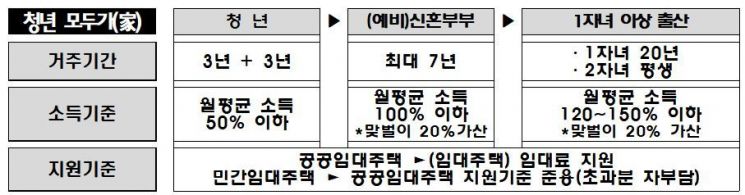
? Support housing stability for youth and newlyweds through lifelong ‘Youth Everyone’s Home (家)’ initiative.
‘Youth Everyone’s Home (家)’ is a plan to support lifelong housing supply with zero rent and zero housing worries for youth and newlyweds in rental housing.
Support details include full monthly rent support for public rental housing based on purchase rental and jeonse (key money deposit) rental standards, and support for private rental housing following the public rental housing support criteria. The support amount is approximately 300,000 KRW on average per housing type for purchase rental and jeonse rental as of 2024.
The target supply is 10,000 units over six years from 2025 to 2030 (8,500 public rental, 1,500 private rental), with an annual goal of supplying 2,000 units for youth and newlyweds thereafter.
Eligible recipients are youth and (prospective) newlyweds residing in Busan whose monthly average income is below 50% for youth and between 100% and 150% for newlyweds of the previous year’s urban worker average income by household size announced by Statistics Korea.
The support period for public rental housing is up to 6 years for youth and 7 years for newlyweds, extended to 20 years upon the birth of one child, and lifelong for two or more children. For private rental housing, support will be provided up to 20 years reflecting its characteristics.
Supported housing includes 8,500 units of public rental housing such as purchase rental, jeonse rental, Happy Housing, transit station area zoning-up donation housing, and integrated public rental housing from 2025 to 2030, with continuous support of 1,700 units annually thereafter. Private rental housing includes 1,500 units of transit station area Hope Plus Housing and public-supported private rental housing from 2025 to 2030, with 300 units annually thereafter to alleviate housing cost burdens.
To this end, the city plans to actively consult with Busan Urban Corporation, Korea Land and Housing Corporation, and others to ensure smooth demand management and supply of Youth Everyone’s Home (家), and to expand supported housing by actively utilizing integrated public rental housing in Daejeo Public Housing District, Centum 2 District Urban High-tech Industrial Complex, and Myungji International New City 2nd District public land.
? Eliminate social prejudice against rental housing by building ‘Public Housing Beyond Imagination.’
First, the city plans to activate ‘Hope Plus Housing’ near transit stations for youth by significantly expanding the supply of high-quality public-supported private rental housing at prices lower than market rates.
‘Hope Plus Housing’ is a project to supply high-quality private rental housing at prices lower than market rates to youth for 10 years by relaxing building regulations in commercial areas near transit stations.
To activate the project, the target area for Hope Plus Housing will be expanded from existing commercial areas near transit stations to all commercial areas and residential areas near transit stations, with relaxed building regulations such as zoning changes and parking reductions, and up to 2% annual interest support on construction funds to dramatically increase supply.
Currently, there are about 4,000 units in 14 complexes under development in commercial areas near transit stations, and if the project is activated, the supply scale is expected to expand by more than 10,000 additional units.
Second, the design and space of public housing will be dramatically improved. Improvements include enhancing the exterior design of public housing, diversifying supply sizes, and planning common spaces at the level of private housing. By reflecting creative design and diverse lifestyles in public housing, it is expected to eliminate social prejudice and disconnection related to rental housing.
Third, the city will develop housing models for single-person households in communal housing. To this end, the city plans to improve housing stability for single-person households through customized policy support considering their economic, social characteristics, and housing conditions in 2025 in cooperation with Busan Urban Corporation.
? Implement seamless ‘On-site Housing Support’ projects.
First, to strengthen housing stability support for victims of jeonse fraud, a fixed amount of housing stability support will be provided once. Additionally, as a practical measure to prevent the spread of jeonse fraud, full interest support on jeonse loan will be provided for up to 2 years within a limit of 400,000 KRW monthly for those who have taken out the Jeonse Victim Support Loan, and a ‘Temporary Private Monthly Rent Support Project’ will be implemented for actual residents who have signed private monthly rent contracts.
Second, to improve the housing environment of child housing poverty households, essential living facilities will be installed for children living in poor housing environments with median income below 75%, and up to 10 million KRW per household will be provided for improving living space efficiency, furniture, and heating/cooling equipment installation.
? Promote ‘Old Housing Redevelopment’ for future city transition.
First, sequential redevelopment of 26,000 units in 21 aged public rental housing complexes over 30 years old within the city will be promoted. To improve not only the physical aging of public rental housing but also social stigma and deep disconnection with surroundings, the city is working with Busan Urban Corporation to establish various commercialization plans through a service to prepare a ‘Busan-type Public Rental Housing Redevelopment Mid- to Long-term Roadmap.’
Second, the city plans to create a residential environment that meets citizens’ expectations through redevelopment of aged planned cities.
The target projects are land sites over 1 million square meters that are more than 20 years old, and the city is actively consulting with the Ministry of Land, Infrastructure and Transport on five pilot project sites (① Haeundae 1 & 2 ② Hwamyung & Geumgok ③ Dadae area ④ Mandeok ⑤ Mora).
Third, following the enactment of the ‘Act on Support for Urban Complex Development,’ the city plans to promote urban complex development projects to lead the transition to a future city.
? Create a 1 million-pyeong ‘Active Senior Town’ for retiring baby boomers.
Busan became the first metropolitan city to enter a super-aged society in 2021, with the aging rate continuously increasing. Accordingly, to actively respond to the demand for a new residential culture for baby boomers with high income levels (providing various convenience facilities and services) and the government’s announcement of the ‘Senior Residence Activation Plan’ (July 2024), the city plans to introduce the ‘Busan-type Active Senior Town Housing Model’ combining household, health, and leisure services.
Among the ‘Busan-type Active Senior Town Housing Models,’ the ‘urban type’ will be developed as a senior welfare facility planned in Marine City, U-dong, Haeundae-gu; the ‘suburban type’ will be developed as a specialized senior town complex based on medical services in cluster residential districts in Gangseo-gu, Geumjeong-gu, and Haeundae-gu, and near the heavy ion accelerator in Gijang-gun as a leading project. The city aims to secure a specialized city for seniors by creating up to 1 million pyeong within the city area.
These ‘Five Key Tasks for Happy Housing’ were planned based on the vision and goals of the ‘2032 Busan Comprehensive Housing Plan.’
Additionally, the city plans to launch the ‘Future Busan Housing Policy Forum’ in 2025 to share excellent domestic and international housing policy cases and knowledge and explore cooperation methods. Through this, the city will strive to realize housing stability and prepare various policy alternatives, dedicating its best efforts to implementing the ‘Five Key Tasks for Happy Housing.’
Mayor Park Hyung-jun stated, “To make Busan ‘a city where people want to live again,’ resolving citizens’ housing worries is the most important factor.” He added, “We will faithfully implement the ‘Wave of Housing Innovation, Five Key Tasks for Happy Housing’ to create a city where youth want to live without housing worries and where the elderly can live happily.”
© The Asia Business Daily(www.asiae.co.kr). All rights reserved.
![Clutching a Stolen Dior Bag, Saying "I Hate Being Poor but Real"... The Grotesque Con of a "Human Knockoff" [Slate]](https://cwcontent.asiae.co.kr/asiaresize/183/2026021902243444107_1771435474.jpg)
















