President-elect of the United States Donald Trump’s transition team announced on the 10th (local time) that on January 20th next year, the first day of his inauguration, he will initiate the largest-scale deportation of illegal immigrants in U.S. history.
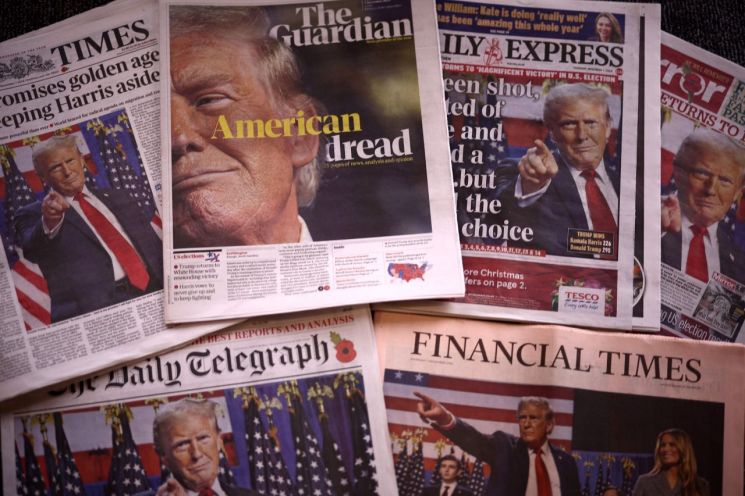
Caroline Rabbit, spokesperson for the transition team, stated in an interview with Fox News that policy advisors are currently drafting dozens of executive orders that Trump will sign after his inauguration on January 20th. President-elect Trump has indicated that he will carry out deportation operations modeled after the 1950s Dwight Eisenhower administration’s policy, which used military service to deport migrant workers.
Additionally, Rabbit explained that Trump plans to restore the so-called 'Remain in Mexico' policy. This policy requires asylum seekers to stay on the Mexican side of the U.S.-Mexico border while their procedures are processed. It was introduced during Trump’s first administration but faced enforcement difficulties due to Mexico’s opposition and legal battles.
On the same day, Trump personally announced that Tom Homan, who served as acting director of the Immigration and Customs Enforcement (ICE) during the first administration, will join the second administration as the 'border czar.' Through Truth Social, he stated, "I am pleased to announce that Tom Homan, former ICE director and a strong advocate for border control, will join the Trump administration as the official in charge of our borders ('border czar')."
The early announcement of this appointment is interpreted as a demonstration of his commitment to his key campaign promise of cracking down on illegal immigration. Former President Trump said, "I have known Tom for a long time, and there is no one better suited to control and monitor the border," adding, "Tom Homan will also oversee the deportation of all illegal residents back to their countries."
Meanwhile, in an interview with the British daily The Times Sunday edition, The Sunday Times, Tom Homan emphasized that newly constructed detention centers will house those to be deported and that the U.S. military could play a larger role in their transportation. He also expressed confidence that there will be no humanitarian disasters during the large-scale deportation process, stating, "We will focus on the worst of the worst."
© The Asia Business Daily(www.asiae.co.kr). All rights reserved.
![Clutching a Stolen Dior Bag, Saying "I Hate Being Poor but Real"... The Grotesque Con of a "Human Knockoff" [Slate]](https://cwcontent.asiae.co.kr/asiaresize/183/2026021902243444107_1771435474.jpg)















