Notification of No Orders for Sub-7nm Semiconductors
UK FT and Other Foreign Media Report Citing Sources
Alibaba, Baidu Expected to Be Impacted
Interpreted as Considering Trump’s Re-election
Taiwan's TSMC, which dominates the global foundry (semiconductor contract manufacturing) market, has decided to halt the production of artificial intelligence (AI) semiconductors for Chinese companies starting next week, according to foreign media including the UK Financial Times (FT) on the 8th (local time).
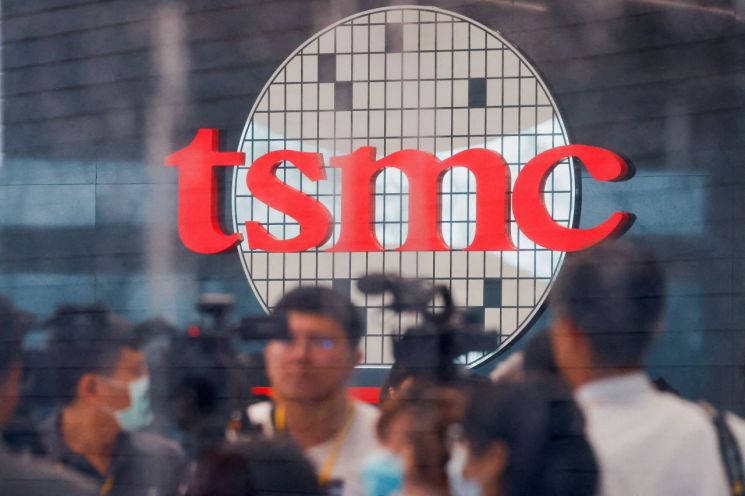
FT cited three sources reporting that TSMC notified its Chinese customers earlier this week that it will no longer accept semiconductor orders below 7nm (nanometer = one billionth of a meter) starting from the 11th.
Two of the sources explained that TSMC will have to undergo an approval process, which may involve U.S. intervention, to supply advanced semiconductors to Chinese customers in the future.
Accordingly, FT pointed out that this move is expected to impact Chinese big tech companies such as Alibaba and Baidu, which have heavily invested in semiconductor design for their AI clouds.
TSMC's decision is interpreted as being made with the re-election of U.S. President Donald Trump in January next year in mind. Before the election, Trump targeted TSMC, saying, "Semiconductor companies are very wealthy," and "They stole 95% of our business and now they are in Taiwan."
Earlier, market research firm TechInsights recently revealed that after dismantling Huawei's advanced AI chipset 'Ascend 910B,' they found a TSMC processor inside. This suggests a possible violation of U.S. government export controls. The U.S. government has prohibited Huawei from purchasing semiconductors made using U.S. equipment since 2020, citing national security concerns. TSMC heavily relies on U.S.-made equipment for semiconductor manufacturing.
At that time, TSMC stated that it had done nothing wrong and would cooperate with the U.S. Department of Commerce to investigate the issue. It also stopped supplying products to one customer who delivered semiconductors to Huawei. Even if TSMC loses Chinese customers, the impact on its sales is likely to be limited. According to Hong Kong's South China Morning Post (SCMP), the proportion of mainland China in TSMC's sales in the last quarter was only 11%.
© The Asia Business Daily(www.asiae.co.kr). All rights reserved.
![Clutching a Stolen Dior Bag, Saying "I Hate Being Poor but Real"... The Grotesque Con of a "Human Knockoff" [Slate]](https://cwcontent.asiae.co.kr/asiaresize/183/2026021902243444107_1771435474.jpg)















