Severe Fatigue Initially Attributed to Post-COVID Symptoms
Diagnosed with Stage 4 Lung Cancer Due to EGFR Mutation
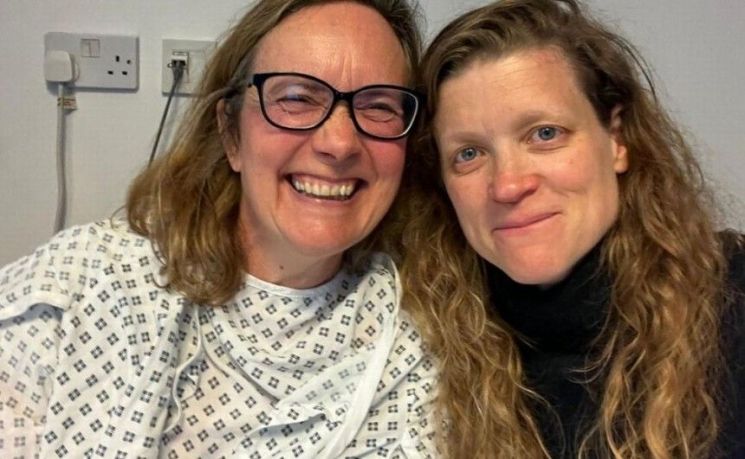
A woman in her 50s from the UK revealed that despite never having smoked in her life, she was diagnosed with stage 4 lung cancer and given a terminal prognosis.
According to British media outlets The Mirror and Daily Mail on the 6th (local time), Melanie Irwin (57) had been suffering from extreme fatigue for some time. Irwin thought this was 'Long COVID (chronic COVID-19 syndrome),' a known aftereffect of COVID-19, and did not take it seriously.
However, in March, hospital tests revealed that Irwin was diagnosed with stage 4 lung cancer and given a terminal prognosis. Irwin said, "I did not even have a cough, which is one of the main symptoms of lung cancer. I only had fatigue, so I thought it was a post-COVID aftereffect." She added, "Everyone around me was shocked. They said it was unbelievable that someone who lived so healthily and never smoked or even touched a cigarette got lung cancer."
Test results confirmed that Irwin had an EGFR mutation. This mutation is known to cause lung cancer even in non-smokers. She said, "If you have the mutation, even non-smokers can get lung cancer. I want to raise awareness that anyone with lungs can get it." Irwin is currently undergoing treatment to stop the proliferation of cancer cells while fighting the disease. Lung cancer patients with the EGFR mutation like Irwin are not uncommon. According to the medical community, non-small cell lung cancer accounts for 80-90% of all lung cancers, and 40% of those have the EGFR mutation. EGFR regulates the growth and development of normal cells, but when mutated, it causes cancer by promoting cancer cell proliferation and inhibiting programmed cell death.
Meanwhile, smoking is considered a major cause of lung cancer. In fact, smokers have a 15 to 80 times higher risk of lung cancer than non-smokers. Additionally, air pollution and long-term asbestos exposure can also cause lung cancer. Early-stage lung cancer presents symptoms similar to a cold, such as coughing, phlegm, and hoarseness, and as the cancer progresses, symptoms like blood-tinged phlegm, difficulty breathing, and chest pain occur.
© The Asia Business Daily(www.asiae.co.kr). All rights reserved.
![Clutching a Stolen Dior Bag, Saying "I Hate Being Poor but Real"... The Grotesque Con of a "Human Knockoff" [Slate]](https://cwcontent.asiae.co.kr/asiaresize/183/2026021902243444107_1771435474.jpg)















