In just six days this month, dollar deposits at major commercial banks have increased by more than 1.6 trillion won. The banking sector interprets this as some investors betting on the re-election of former President Donald Trump, who is expected to implement 'strong dollar' policies such as imposing tariffs.
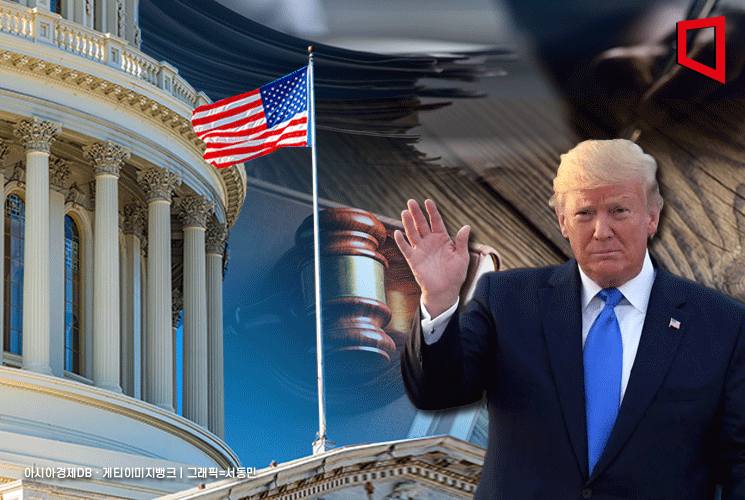
According to the financial sector on the 8th, the dollar deposit balance at the five major commercial banks (KB Kookmin, Shinhan, Hana, Woori, NH Nonghyup) stood at $61.811 billion as of the 6th. This represents a 2.06% ($1.249 billion) increase compared to the end of the previous month ($60.562 billion). In just six days, more than 1.6 trillion won was converted into dollars.
The foreign currency deposit balances of the five major banks have steadily risen: ▲June $53.261 billion ▲July $57.348 billion ▲August $63.149 billion ▲September $63.698 billion. Especially in August and September, when the KRW-USD exchange rate dropped to the 1,310?1,340 won range (closing price basis), the increase in dollar deposits reached $6 billion.
This trend began to reverse in late last month, when the exchange rate reached the 1,380 won level as the U.S. presidential election approached its final stage. As of the end of last month, the dollar deposit balance decreased by 4.92% ($3.136 billion) compared to the previous month, marking the first decline in five months.
However, in just six days, the dollar deposit balance resumed its upward trend. Between the 1st and 5th of this month, the KRW-USD exchange rate slightly fell to the 1,370 won range, but on the 6th, when former President Trump's re-election was confirmed, the closing price at 3:30 PM surged to 1,396.20 won.
A representative from a commercial bank said, "The exchange rate sharply rose throughout October, which can be seen as the market anticipating the return of former President Trump," adding, "The increase in dollar deposits this month also appears to be in anticipation of Trump's re-election and the resulting further rise in the exchange rate."
The financial sector believes that the strong dollar phenomenon is likely to continue with Trump's return. This is because former President Trump advocates a protectionist trade policy domestically in the U.S., including expanding tariffs. If tariffs cause domestic product prices to rise, it leads to inflation, which in turn results in higher interest rates and a stronger dollar. Especially for Korea, which is highly dependent on exports, if trade disputes expand and export volumes decrease, the won is likely to weaken significantly.
A financial sector official stated, "The sentiment that former President Trump, who wields tariffs like a club, is likely to be re-elected has pushed the exchange rate to around 1,400 won," adding, "With the Republican Party controlling both the House and Senate, the exchange rate is expected to rise further."
© The Asia Business Daily(www.asiae.co.kr). All rights reserved.
![Clutching a Stolen Dior Bag, Saying "I Hate Being Poor but Real"... The Grotesque Con of a "Human Knockoff" [Slate]](https://cwcontent.asiae.co.kr/asiaresize/183/2026021902243444107_1771435474.jpg)















