Mapo-gu to Co-host Waste Incineration Opposition Forum with Global Alliance for Incinerator Alternatives Gaia on November 5
Professor Paul Connett Criticizes Unscientific Methods of Measuring Harmful Substances from Waste Incineration and Raises Human Health Concerns
Park Gang-su, Mayor of Mapo-gu, Urges Seoul to Benchmark Cities That Have Eliminated Incinerators... Vows to Prevent Any Further Outdated Incinerator Construction
.
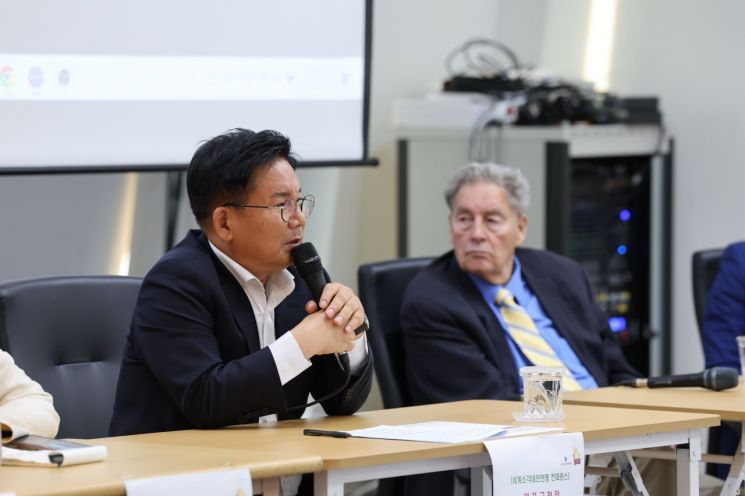
Mapo-gu (Mayor Park Gang-su) held an international forum against waste incineration on November 5th in collaboration with the Global Alliance for Incinerator Alternatives (GAIA), a network of over 1,000 environmental organizations from 92 countries worldwide.
This forum was planned by Mapo-gu to discuss and debate global policy trends and solutions regarding waste incineration in order to oppose the construction of additional incineration plants, and to share with residents the environmental and health impacts of waste incineration.
Before the discussion, at 2 p.m., Professor Paul Connett, a global resource circulation activist, delivered a keynote speech criticizing the risks of harmful substances generated by waste incineration and the inaccuracies in measurement methods, and introduced resource circulation policies that can overcome the environmental crisis currently faced by the world.
Professor Paul Connett stated, “Even the state-of-the-art incinerator in Harlingen, Netherlands, which claims a dioxin level of zero, showed results 460 to 1290 times higher after a four-week long-term measurement by Toxico Watch (Toxic Substance Monitoring Foundation). Currently, measurements of harmful substances such as dioxins are mostly conducted over short periods of only 6 to 7 hours, so the results cannot be trusted.”
He explained that nanoparticles smaller than 1 micron emitted from incinerators are not detected by current measurement methods but can penetrate deeper into the human body and cause various diseases such as cancer and Alzheimer’s.
Furthermore, Professor Paul Connett emphasized that no waste incineration can be harmless to humans and the environment by any technological means, and the fundamental solution lies in zero waste, that is, industrial innovation that produces no waste and resource circulation through recycling.
This aligns with Mapo-gu’s resource circulation policy, which strongly promotes the expansion of the Mapo-style recycling separation facility called ‘Incineration Zero Store’ and recycling projects for waste fabric and coffee grounds, based on the policy principle that waste should be fundamentally reduced instead of incinerated or landfilled.
Following this, a panel discussion on the legitimacy of opposing incinerators and practical alternatives was held from 4 p.m., attended by Park Gang-su, Mayor of Mapo-gu; Professor Paul Connett; Shin Woo-yong, Secretary General of the Korean Federation for Environmental Movements (KFEM); and Sung Eun-kyung, representative of the Mapo Incinerator Abolition Struggle Headquarters. Janek Vahk, an environmental activist from Zero Waste Europe, also participated via the online platform Zoom, engaging in a heated discussion.
Sung Eun-kyung, representative of the Incinerator Abolition Struggle Headquarters, said, “Despite the global trend toward zero waste instead of incinerators, Seoul City is pushing forward with the construction of a large-scale incinerator without fundamental environmental philosophy or communication with residents. Although the environmental impact assessment claimed the effect of incinerated materials is minimal, it is questionable whether this can be trusted.”
In response, Professor Paul Connett said, “The environmental impact assessment standards are Korean standards, and the measurement methods cannot be considered accurate or thorough. Especially, new harmful substances such as PFAS (per- and polyfluoroalkyl substances) emitted from incineration likely have no measurement standards or regulations.”
Environmental activist Janek Vahk also explained, “Europe also promoted incinerated materials as safe, but investigations of animal and plant samples near incinerators revealed dioxin and other harmful substances exceeding permissible levels. The global trend is shifting from incinerator construction to resource circulation policies.”
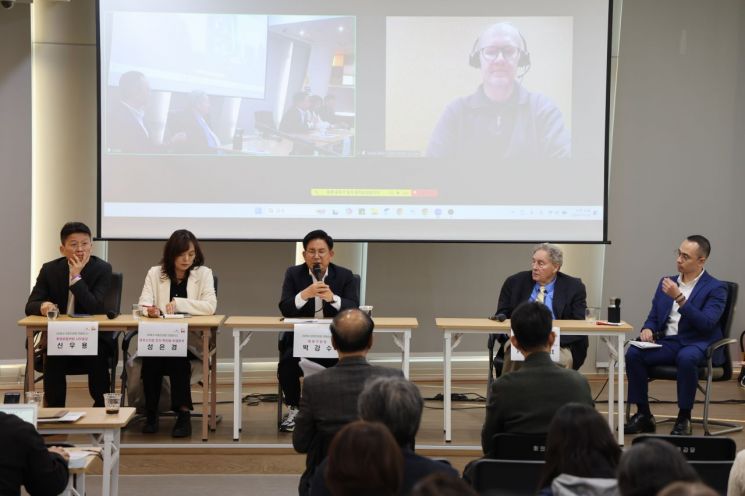
Park Gang-su, Mayor of Mapo-gu, said, “Rather than visiting the state-of-the-art incinerator in Amager Bakke, Denmark, Mayor Oh Se-hoon of Seoul should benchmark cities like ‘Capanori’ in Italy or ‘Baguio’ in the Philippines, which have eliminated incinerators and are implementing zero waste policies.”
He added, “Mapo-gu will strongly oppose the additional construction of incinerators, which infringes on the health rights of 370,000 Mapo residents without proper consideration or will from policymakers for sound environmental policies, and will use all means to prevent the construction.”
On November 4th, Mapo-gu launched a policy advisory group consisting of 12 experts including professors, researchers, and residents to counter Seoul City’s incinerator construction plans. The district will also promptly deliver a petition with 57,000 signatures opposing the incinerator to Seoul City to clearly convey the opposition of Mapo residents.
© The Asia Business Daily(www.asiae.co.kr). All rights reserved.
![Clutching a Stolen Dior Bag, Saying "I Hate Being Poor but Real"... The Grotesque Con of a "Human Knockoff" [Slate]](https://cwcontent.asiae.co.kr/asiaresize/183/2026021902243444107_1771435474.jpg)
















