UN Committee on the Elimination of Discrimination against Women Recommends Revision of Royal Succession Law
Japanese Government Officials Oppose... "Not Related to Human Rights"
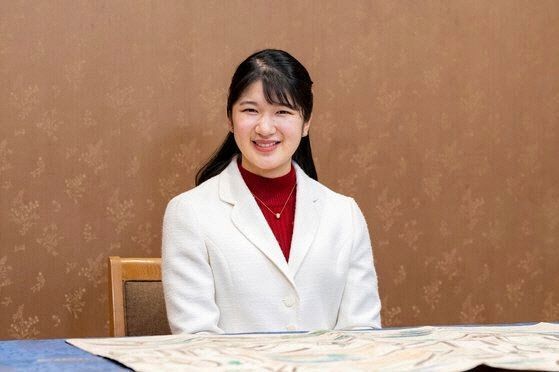
Princess Aiko's Possibility of Succession Diminishes
The United Nations recommended that Japan, where women cannot inherit the throne, "allow women to succeed to the throne," but the government has effectively expressed a rejection. According to the Yomiuri Shimbun on the 4th, Foreign Minister Takeo Iwaya stated on the 1st, "(The UN Committee on the Elimination of Discrimination against Women) made recommendations on matters related to the fundamentals of the state, which is very regrettable," and Chief Cabinet Secretary Yoshimasa Hayashi also said, "This is an issue unrelated to human rights." The far-right party Japan Innovation Party also opposed, saying, "(The issue of succession to the throne) is a matter of the country's culture and history."
The UN Committee on the Elimination of Discrimination against Women reviewed Japan's women's policies at the UN Geneva office in Switzerland on the 29th of last month (local time) and recommended revising the Imperial Household Law, which allows only men to succeed to the throne. The committee had made the same recommendation in 2003, 2009, and 2016. However, the Japanese government delegation protested, saying "It is inappropriate for the Committee on the Elimination of Discrimination against Women to deal with the Imperial Household Law," and demanded the deletion of that part.
According to the Japanese Imperial Household Law, female members of the imperial family must give up their royal status upon marriage. Therefore, they cannot inherit the throne. In the past, Princess Sayako, the younger sister of Emperor Naruhito, left the imperial family and took her husband's surname after marrying a commoner, and recently, Princess Mako, the eldest daughter of Crown Prince Fumihito and niece of Emperor Naruhito, followed the same path. In this regard, voices within Japan have emerged saying, "Women should be allowed to maintain their royal status after marriage and also be eligible for succession to the throne."
Currently, there are only three members of the imperial family eligible for succession in Japan, and the average age of the imperial family is 60.2 years, indicating aging. As of 1994, there were 26 members of the imperial family, but now the number has decreased to 17, and when princesses marry, they lose their royal status, so the number is expected to decrease further in the future.
Emperor Naruhito has no children other than Princess Aiko, and in this case, it is likely that Prince Hisahito, the only son of Crown Prince Fumihito, who is second in line to the throne, will become the next emperor. However, due to incidents such as the marriage controversy of Princess Mako, the eldest daughter of the Crown Prince, the reputation of the Crown Prince's family within Japan is negative. On the other hand, Princess Aiko is loved by the public for her characteristic modest demeanor. According to a public opinion poll conducted in April regarding awareness of succession to the throne, about 90% of respondents expressed the view that "a queen can be accepted," attracting attention.
However, with the possibility of revising the Imperial Household Law becoming slim this time, there is also analysis that her chances of succeeding her father are not high. The Yomiuri Shimbun reported, "Before taking office, Prime Minister Ishiba was in favor of discussing 'female succession to the throne,' but after taking office, he has been cautious due to pressure from opposition factions within the Liberal Democratic Party."
© The Asia Business Daily(www.asiae.co.kr). All rights reserved.
![Clutching a Stolen Dior Bag, Saying "I Hate Being Poor but Real"... The Grotesque Con of a "Human Knockoff" [Slate]](https://cwcontent.asiae.co.kr/asiaresize/183/2026021902243444107_1771435474.jpg)















