Mark Lee AMD CTO Visits Korea
Keynote Speech at Samsung AI Forum
Jeon Kyung-hoon DX Division CTO Visits US
Discusses Collaboration with Senior VP
AI Chip 'MI325X' Launching Q4
High Possibility of Using Samsung HBM
Lisa Su "Interested in 3nm GAA"
Foundry Cooperation Expected to Expand
Samsung Electronics appears to be strengthening its cooperation with the U.S. company AMD. Following the attendance of AMD's Chief Technology Officer (CTO) at the Samsung Artificial Intelligence (AI) Forum, Samsung Electronics is also reportedly planning to send its CTO to Santa Clara, California, where AMD's headquarters are located, in the near future. This is to discuss the application plans for the company's next-generation graphics processing units (GPUs).
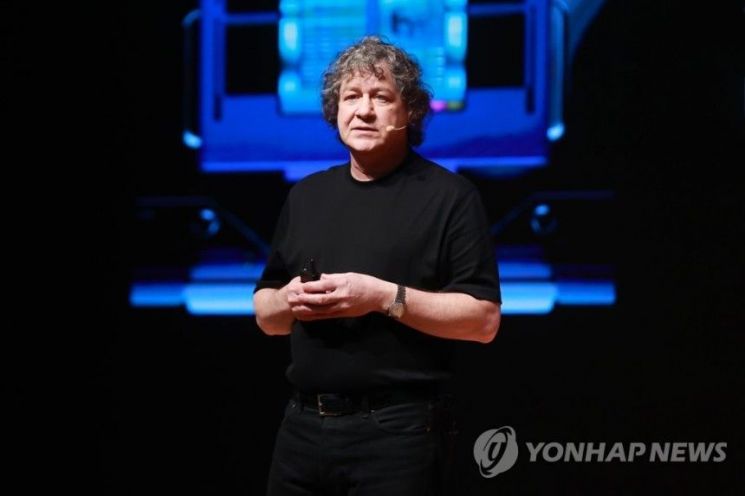
Joseph Macri, AMD's CTO and Vice President, attended the '8th Samsung Artificial Intelligence (AI) Forum' held by Samsung Electronics on the 4th at the Suwon Convention Center. Among the many experts and scholars participating in this forum, Macri was the only senior executive from a global big tech company actively leading AI-related industrial sites.
Macri's attendance is seen in the industry as a clear indication of the close relationship between Samsung Electronics and AMD. At the forum's technical session, Macri introduced AMD's AI solutions under the theme of 'AI Everywhere,' emphasizing the importance of AI platforms and collaboration, as well as AMD's strengths.
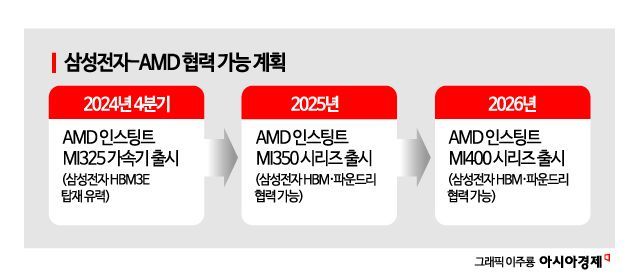
Samsung Electronics will send Jeon Kyung-hoon, CTO of the Device Experience (DX) Division and President of Samsung Research, on a business trip to Santa Clara, USA, this week. During the trip, Jeon is expected to meet with Bojana Nightingale, AMD's Senior Vice President, to strengthen the cooperation between the two companies in AI. Specifically, it is analyzed that they will seek advice on the utilization of the next-generation GPU 'Instinct MI300X,' which Samsung reportedly purchased from AMD last October, and explore potential future collaboration plans.
There is also interest in whether Samsung Electronics' High Bandwidth Memory (HBM) will be additionally supplied to AMD. AMD is regarded as an excellent customer for Samsung Electronics, which is seeking a breakthrough to surpass competitors in the HBM market. AMD plans to launch a new AI chip, the 'MI325X,' in the fourth quarter of this year and begin full-scale mass production preparations. This means a significant amount of HBM will be required.
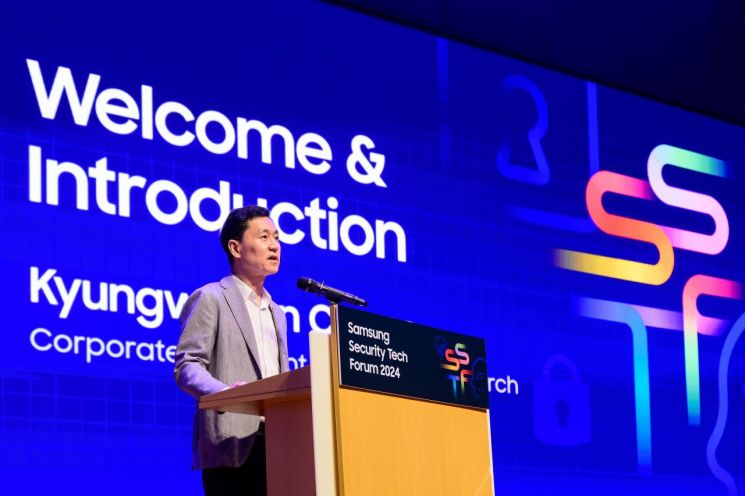 Jeon Gyeonghun, CTO of Samsung Electronics DX Division and Head of Samsung Research [Image source=Yonhap News]
There is a high possibility that Samsung Electronics' HBM will be used. According to Taiwanese market research firm TrendForce and foreign media, AMD has maintained a business relationship by previously receiving about $3 billion (approximately 4 trillion KRW) worth of HBM3E from Samsung Electronics in March. Some speculate that AMD will use Samsung Electronics' 5th generation HBM, the 12-stack HBM3E, in its new chips. Samsung Electronics hinted at imminent supply by announcing in its Q3 confirmed earnings report that it had completed a critical stage of NVIDIA's quality test for HBM3E. If Samsung confirms the supply of the 5th generation 12-stack product to AMD, it could significantly increase its market share.
If the cooperation between the two companies strengthens, it could also provide relief to Samsung Electronics' foundry business, which has been struggling with losses. Since AMD CEO Lisa Su declared at the IMEC Technology Forum (ITF) held in Antwerp, Belgium, in May that the '3nm Gate-All-Around (GAA)' process technology would enhance the power efficiency and performance of its chips, there have been ongoing industry speculations that AMD might outsource chip production to Samsung Electronics. GAA is evaluated to reduce transistor performance degradation caused by process miniaturization and improve data processing speed and power efficiency. Recently, Samsung Electronics announced its decision to continue the foundry business and secure mass production by applying the GAA process to the 2nm process in the fourth quarter, which is also analyzed as an expectation to receive orders from AMD. However, yield rates below 60% and unstable performance remain urgent issues to be resolved.
At this AI forum, Samsung Electronics invited global AI scholars such as Yoshua Bengio, a professor at the University of Montreal in Canada, to discuss the future of AI. Samsung Electronics Vice Chairman Han Jong-hee stated in his opening remarks the day before, "AI is transforming our lives at an astonishing speed, and as it becomes more powerful, it is increasingly important to consider 'how to use AI more responsibly.' We will take responsibility for building a more efficient and sustainable AI ecosystem."
Professor Bengio introduced research findings in his keynote speech on the future risks of AI, including large-scale labor market impacts, AI-enabled hacking, and the emergence of superintelligence, as well as the fact that AI performance has surpassed human levels in various fields. He emphasized, "For AI safety, policymakers as well as the public must accurately understand the current state and future of AI." He further stressed the need for "preemptive safe AI design to prevent AI from engaging in dangerous behavior, aligning AI actions and goals with humans, and increased coordination and cooperation between nations and companies in AI competition" to ensure AI safety.
Yann LeCun, Meta's Chief AI Scientist and a professor at New York University, explained the capabilities and limitations of large language models (LLMs) and emphasized that additional technological innovations are necessary for machines to reach human-level intelligence. Ian Horrocks, a professor at the University of Oxford and co-founder of Oxford Semantic Technologies (OST), delivered a keynote titled 'Personalized AI Service Technology Applying Knowledge Graphs,' introducing use cases such as search and recommendation that reflect this well. Knowledge graphs refer to technology that stores and processes data in a way similar to how humans remember and recall knowledge. Samsung Electronics acquired OST, which possesses core technology for knowledge graphs, in July of this year.
© The Asia Business Daily(www.asiae.co.kr). All rights reserved.
![Clutching a Stolen Dior Bag, Saying "I Hate Being Poor but Real"... The Grotesque Con of a "Human Knockoff" [Slate]](https://cwcontent.asiae.co.kr/asiaresize/183/2026021902243444107_1771435474.jpg)

















