GDP 13.1% Decline by 2050 Under 1.5°C Target Response
Impact of Carbon Price Increase to Achieve 2050 Carbon Neutrality Goal
Rising Pressure on Producer Prices
"Early Implementation of Climate Policy Needed to Mitigate Negative Effects"
A study has found that risks caused by climate change have long-term negative effects on South Korea's real economy, including gross domestic product (GDP) and producer prices. However, the negative impact is reduced when actively responding to the climate crisis by implementing policies such as the 2050 carbon neutrality plan early.
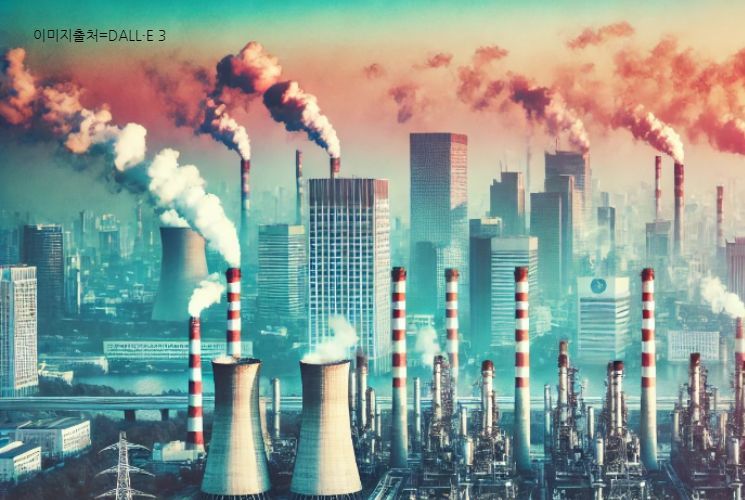
According to the report titled "BOK Issue Note: The Impact of Climate Change Risks on the Real Economy" released by the Bank of Korea on the 4th, if greenhouse gases are actively reduced to keep the global average temperature rise within 1.5 degrees Celsius compared to the pre-industrial period (1850?1900), South Korea's GDP is estimated to decrease by 13.1% around 2050 compared to the baseline scenario. This is because achieving the 2050 carbon neutrality target requires raising South Korea's carbon price from 220,000 KRW per ton in 2030 to 2.5 million KRW per ton in 2050. If eco-friendly technologies develop and climate damages are mitigated, the GDP decline is projected to narrow to 10.2% by around 2100.
The baseline scenario used in the analysis is a growth path proposed by the Network for Greening the Financial System (NGFS), a voluntary discussion forum among central banks and supervisory authorities, based on domestic population growth trends. It assumes normal economic growth reflecting past trends without shocks from climate risks. It is unrelated to the potential GDP estimated based on domestically available production factors.
If there is no response to climate change, GDP is expected to decline even more. In the no-response scenario, since carbon price increases are not assumed, GDP around 2050 decreases by only 1.8% compared to the baseline scenario, but as climate damages expand thereafter, it is estimated to fall by up to 21% by around 2100.
The timing of policy responses also significantly affects GDP impacts. When limiting the global average temperature rise to within 2 degrees or delaying responses compared to the original plan, GDP around 2050 decreases by 6.3% and 17.3%, respectively, compared to the baseline scenario. By around 2100, the GDP decline expands to 15% and 19.3%, respectively.
By industry, high-carbon sectors such as refining, chemicals, cement, and steel are vulnerable to transition risks caused by climate change. During 2024?2050, when carbon prices rise, the value added of these industries is projected to decrease by 62.9% compared to the baseline scenario around 2050 under the 1.5-degree target response. However, if eco-friendly technologies develop thereafter, the value-added decline is expected to slow to 32.4% by around 2100.
Industries vulnerable to chronic risks from climate change, such as agriculture, food products, construction, real estate, and restaurants, see their value added decrease by only 1.8% compared to the baseline scenario around 2050 in the no-response scenario, but the decline expands to 33.4% by 2100 as temperature rises and precipitation damages increase.
Producer Prices Also Rise 6.6% Around 2050 Under 1.5-Degree Response
Producer prices are also expected to rise during the climate change response process. Under the 1.5-degree response scenario, producer prices are estimated to increase by 6.6% around 2050 compared to the baseline scenario due to increased corporate production costs from carbon pricing policies. Subsequently, as eco-friendly technologies develop and production costs decrease, this pressure gradually eases, resulting in only a 1.9% increase by around 2100. However, as global agricultural supply shocks intensify toward 2100, import prices are expected to rise, further increasing upward pressure on producer prices.
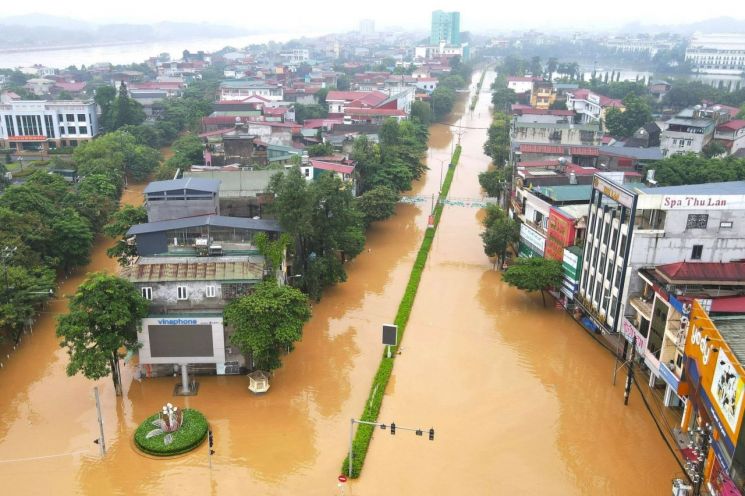
Analyses also show that if no response is made to natural disasters such as typhoons and floods, the damage scale could reach trillions of won. In the no-response scenario, typhoon damages gradually increase over time, with estimated losses reaching 9.7 trillion KRW. This is 38% higher than the damage amount of 7 trillion KRW under the 1.5-degree response scenario. For floods, damages could reach 3.2 trillion KRW by around 2100 if no response is made, which is 52% higher than the 2.1 trillion KRW damage estimated under the 1.5-degree response scenario.
Kim Jae-yoon, head of the Sustainability Growth Office at the Bank of Korea, said, "While greenhouse gas reduction policies initially involve costs, they subsequently promote technological development and reduce climate damages, enhancing the resilience of our economy." He added, "Strengthening greenhouse gas reduction policies early will be a favorable long-term strategy for our economy." He also noted, "Among the four pathways presented in the report, the 1.5-degree response target appears to be the most advantageous."
© The Asia Business Daily(www.asiae.co.kr). All rights reserved.
![Clutching a Stolen Dior Bag, Saying "I Hate Being Poor but Real"... The Grotesque Con of a "Human Knockoff" [Slate]](https://cwcontent.asiae.co.kr/asiaresize/183/2026021902243444107_1771435474.jpg)
















