Ministry of Land, Infrastructure and Transport Announces '2023 Survey on Mobility Convenience for Transportation-Disadvantaged'
Number of Transportation-Disadvantaged Last Year: 15.86 Million
Special and Metropolitan Cities' Mobility Facility Suitability Rate Increased by 3.8 Percentage Points Compared to Two Years Ago
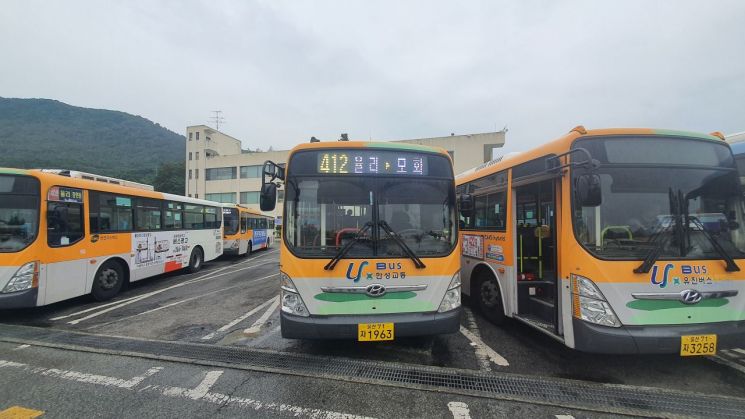
One in three people in our country is a transportation-vulnerable person who experiences difficulties when using transportation, and the Ministry of Land, Infrastructure and Transport announced that last year, the standard-compliant installation rate of mobility convenience facilities for transportation-vulnerable people in transportation means, passenger facilities, and roads in special and metropolitan cities was 85.3%. This is an increase of 3.8 percentage points compared to the survey conducted two years ago in 2021.
The Ministry of Land, Infrastructure and Transport announced the results of the '2023 Mobility Convenience Survey for Transportation-Vulnerable People' conducted in eight special cities, metropolitan cities, and special self-governing cities on the 4th. This survey is conducted once every two years. Transportation-vulnerable people refer to those who experience difficulties in mobility, including persons with disabilities, the elderly, pregnant women, caregivers with infants, and children. As of the end of last year, the number of transportation-vulnerable people in Korea was 15.86 million, accounting for 30.9% of the total population of 51.33 million.
According to the survey on the main transportation means used by transportation-vulnerable people, when moving within autonomous districts, they mainly used buses (32.4%) or walked (29.8%, including wheelchair users). For travel within special, metropolitan, or self-governing cities, buses (42.6%) and subways (28.1%) were mainly used, while for intercity travel, private cars (62.8%) and trains (15.5%) were primarily used.
The nationwide supply rate of low-floor buses, which have no stairs and a low chassis making boarding and alighting easier for wheelchair users and the elderly, was 38.9% last year. This is a 4.1 percentage point increase compared to 2022. Special transportation means reached about 101.4% of the legally mandated number, marking the first time the legal quota was achieved nationwide.
The average dispatch interval for low-floor buses nationwide last year was 26.4 minutes, a slight improvement from 26.8 minutes in 2022. However, there was a maximum regional disparity of 81.2 minutes. The number of routes with low-floor buses introduced last year was 2,497, an increase of 666 routes compared to 1,831 in 2022.
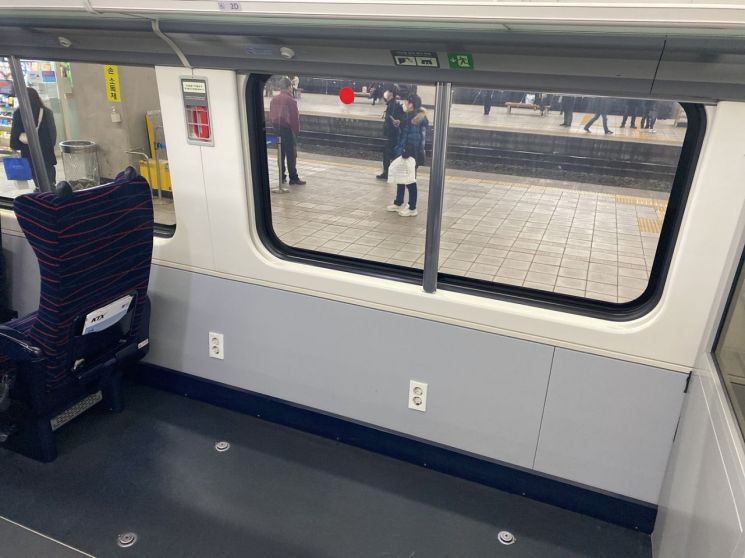
Looking solely at the standard-compliant installation rate of mobility convenience facilities in transportation means last year, it was 88.3%. All eight cities exceeded a 90% compliance rate, averaging 95.9%, which is a 0.8 percentage point increase compared to 2021. Seoul had the highest rate at 98.1%.
For urban and metropolitan railway vehicles, the nationwide survey showed a standard-compliant installation rate of 97.3%. Sections operated by Korea Railroad Corporation such as the Gyeongbu, Donghae, and Gyeongwon lines, as well as Daegu Line 1, Gwangju Line 1, Daejeon Line 1, and the Uisinseol Line, all showed a 100% compliance rate. However, the Uijeongbu Light Rail, Sillim Line, and Yongin Light Rail did not meet standards for destination displays and other criteria.
For passenger ships, the nationwide survey showed a standard-compliant installation rate of 74.9%, an increase of 37.1 percentage points compared to 2021.
Looking at passenger facilities, the standard-compliant installation rate for passenger car terminals was 69.9%, a 0.7 percentage point increase compared to 2021, with Sejong City having the highest compliance rate at 85.6%.
The standard-compliant installation rate for bus stops was 61.7%, a 4.6 percentage point increase compared to 2021. Ulsan City had the highest compliance rate at 68.9%. Among detailed items, curb cuts had a compliance rate of 90.5%, but braille and audio guidance on signboards were only 25.5%.
The standard-compliant installation rate for railway stations was 89.9%, a 1.5 percentage point increase compared to 2021. Among detailed items, tactile blocks had a 100% compliance rate, but guidance and induction facilities were at 73.4%.
The standard-compliant installation rate for airport passenger terminals was 93.7%, a 7.7 percentage point increase compared to 2021. Ulsan Airport had the highest compliance rate at 98.9%. Among detailed items, pedestrian access routes and tactile blocks were 100%, but ticket counters were at 90.8%.
Park Jeong-su, Director General of Comprehensive Transportation Policy at the Ministry of Land, Infrastructure and Transport, said, “Due to increased interest in improving mobility convenience for transportation-vulnerable people, mobility convenience facilities have been continuously improved. We plan to provide the survey results to transportation administrative agencies and operators nationwide to suggest directions for improvement.”
© The Asia Business Daily(www.asiae.co.kr). All rights reserved.
![Clutching a Stolen Dior Bag, Saying "I Hate Being Poor but Real"... The Grotesque Con of a "Human Knockoff" [Slate]](https://cwcontent.asiae.co.kr/asiaresize/183/2026021902243444107_1771435474.jpg)
















