"Electronic Waste to Increase 3-12% by 2030
Up to 2.5 Million Tons Additional Production Expected Annually"
Amid the generative artificial intelligence (AI) boom, global companies are rushing to build data centers, and it is predicted that by 2030, electronic waste equivalent to discarding 13 billion iPhones annually will be generated. There are growing concerns that not only will massive energy be consumed in the process of constructing and operating data centers, but also that the production of electronic waste, which is difficult to recycle, will cause significant environmental damage.
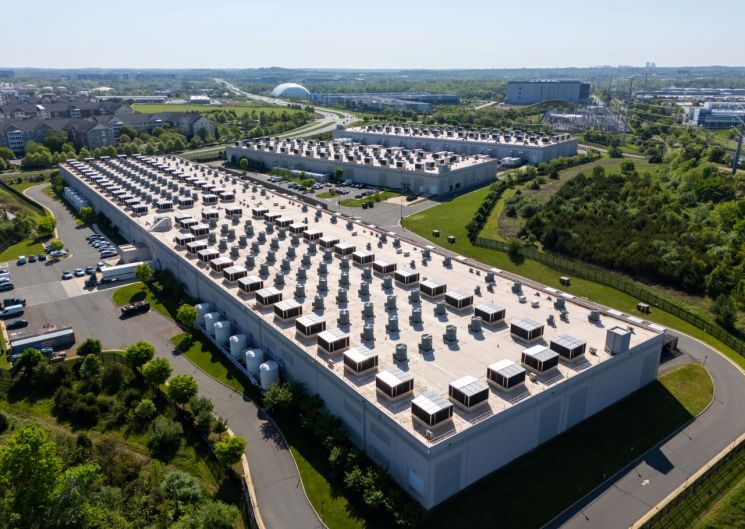
The Washington Post (WP) recently reported, citing data analyzed by researchers from the Chinese Academy of Sciences and Reichman University in Israel, that electronic waste produced worldwide is expected to increase by 3-12% by 2030 due to the AI boom. This means that up to 2.5 million tons of additional electronic waste could be generated annually, which is equivalent to discarding 13 billion iPhones each year.
This study estimated the figures based on waste generated when computer servers using AI semiconductors like Nvidia H100 are discarded every three years. Some waste, such as cooling systems, was not included in the study. Given the massive investments pouring into the construction and upgrading of data centers for AI use worldwide, including Silicon Valley, an increase in waste is expected to be inevitable for the time being.
Electronic waste is also difficult to recycle. According to the United Nations (UN) annual report on electronic waste, only 22.3% of electronic waste generated in 2022 was recycled. The UN projects that this rate will drop to around 20% by 2030. However, it added that if the recycling rate could be raised to 60% by 2030, the economic benefits would exceed the costs by $38 billion (approximately 52.4 trillion KRW).
The WP reported that discarded computers and some electronic products from Western countries are exported to low-income countries, where they are dismantled to recover various metals, including copper. It is said that low-wage workers are exposed to harmful substances such as mercury and lead during this process.
Asaf Chakor, a professor at Reichman University and one of the researchers, said, "The environmental impact caused by AI hardware is often overlooked, but we hope this study draws attention to this issue," adding, "AI entails real environmental costs beyond energy consumption and carbon emissions." Sasha Lucioni, a researcher at Hugging Face, a company studying the environmental impact of the AI boom, commented, "Everyone seems to be focused on bigger and faster when it comes to AI."
© The Asia Business Daily(www.asiae.co.kr). All rights reserved.
![Clutching a Stolen Dior Bag, Saying "I Hate Being Poor but Real"... The Grotesque Con of a "Human Knockoff" [Slate]](https://cwcontent.asiae.co.kr/asiaresize/183/2026021902243444107_1771435474.jpg)















