The UK Labour government has unveiled a new budget centered on the largest tax increase in nearly 30 years. While committing to ?70 billion (approximately 125 trillion won) in fiscal spending to improve public finances and public services, more than half of that amount, ?40 billion (about 71.45 trillion won), will be raised through tax hikes.
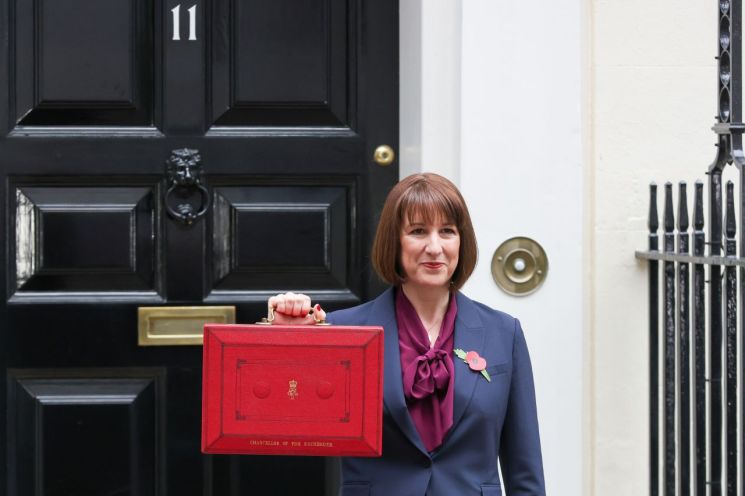
According to BBC and other outlets, Chancellor of the Exchequer Rachel Reeves stated in a parliamentary speech that "the only way to improve living standards and promote economic growth is investment, investment, investment," presenting the budget accordingly. This is the first time since 2010 that the Labour Party, which achieved a change of government in the early general election last July, has announced a budget.
Chancellor Reeves emphasized that the new government inherited "failure" from the previous Conservative government, saying, "The choices made today are not easy, but they are the right choices for our country," underscoring the inevitability of tax increases to expand fiscal spending. The think tank Institute for Fiscal Studies (IFS) estimates that ?40 billion amounts to 1.25% of the annual Gross Domestic Product (GDP). This represents the largest tax increase in over 30 years since former Conservative Home Secretary Norman Lamont in 1993.
The main targets of the tax increase are corporations and the wealthy. The tax burden on companies, estimated at around ?25 billion, will come from raising the National Insurance (NI) contributions paid by employers. Starting from the new fiscal year in April next year, companies will be required to pay 15% NI on employee salaries exceeding ?5,000, an increase of 1.2 percentage points from the previous rate. For salaries above ?9,100 annually, the rate remains at 13.8%. Additionally, the employment allowance will be expanded from ?5,000 to ?10,500, and the corporate tax rate for companies with taxable profits exceeding ?250,000 will be maintained at 25%.
As part of the wealth tax increase, capital gains tax and inheritance tax will also be expanded. Inheritance pensions, which are currently exempt from inheritance tax, will be included in the taxable base starting in 2027. Furthermore, from 2026, inheritance tax relief on agricultural land will be reduced. The basic rate on gains from stock sales has also been raised. For capital gains tax (CGT), the lower rate bracket has increased from 10% to 18%, and the higher rate bracket from 20% to 24%. Moreover, the 'Non-Dom' tax regime, which grants tax exemptions on foreign income to foreign residents living in the UK, will be abolished.
Additionally, air passenger duty will increase from 2026, with short-haul economy flights rising by ?2 and long-haul flights by ?12. To encourage the transition to electric vehicles, vehicle excise duty for all car owners, except those with highly efficient new gasoline cars, will be doubled. The Conservative Party's reduction of petrol and diesel taxes, originally scheduled to end in April next year, has been extended by one year. The legal minimum wage for workers aged 21 and over will increase from ?11.44 to ?12.21 per hour.
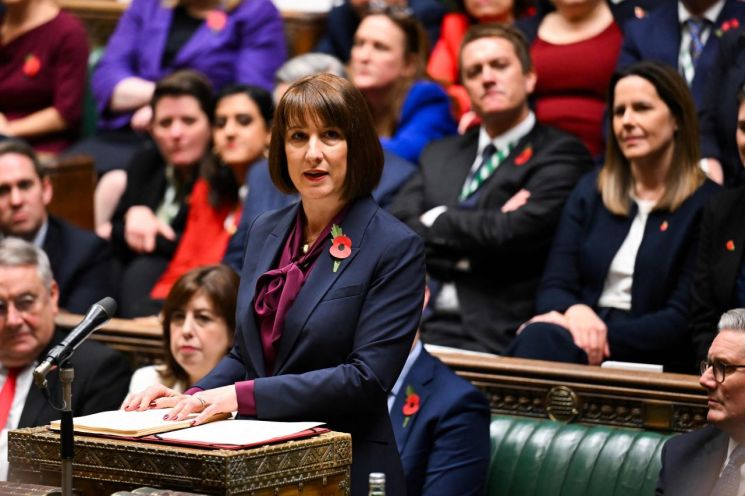
The UK Office for Budget Responsibility (OBR) announced that based on this budget, fiscal spending will increase by ?70 billion, and the tax-to-GDP ratio will reach an all-time high. Specifically, fiscal spending on the National Health Service (NHS) and other national health services will increase by ?22.6 billion. Capital expenditure budgets for this year and next year have also been increased by ?3.1 billion. Chancellor Reeves confirmed that "there will be no return to austerity" and that more investment will be made in areas such as education. Capital expenditure over the next five years on school buildings, hospitals, and diagnostic centers will increase by ?100 billion.
The UK's real GDP growth rate is projected to be 1.1% this year, 2.0% next year, and 1.8% in 2026. It is expected to record 1.6% in 2029. However, local media noted that these figures fall short of the targets previously set by the Labour Party. The average inflation rate is estimated at 2.5% this year, 2.6% next year, and 2.3% in 2026.
The Guardian mentioned the impact of the large-scale tax increase amid a sharp decline in approval ratings just three months after taking office, describing it as "a definite gamble. It is unclear whether it will bring a new dawn or lead to a dead end." The Labour Party, which won a landslide victory in the July general election and achieved a change of government, is currently facing challenges including economic growth, public service improvement, and fiscal strengthening amid a recent sharp drop in support. Former Conservative leader Rishi Sunak criticized the Labour Party's new budget as a "massive borrowing storm."
© The Asia Business Daily(www.asiae.co.kr). All rights reserved.


















