Worst Damage Since the 1996 Heavy Rain in the Pyrenean Mountains
At least 95 people have died due to record-breaking heavy rains that struck southeastern Spain, according to major foreign media outlets including CNN on the 30th (local time).
According to reports, ?ngel V?ctor Torres, Spain's Minister of Territorial Policy and Public Function (MPTMD), announced that 95 people have died so far due to the heavy rains that poured down in southeastern Spain the previous day. Valencia, which suffered the most damage, reported 92 deaths, Castilla-La Mancha had 2 deaths, and M?laga had 1 death. Rescue authorities warned that there are also a significant number of people missing after being swept away by the torrents, and additional casualties may occur.
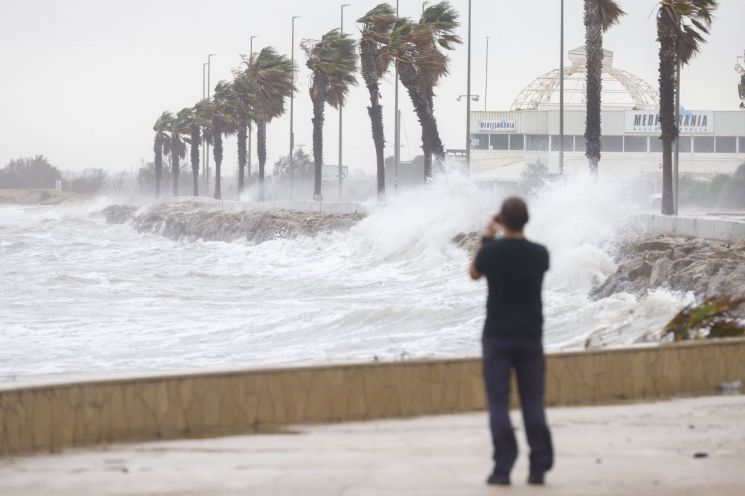
The Guardian described it as "the most severe flooding Spain has experienced since the heavy rains that struck a campsite in the Pyrenees in 1996, killing 87 people," and noted, "The most recent catastrophic floods in Europe occurred in July 2021, when 243 people died across Germany, Belgium, Romania, Italy, and Austria." The BBC reported, "This flood has caused the highest number of deaths since the 1973 floods in Spain," adding, "At that time, it is estimated that at least 150 people died in what was Spain's worst flood disaster."
Spanish Prime Minister Pedro S?nchez said on the day, "The government will mobilize all necessary means to help flood victims," urging people not to lower their guard. Margarita Robles, Spain's Minister of Defense, stated that more than 1,000 soldiers have been deployed to support rescue operations. The Spanish government declared a three-day mourning period from the 31st to the 2nd of next month.
Local meteorologists attribute the cause of the heavy rains to the "Cold Drop" (Gota Fr?a) phenomenon, which occurs when cold air crossing southeastern Spain moves over the warm waters of the Mediterranean Sea. The Spanish Meteorological Agency (AEMET) reported that southeastern Spain received a month's worth of rain in one day, and in the town of Chiva in eastern Valencia, nearly a year's worth of rain fell over eight hours. Experts explained that Valencia has many canyons and small streams, so when heavy rain falls, water levels rise quickly.
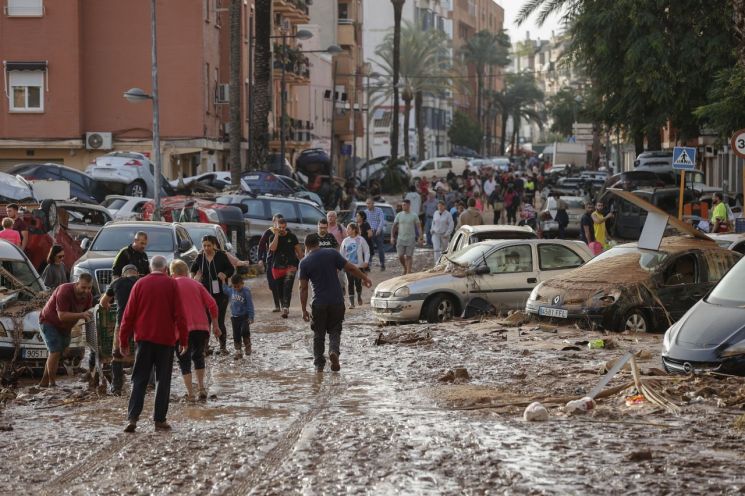
Due to the heavy rains, most railways, highways, and air routes remained closed as of that day, and electricity supply was cut off to about 150,000 households. Valencia ordered all schools to close and canceled various outdoor events. The Spanish Ministry of the Interior stated, "Morocco, Italy, France, Portugal, T?rkiye, the Czech Republic, Greece, and Slovenia have provided rescue means and resources." Support at the European Union (EU) level is also expected.
Some have criticized Spain's disaster authorities for inadequate heavy rain warnings. At the time, Spanish meteorological authorities issued a "red alert" at 7:36 a.m. on the 29th, warning of a high possibility of heavy rain in the Valencia area, but the severity of the situation was not effectively communicated. Liz Stevens, a climate risk expert at the University of Reading, said, "The alert itself was issued with enough time for people to escape danger, but a red alert alone does not convey what impacts to expect or what actions to take," criticizing, "The Spanish government still has a long way to go in disaster response." Jorge Olcina, a geography professor at the University of Alicante, proposed introducing a "black alert" to be sent when citizens' lives are at risk.
© The Asia Business Daily(www.asiae.co.kr). All rights reserved.
![Clutching a Stolen Dior Bag, Saying "I Hate Being Poor but Real"... The Grotesque Con of a "Human Knockoff" [Slate]](https://cwcontent.asiae.co.kr/asiaresize/183/2026021902243444107_1771435474.jpg)
















