Selected for the Research-Based Advancement Track
Korea University of Technology and Education (KOREATECH) has been selected for the Ministry of Trade, Industry and Energy’s industrial support project and will receive a total of 11.6 billion KRW in funding.
On the 28th, KOREATECH announced that its Convergence Testing and Analysis Center was chosen as an executing institution for the Ministry’s ‘2024 Industrial Innovation Infrastructure Construction Project (Research Infrastructure Advancement).’ The Research Infrastructure Advancement track is a newly established program this year that supports centers with excellent operational performance among existing research facilities.
With this project selection, KOREATECH will receive a total project budget of 11.63 billion KRW over three years (6.7 billion KRW from the national government, 4.63 billion KRW from the university, and 300 million KRW from the Korea Industrial Complex Corporation) to strengthen precision analysis capabilities in the microelectronics manufacturing field and contribute to Korea’s industrial innovation.
Microelectronics manufacturing technology is regarded as a core technology leading the future of manufacturing industries by miniaturizing products and improving performance and energy efficiency across various sectors such as semiconductors, home appliances, automotive parts, telecommunications, and bio industries.
KOREATECH’s Convergence Testing and Analysis Center, established in 2001, has accumulated full-cycle testing and analysis capabilities specializing in advanced electronic manufacturing in national strategic industries such as semiconductors, displays, automotive electronics, and telecommunications for over 20 years, earning recognition for its technological expertise and services.
The center is located in the Siwha-Banwol National Industrial Complex, the largest manufacturing cluster in Korea, providing close support to corporate demands on a regular basis. Last year alone, about 270 companies and institutions utilized the center, resulting in approximately 1,600 support cases.
Through this project, the center will newly introduce 11 advanced pieces of equipment with high field demand, including High-Resolution Focused Ion Beam (HR FIB) and High-Resolution Field Emission Scanning Electron Microscope (HR FE-SEM), to advance microelectronics manufacturing technology, and operate specialized services supporting technological capabilities and research personnel.
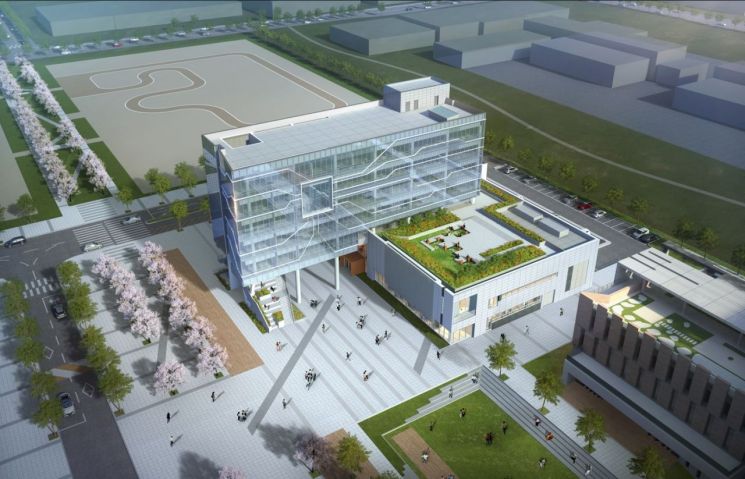
Additionally, the center will relocate to the newly constructed Advanced Manufacturing Innovation Hall on the second campus within the MTV (Multi-Techno Valley) Industrial Complex, consolidating the university’s three major equipment centers?the Convergence Testing and Analysis Center, the High-Value PCB Joint Research Center, and the Process Innovation Simulation Center?into one space. Together with related organizations such as Siheung City and the Korea Industrial Complex Corporation (Gyeonggi Regional Headquarters), integrated support services will be provided to create synergy. In particular, the Korea Industrial Complex Corporation will strengthen technical consultative bodies and networks within the industrial complex and play a role in activating cooperation services between companies and universities.
Professor Seong-ui Lee of KOREATECH, the project’s overall director, stated, “Our center has established itself as a representative testing and analysis institution in the region through close cooperation with local companies for over 20 years. Taking this project as an opportunity, we will advance not only our equipment but also our operational systems to enhance corporate value and contribute to the creation of new technologies.”
President Su-seong Hwang of KOREATECH emphasized, “Our university is a specialized industry-academia cooperation university established within a national industrial complex, and the operation of shared equipment is a representative model of industry-academia cooperation at the university. We will continue to provide policy and financial support at the university level so that local companies can actively utilize university infrastructure to achieve technological innovation.”
© The Asia Business Daily(www.asiae.co.kr). All rights reserved.
![Clutching a Stolen Dior Bag, Saying "I Hate Being Poor but Real"... The Grotesque Con of a "Human Knockoff" [Slate]](https://cwcontent.asiae.co.kr/asiaresize/183/2026021902243444107_1771435474.jpg)















