Based on the 'Employment Status of Resigned Residents' Data
1,000 More Hired Than Last Month
It was found that half of the residents who resigned in protest against the increase in medical school admissions have been re-employed and returned as doctors. Among them, more than half were employed at clinic-level medical institutions. The proportion of those re-employed at the tertiary general hospitals where they previously worked was only 1.7%.
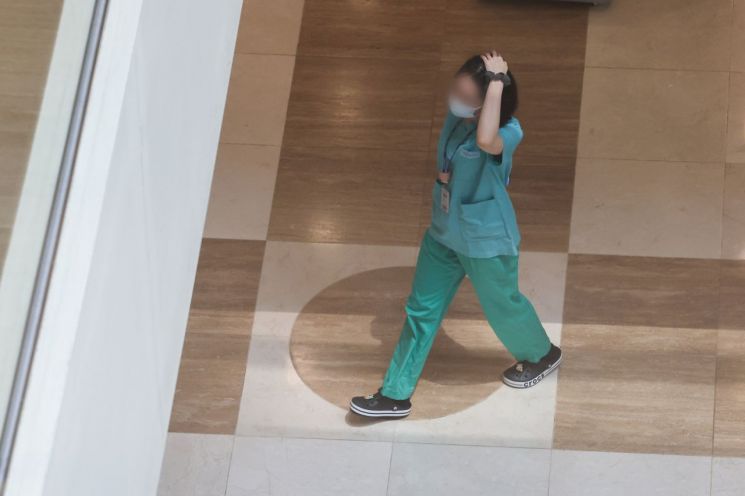
According to the 'Re-employment Status of Resigned Residents' data received by Kim Yoon, a member of the Democratic Party of Korea, from the Ministry of Health and Welfare on the 24th, as of the 20th of this month, out of 9,163 residents who resigned or gave up their appointments in protest against the government's increase in medical school admissions, 4,111 (44.9%) were re-employed at medical institutions. Compared to 3,114 (34.5%) who were re-employed as of the 19th of last month, about 1,000 more have returned to the workforce in one month.
By type of institution, among the 4,111 re-employed, only 72 (1.7%) were working at tertiary general hospitals, the same as a month ago. Those employed at general hospitals numbered 648 (15.8%). 301 were employed at long-term care hospitals, and 43 at Korean medicine hospitals.
More than half of the resigned residents, 2,341 (56.9%), were working at clinics. Clinics are the smallest medical institutions operated by individuals. Among the specialties these doctors practice at clinics, general practitioners were the most numerous with 808 (34.5%), followed by internal medicine with 347, orthopedics with 199, otolaryngology with 193, dermatology with 168, and ophthalmology with 164.
By region, the largest number of resigned residents working at hospital-level or higher medical institutions was in Gyeonggi with 472. Seoul had 313, Busan 140, Gyeongnam 106, and Daegu 101, in that order. The highest number of resigned residents re-employed at tertiary general hospitals was in Seoul (34).
Although expectations were raised for the recent launch of a consultative body involving the ruling and opposition parties, medical associations, and the government to resolve the conflict between the medical profession and the government, the process has been difficult as residents and medical students have consecutively declared their non-participation following the doctors' organizations. Among the 15 medical organizations and institutions urged by the People Power Party to participate in the consultative body, only two have expressed willingness to join. Due to the low participation rate, the opposition Democratic Party of Korea also declared non-participation. Even if the consultative body is launched, it is believed that without the participation of the resigned residents and medical students who hold the key to the medical crisis, progress will be impossible.
© The Asia Business Daily(www.asiae.co.kr). All rights reserved.
![Clutching a Stolen Dior Bag, Saying "I Hate Being Poor but Real"... The Grotesque Con of a "Human Knockoff" [Slate]](https://cwcontent.asiae.co.kr/asiaresize/183/2026021902243444107_1771435474.jpg)















